
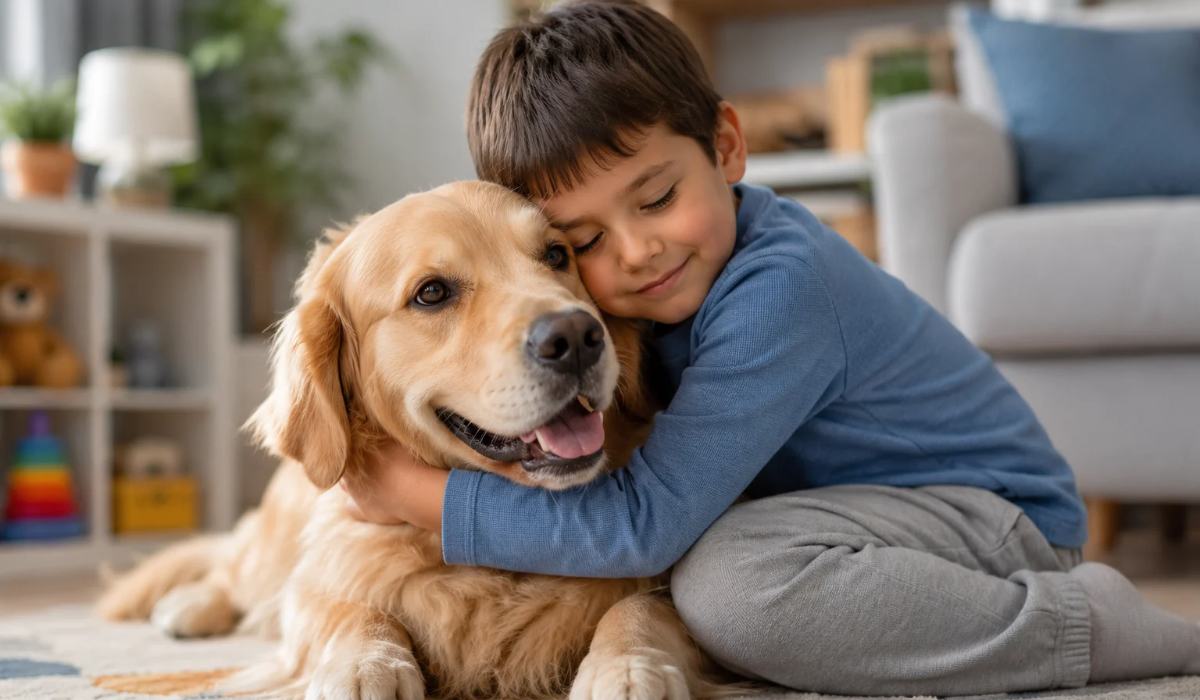
If you’re considering a dog for your autistic child (or for yourself), you’ve probably already sensed there’s more to this decision than just picking a cute breed. Dogs can genuinely support autistic individuals in real, meaningful ways, but the right dog depends a lot on the role you want it to play, your family’s specific needs, and the individual dog’s temperament. Here’s a clear, practical breakdown to help you think it through.
Why Dogs Can Genuinely Help
Many autistic individuals find it easier to connect with dogs than with people, and there’s a simple reason for that: dogs communicate consistently, through touch, body language, and predictable routines, without relying on the verbal or social cues that can be harder to process. Activities like walking a dog, playing fetch, or teaching basic commands offer connection and engagement without pressure to make constant eye contact or carry a conversation.
Commonly reported benefits include:
- Reduced anxiety and stress
- Support with emotional regulation, including calming effects during overwhelming moments
- Increased opportunities for social interaction, since dogs can act as a natural, low-pressure bridge to conversations with others
- A sense of routine, responsibility, and companionship
- For some families, reduced parental stress as well, not just benefits for the child
It’s worth noting that outcomes vary a lot by individual, both the child and the dog, and a dog is not a substitute for therapy or professional support. Think of a dog as one part of a broader support system, not a stand-alone treatment.
Service Dogs, Therapy Dogs, and Companion Pets: What’s the Difference?
Before choosing a breed, it helps to know what role you actually want the dog to play, since these are genuinely different things.
Autism service dogs are individually trained to perform specific tasks for one handler. This can include deep pressure therapy during anxiety, interrupting self-injurious behavior, tethering to prevent a child from wandering off in public, alerting a caregiver to overwhelming sensory situations, or helping a child follow daily routines. Because of the intensive, specialized training involved, service dogs are a significant undertaking, both in time and cost, training can run well into the tens of thousands of dollars, and most reputable organizations require an application, interview, and home visit before matching a dog with a family.
Therapy dogs are trained to provide comfort to multiple people, not just one handler. They’re the dogs you’ll see visiting schools, hospitals, or care facilities, offering calm, friendly interaction to whoever needs it in the moment. They’re not trained for the specific, individualized tasks a service dog performs.
Companion pets are simply family dogs, not formally trained for service or therapy work, but still capable of offering real comfort, routine, and connection. For many families, a well-matched, well-trained companion dog is enough, it just requires extra thought about a specific child’s sensory needs and consistent training to make sure the relationship works well for everyone.
What to Actually Look for in a Breed
Rather than chasing a single “best” breed, it helps to think through a few practical factors specific to your child and household:
- Temperament. Calm, patient, and gentle dogs tend to be the most forgiving match, especially for children who may unintentionally handle a dog roughly or unpredictably during overwhelming moments.
- Size. A larger dog can offer grounding, deep-pressure comfort, but may also be harder for a smaller child to manage. A smaller dog might be easier to handle but won’t offer the same physical calming presence.
- Energy level. A high-energy dog can be a great outlet for an active child who enjoys movement and play, but might overwhelm a child who prefers calmer, quieter interaction.
- Shedding and allergies. If anyone in the household has allergies or sensory sensitivities to fur or dander, hypoallergenic breeds are worth prioritizing.
- Noise tendencies. If your child has sound sensitivities, a breed known for frequent barking may not be the best fit.
- Trainability. Especially relevant if you’re considering service or therapy work, some breeds are simply easier to train reliably than others.
Commonly Recommended Breeds
A handful of breeds show up again and again in autism-support recommendations, largely because of their temperament and trainability:
- Golden Retriever. Friendly, patient, and highly trainable, often considered one of the most reliable choices for both service and companion roles.
- Labrador Retriever. Gentle, adaptable, and eager to please, a longtime favorite for service and therapy work.
- Standard Poodle. Intelligent and hypoallergenic, a strong option for families managing allergies.
- Labradoodle. A Labrador-Poodle mix that combines trainability with a low-shed coat, popular for allergy-sensitive households.
- Bernese Mountain Dog. Calm and affectionate, with enough size to offer grounding, deep-pressure comfort.
- Newfoundland. Gentle and famously patient with children, though their large size and lower energy level suit families who prefer quieter indoor companionship.
- German Shepherd. Intelligent, loyal, and highly trainable, frequently used in service dog roles, though their size and protective instincts are worth considering carefully for younger or smaller children.
- Great Pyrenees. Calm and sturdy, a good fit for active families, though they need consistent training and regular exercise.
- Saint Bernard. Gentle and patient, though their large size may be difficult for smaller children to manage safely.
Good Options for Smaller Households or Allergy Concerns
If a large breed isn’t practical for your living situation or a family member has allergies, several smaller breeds are also commonly recommended:
- Cavalier King Charles Spaniel. Affectionate, gentle, and adaptable to different environments.
- Beagle. Friendly and sociable, with a gentle nature that suits many family settings.
- Havanese. Small, hypoallergenic, and known for a warm, affectionate temperament.
- Bichon Frise, Toy Poodle, Miniature Schnauzer, and Shih Tzu are also frequently mentioned for their gentle temperaments and manageable size.
If a Dog Isn’t the Right Fit
Dogs require a real commitment, exercise, grooming, training, and consistent daily care, and that’s not the right fit for every family or every child’s sensory profile. Other pets can offer similar benefits with a different care level:
- Cats are independent and low-maintenance, offering a calming presence without demanding constant interaction.
- Fish provide gentle visual stimulation and require minimal upkeep, appealing for children who enjoy quiet sensory engagement.
- Guinea pigs and rabbits can help teach responsibility and gentle social interaction, with lower care demands than a dog.
- Turtles, for children who enjoy quieter, lower-interaction pets, can offer a soothing sensory experience with relatively simple care needs.
The right choice really depends on your child’s specific sensory preferences and your family’s capacity for ongoing care, not on which pet is generally considered “best.”
A Few Practical Next Steps
- Think through the role first. Do you need a specific service dog, a general therapy visit, or simply a loving family companion? This shapes everything else.
- Meet the individual dog, not just the breed. Breed tendencies are a helpful starting point, but individual temperament varies a lot, spend time with a specific dog before committing.
- Work with reputable organizations for service or therapy dogs. If you’re considering a trained service dog, look for accredited organizations and be prepared for a genuine application and matching process, not just a purchase.
- Involve your child in the process where possible. A child’s comfort and interest matter as much as any breed characteristic on paper.
- Talk to your child’s therapist or care team. They may have useful insight into your child’s specific sensory needs and whether a dog, and which type of role, makes sense right now.
A Few Honest Reminders
- No single “best breed” exists for every autistic child. Individual temperament, both the child’s and the dog’s, matters more than breed alone.
- A dog is a real commitment, not a quick fix, worth thinking through carefully as a family decision.
- This is general guidance, not a treatment recommendation. If you’re considering a service dog specifically for behavioral or safety needs, it’s worth discussing with your child’s care team first.
Also Read: Can Dogs Have Autism? What Vets and Researchers Actually Say
This article summarizes general information commonly shared by autism support resources on choosing a dog breed, reworded here for informational purposes. It isn’t medical advice, if you have questions specific to your child’s needs, a pediatrician, occupational therapist, or behavioral specialist is a good next step.