
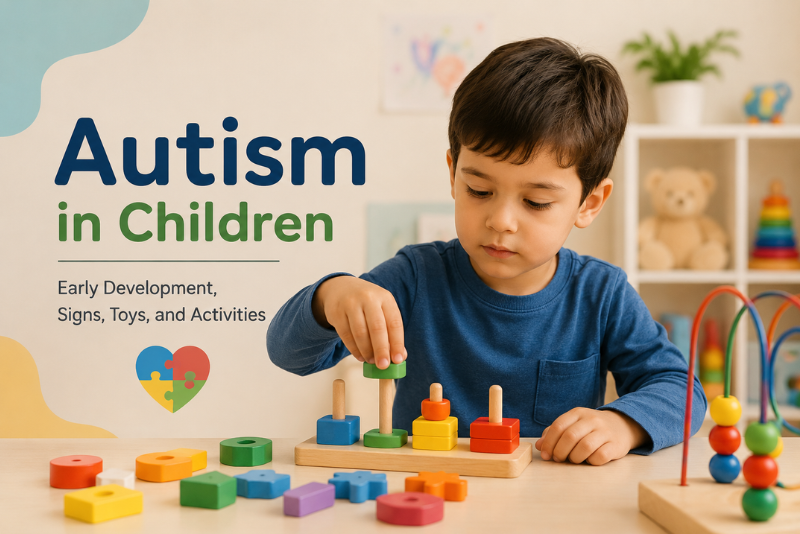
Autism spectrum disorder (ASD) is a developmental condition associated with differences in social communication, interaction, behavior, learning, and sensory experiences. Every autistic child is different, and developmental characteristics can vary considerably from one child to another. For parents and caregivers, understanding early development can help them know what to observe and when to discuss concerns with a qualified healthcare professional.
This article provides general, educational information about autism, child development, toys, and everyday activities. It is not intended to diagnose autism or replace advice from a pediatrician or other qualified healthcare professional.
Are Kids Born With Autism?
Many parents ask, “are kids born with autism?” This is an important question when learning about autism and early childhood development.
Autism is considered a developmental condition, and research indicates that genetic factors play an important role. Scientists are still studying the complex combination of genetic and environmental factors involved in autism. There is no single known cause that explains every case.
Autism does not result from something a parent simply did or did not do. Researchers have identified genetic variations and other factors associated with an increased likelihood of autism, but having an associated factor does not mean that a child will necessarily be autistic.
It is also important to understand that autism cannot be determined simply by looking at a newborn. Development continues rapidly during infancy and early childhood, and characteristics associated with autism may become more noticeable as a child grows.
Early Signs of Autism in Newborns
The phrase “early signs of autism in newborns” is frequently searched by parents who are concerned about their baby’s development. However, newborn behavior alone generally cannot establish whether a baby is autistic.
According to the National Institute of Child Health and Human Development, behavioral signs associated with autism often become apparent during early development, with many children showing signs by around 12 to 18 months or earlier. Examples can include differences in eye contact, responding to their name, nonverbal communication, imitation, and shared attention.
Parents should avoid using a single behavior as proof of autism. Babies develop at different rates, and one developmental difference does not automatically indicate autism.
Instead, caregivers can monitor development over time. Areas to observe include:
Social interaction
Communication
Play
Movement
Responses to sounds and other sensory experiences
Use of gestures and facial expressions
Response to people and surroundings
The CDC provides developmental milestone information covering infancy through early childhood. Developmental milestones describe skills that most children can perform by specific ages and can help families discuss development with healthcare professionals.
When Should Parents Discuss Developmental Concerns?
Parents do not need to wait until they are certain something is wrong before discussing a developmental concern.
A pediatrician can consider a child’s developmental history, observations, and screening results when deciding whether additional evaluation may be appropriate. The American Academy of Pediatrics recommends regular developmental surveillance and autism-specific screening at 18 and 24 months.
Some developmental characteristics that may warrant discussion with a healthcare professional include limited response to a person’s name, differences in eye contact, delayed communication, repetitive behaviors, or unusual responses to sounds, textures, smells, or other sensory experiences. These characteristics can occur for different reasons and do not by themselves establish an autism diagnosis.
Toys for Kids With Autism
Play is an important part of childhood. Choosing toys for kids with autism does not need to be complicated or expensive.
The best choice depends on the individual child’s age, interests, developmental abilities, and preferred ways of playing. A toy that works well for one child may not be interesting or comfortable for another.
The American Academy of Pediatrics recommends choosing toys that encourage interaction and shared play between children and caregivers. Simple items such as blocks, puzzles, crayons, books, and other traditional toys can support creative and interactive play.
Some general toy categories parents may consider include:
- Building blocks
- Simple puzzles
- Drawing and coloring materials
- Picture books
- Pretend-play materials
- Balls and age-appropriate movement toys
- Matching and sorting games
- Simple cause-and-effect toys
Parents should always consider age recommendations and safety information when selecting toys.
Best Toys for Kids With Autism
There is no single list of best toys for kids with autism because children have different interests and abilities.
Instead of choosing a toy because it is marketed specifically for autism, parents can consider what their child enjoys and what type of play feels comfortable and engaging.
For example, a child who enjoys building may prefer blocks, while another child may enjoy books, drawing, puzzles, or pretend play.
Shared play can also be valuable. Parents can sit with their child, follow the child’s interests, and participate without requiring a particular way of playing.
Shared play can also be valuable. Parents can sit with their child, follow the child’s interests, and participate without requiring a particular way of playing.
Activities for Kids With Autism
There are many simple activities for kids with autism that can be included in everyday family routines.
Activities can be simple, enjoyable, and easy to include in everyday routines. The goal can simply be to provide opportunities for children to explore, communicate, move, create, and spend enjoyable time with caregivers.
Examples include:
1. Building Activities
Blocks and construction toys can provide opportunities for children to stack, connect, separate, and create objects according to their interests.
2. Art and Drawing
Crayons, washable markers, paper, and age-appropriate art materials can provide opportunities for creative expression.
3. Reading Together
Parents can read picture books with children and talk about pictures, characters, objects, and actions. Reading together can also become a regular family routine.
4. Simple Sorting Games
Sorting objects by shape, size, or color can provide an easy play activity. Parents can follow the child’s interest rather than requiring a specific result.
5. Movement Activities
Age-appropriate activities such as walking, dancing, playing with a ball, or visiting a playground can provide opportunities for movement and family interaction.
6. Pretend Play
Pretend activities can include toy kitchens, dolls, animals, vehicles, or other familiar objects. Parents can follow the child’s lead and gradually participate in the play.
The CDC also provides age-specific developmental resources and activity suggestions for young children.
Choosing Toys and Activities Based on the Child
A useful approach is to start with the child’s existing interests.
If a child loves cars, parents might introduce books about vehicles, simple vehicle-based games, or opportunities to draw and build roads. If a child enjoys music, singing and movement activities may be more engaging.
The purpose of play should not be to make every activity a developmental exercise. Play can simply be enjoyable family time.
The AAP emphasizes the value of warm, interactive play between children and parents and notes that expensive electronic toys are not necessary for meaningful play.
When to Seek Professional Guidance
If you have concerns about your child’s communication, social interaction, behavior, learning, movement, or overall development, consider discussing those concerns with the child’s pediatrician or another qualified healthcare professional.
Developmental screening and ongoing developmental monitoring can help identify children who may benefit from further evaluation or support. Importantly, developmental milestone checklists are not diagnostic tests for autism. The CDC specifically notes that its milestone materials are not substitutes for standardized developmental screening tools.
Parents can also keep notes about developmental changes and share specific observations with their child’s healthcare professional. Examples may include changes in communication, responses to their name, social interaction, play patterns, or other behaviors that concern the family.
Conclusion
Understanding autism begins with understanding that every child’s development is individual. Questions such as “are kids born with autism?”, “what are the early signs of autism in newborns?”, and “what are the best toys for kids with autism?” are common, but there is no single observation, toy, or activity that can determine whether a child is autistic.
Parents can focus on observing development over time, encouraging enjoyable play, choosing age- and developmentally appropriate toys, and discussing concerns with qualified healthcare professionals.
For families looking for reliable information, resources from organizations such as the CDC, National Institutes of Health, and American Academy of Pediatrics can provide useful starting points for learning about child development and autism.
Important: This article is for general informational purposes only. It does not provide medical advice, diagnose autism, recommend a specific treatment, or replace an evaluation or guidance from a qualified healthcare professional.