Skip to content
Autism in Adults

Autism in Adults

Autism is a lifelong difference in how the brain works. It affects how a person talks, connects with others, and sees the world.

Some people learn they are autistic as children. Others only find out when they are adults.

This page gives an overview of autism in adults:

  • How it can look
  • Why it is sometimes missed
  • How an assessment works
  • What support can include
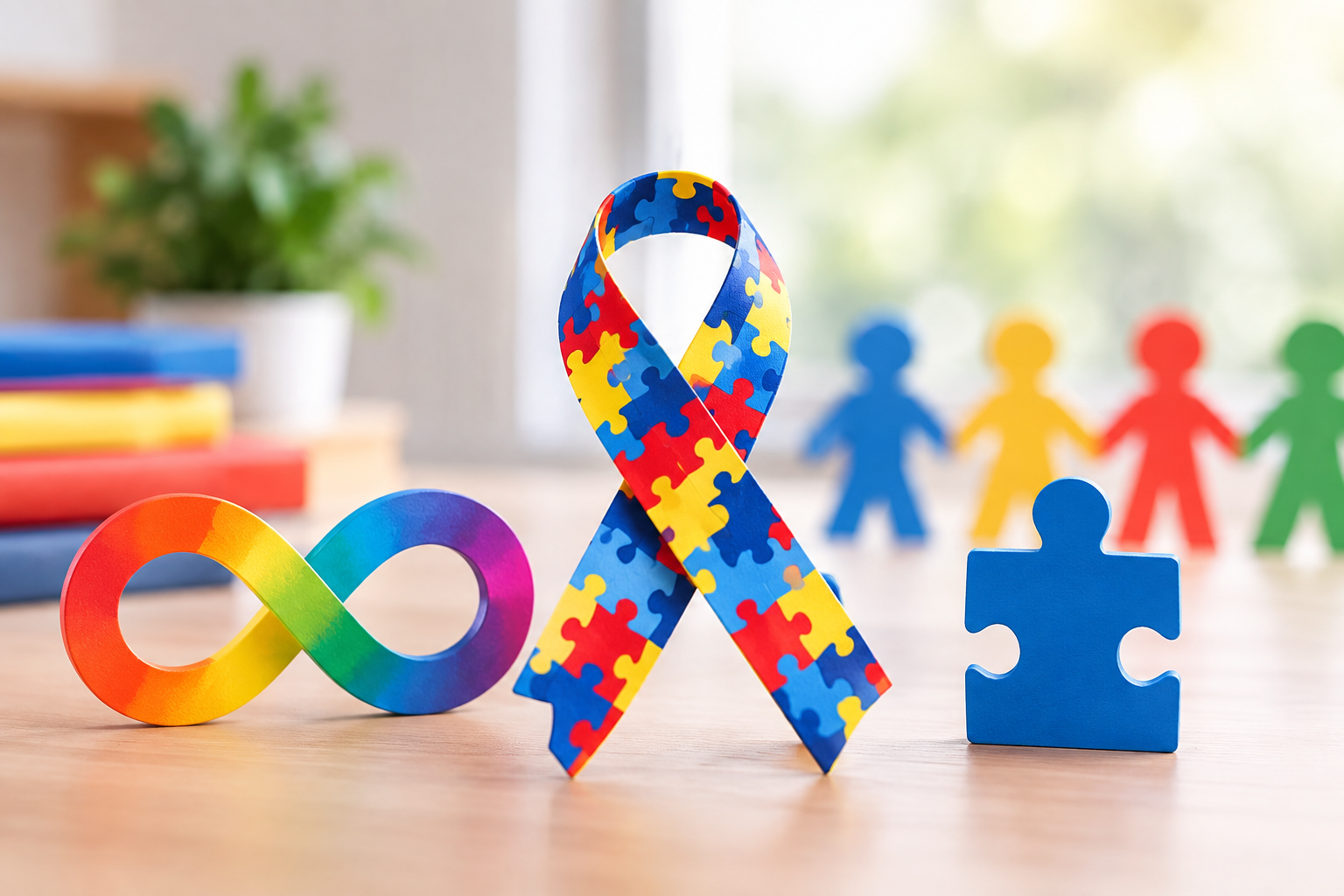
Illustration for understanding autism in adults

What Autism Can Look Like in Adulthood

Common Signs

According to the NHS, the signs of autism in adults can be similar to those seen in children. An autistic adult may:

  • Find social situations tiring or hard to understand
  • Take words literally, including sarcasm and sayings like “break a leg”
  • Like fixed routines and feel anxious when plans change
  • Have deep, focused interests
  • Be sensitive to light, sound, clothing, or temperature

No one has every trait. Autism is called a “spectrum” because each person has different traits, strengths, and support needs (NIMH).

Why Autism Is Sometimes Recognised Later

Many adults go unrecognised for a few reasons.

Masking and coping strategies

Masking and learned coping strategies can hide the signs of autism.

Overlap with other conditions

Autism can overlap with other conditions, or be mistaken for them.

Anxiety, depression, and ADHD

The NHS and NIMH both note that these can make the signs harder to identify.

Getting an Adult Diagnosis

How Assessment Works

  1. Talk to a doctor

    A good first step is to talk to a doctor or another health care provider and ask for a referral.

  2. Get a referral

    According to the NIMH, adults can be referred to a psychologist, psychiatrist, or neuropsychologist who has experience with autism.

  3. Have the assessment

    The specialist usually asks about:

    • Social interaction
    • Communication
    • Interests
    • Sensory experiences
    • Development in earlier life

Methods for assessing adults are still being improved, so it helps to see a clinician with experience in adult autism diagnosis.

Is a Formal Diagnosis Necessary?

Not always. Some people find that understanding themselves is enough. In some places, though, a diagnosis may be needed to get certain services or workplace adjustments. Rules differ by country and employer.

Everyday Life and Support

Autism infinity sign

Autism is not an illness and has no cure (NHS).

Support focuses on making daily life easier and more comfortable.

Depending on the person, support may include:

  • Workplace adjustments

    Such as clear written instructions or a quieter workspace.

  • Planning and organisation

    Help with planning and organising daily tasks.

  • Mental health support

    Support for anxiety or depression that happens alongside autism.

  • Peer groups and communities

    Peer groups and autistic-led communities.

Many autistic people also have strengths (NIMH), such as:

  • Learning details well
  • Strong memory
  • Strong visual or auditory learning

Important Considerations

  • Prevalence

    2.21%

    The CDC estimated that about 2.21% of US adults were autistic, based on 2017 data (CDC). This is an estimate, and many adults remain undiagnosed.

  • Language

    Some people prefer "autistic adult", while others prefer "person with autism". It is respectful to ask.

  • Evolving research

    Research on adult diagnosis and long-term outcomes is still developing.

Not medical advice

This page is for general education and does not replace advice from a qualified professional.

Conclusion

Autism in adults can be subtle, especially when someone has spent years adapting or masking.

Understanding the signs, knowing how assessment works, and having practical support can help autistic adults live in ways that suit them.

Frequently Asked Questions

Can autism be diagnosed in adulthood?

Yes. The NIMH states that autism can be diagnosed at any age, although symptoms generally begin in early childhood.

Why can autism be hard to spot in adults?

Autism in adults can be subtle, especially when someone has spent years adapting or masking. Understanding the signs and knowing how assessment works can help.

Is an online quiz enough to know if I am autistic?

No. Screening tools, such as the AQ-10 mentioned in NICE guidance, can suggest whether further assessment is worthwhile, but only a qualified professional can diagnose autism.

How common is autism in adults?

The CDC estimated that about 2.21% of US adults were autistic, based on 2017 data (CDC). This is an estimate, and many adults remain undiagnosed.

Does autism go away with age?

No. Autism is lifelong. However, how it shows up and what support a person needs can change over time.

What kind of support is available for autistic adults?

Depending on the person, support may include workplace adjustments, help with planning and organising daily tasks, mental health support for anxiety or depression that happens alongside autism, and peer groups or autistic-led communities. Support focuses on making daily life easier and more comfortable.

Should I say "autistic adult" or "person with autism"?

Some people prefer "autistic adult", while others prefer "person with autism". It is respectful to ask.