
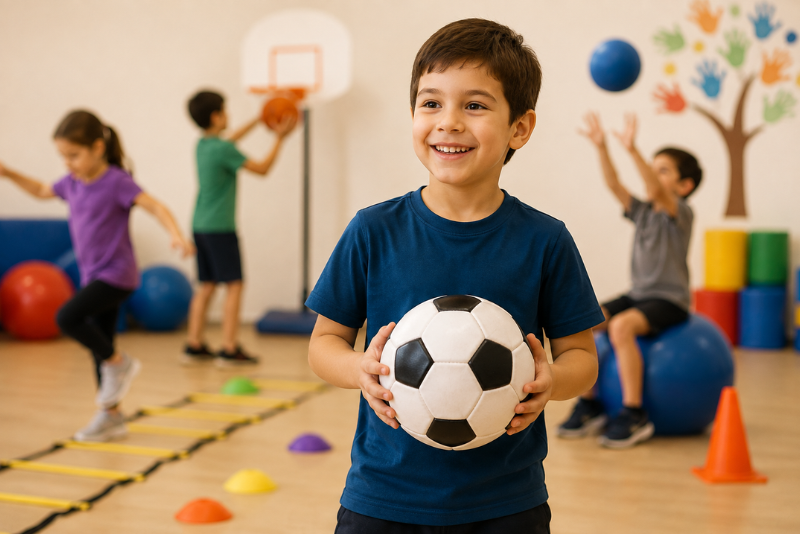
If you’re a parent wondering whether sports could be good for your autistic child, you’re asking the right question at the right time. Movement can offer real, meaningful benefits, but not every sport works for every child, and that’s completely normal. This guide walks through what the research and real families actually say: the benefits, the common challenges, how to choose a sport, and practical tips for getting started.
Why Sports Can Genuinely Help
Physical activity supports every child’s health, but for autistic kids specifically, the benefits often go beyond fitness. Regular movement is commonly linked to:
- Better sleep
- Lower anxiety
- Improved sensory regulation
- Stronger motor coordination and body awareness
- More opportunities to build social skills at a comfortable pace
Sport also creates a natural space to practice things that are hard to teach directly, like waiting a turn, reading body language, or handling the unexpected. These lessons tend to land better through repeated, low-pressure experience than through direct instruction.
For children who experience under- or over-responsiveness to sensory input, certain sports (like swimming, martial arts, or cycling) provide steady, predictable sensory feedback that many families find calming rather than overwhelming.
The Real Challenges Worth Knowing About
Sports aren’t automatically a good fit, and it helps to go in with clear eyes about the common hurdles:
Sensory overload. Loud whistles, echoing gyms, bright lights, and crowded sidelines can be genuinely overwhelming, sometimes triggering distress even when a child is enjoying the activity itself.
Motor coordination differences. Some autistic children experience differences in motor planning or lower muscle tone, which can make fast-paced team sports (like basketball or soccer) more physically demanding and frustrating than individual, self-paced activities.
Social and communication demands. Team sports often require quick verbal processing, reading unspoken social cues, and managing competitive pressure all at once, which can lead to withdrawal or burnout if the pace isn’t right.
Need for routine. Since many autistic kids do best with predictability, the shifting dynamics of practices and games can create anxiety, especially early on.
None of this means sports are off the table. It usually means the right sport, and the right setup, matters more than the sport itself.
Individual Sports Worth Considering
Individual, self-paced activities are frequently recommended as a strong starting point, especially for children who find team environments overwhelming. Common options include:
- Swimming. Low-impact, sensory-soothing, and builds strength and coordination at the child’s own pace.
- Martial arts (karate, judo, taekwondo). Offers structure, repetition, and clear physical boundaries, which many families find genuinely calming.
- Cycling. Builds balance and independence, with the flexibility to go at whatever speed feels comfortable.
- Gymnastics. Focuses on body awareness, strength, and flexibility through structured, repeatable routines.
- Archery. Quiet, methodical, and highly individual, good for kids who prefer a slower, focused pace.
- Horseback riding. Encourages communication and patience through connection with the animal, and is frequently highlighted in autism research for its calming, confidence-building effects.
- Yoga. Supports body awareness and self-regulation without any competitive pressure.
- Bowling. The repetitive, predictable structure appeals to many autistic kids, and leagues offer a gentle, social entry point.
Team Sports That Can Work Well
Team sports aren’t automatically off-limits, some autistic children thrive in them, particularly when the environment is thoughtfully structured. Options that tend to work reasonably well include:
- Soccer. Predictable rules and physical, side-by-side interaction (rather than constant face-to-face communication) can make it more approachable than it first appears.
- Track and field. Offers both individual and team components, so a child can find the format that suits them best.
- Basketball. Structured gameplay can help with motor skills and coordination, though the pace and noise level are worth watching for signs of overload.
If a child is interested in team sports but struggles with the sensory or social demands, smaller teams, quieter practice times, or recreational (non-competitive) leagues are often a gentler way in.
How to Choose the Right Sport for Your Child
There’s no single “best” sport for autistic kids, the right choice depends entirely on the individual child. A few questions can help guide the decision:
- What does your child already enjoy? Existing interest, even in something adjacent (like water play leading to swimming), is one of the strongest predictors of engagement.
- Individual or team? If your child finds group dynamics stressful, start individual. If they crave connection and structure, a well-run team sport might be a great fit.
- What are their sensory needs? Consider noise levels, lighting, physical contact, and textures involved in the sport or its equipment.
- Is the environment adaptable? Look for coaches or programs willing to make small adjustments, like quieter settings, visual schedules, or a “cool-down” space if things get overwhelming.
Talking to your child’s occupational therapist, pediatrician, or another professional who knows them well can also help narrow things down, especially if you’re unsure where to start.
Making Sports More Accessible
A few simple adjustments can make a big difference in how comfortable and successful a sport feels for an autistic child:
- Visit the location and meet the coach beforehand. Familiarity reduces first-day anxiety significantly.
- Use visual aids or social stories to explain what to expect during practices or games.
- Ask about sensory accommodations, like noise-dampening equipment, adjusted lighting, or a designated space to decompress if needed.
- Practice basic skills at home first, so the child arrives with some confidence already built.
- Give it time. Many families find that gradual exposure, often over six to eight weeks, works far better than expecting comfort right away. Focus on enjoyment and participation rather than performance early on.
A Few Honest Reminders
- Every autistic child is different. What works wonderfully for one child may not suit another, and that’s not a failure of the child or the sport, it’s just individual variation.
- Let your child lead. If a sport consistently causes distress, it’s okay to try something else. There’s no “right” sport every autistic child should be doing.
- Progress doesn’t have to look competitive. For many families, the real win is comfort in movement, a bit more confidence, and maybe a new friend, not trophies.
- This is general guidance, not a treatment plan. If your child has specific sensory, motor, or medical needs, it’s worth looping in their therapist, pediatrician, or another qualified professional before starting a new activity.
This article draws on general information and recommendations commonly shared across autism-focused resources and research, reworded here for informational purposes. It isn’t medical advice, if you have questions specific to your child, a pediatrician, occupational therapist, or developmental specialist is the best next step.