
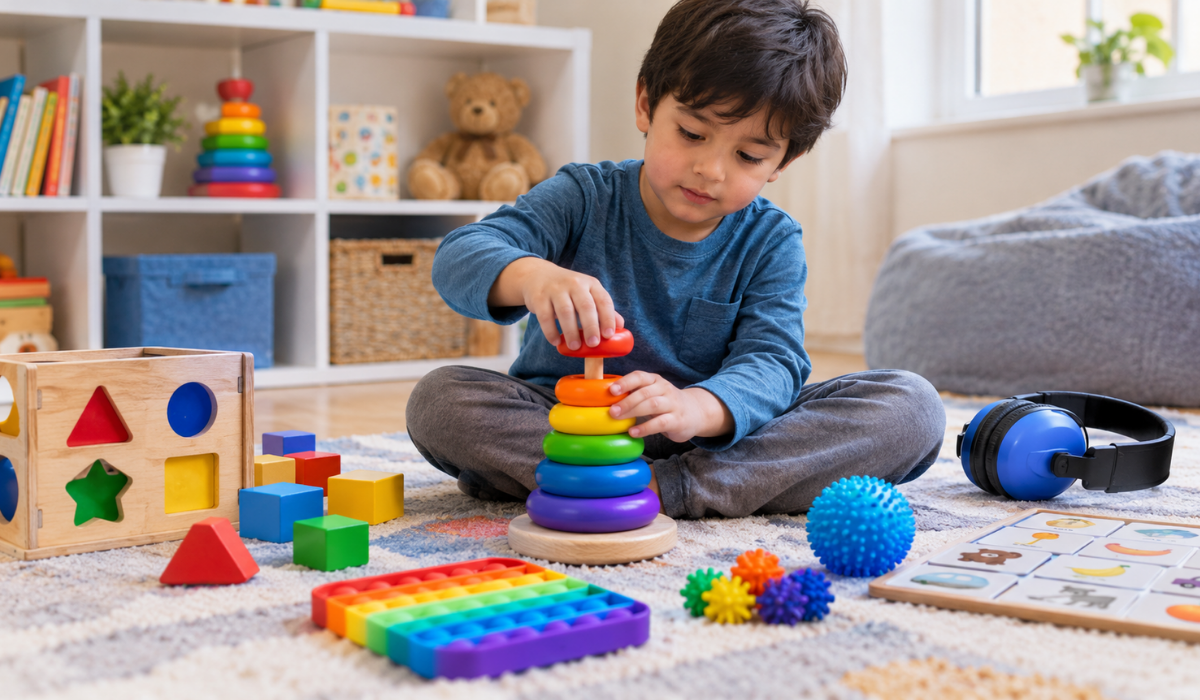
Choosing toys for a young child can be confusing, and it can feel even harder when your child has autism. Some children love spinning objects, while others cover their ears at the sound of a toy piano. Some want to be left alone with a puzzle, and others are just beginning to notice what other children are doing.
This guide covers the best toys for preschoolers with autism, grouped by the needs they support. Instead of a fixed list, it shows you how to match a toy to your child’s interests, comfort level, and stage of development.
Why Toy Choice Matters for Preschoolers With Autism
For preschoolers, play is how they learn. Through play, children practice using their hands, understanding cause and effect, and communicating. They also begin to learn what other people do and feel.
Autistic children often play differently. They may line up cars instead of driving them, repeat the same action many times, or prefer objects to people. These are differences in play style, not wrong ways to play.
The right toy gives a child something enjoyable to work with. It can also give parents, caregivers, and therapists an easy way to join in. The wrong toy, such as one that is too loud, too complicated, or too frustrating, can lead to stress and a child who walks away.
What to Look for Before You Buy
No toy is perfect for every autistic child, because autism looks different in every person. Before buying, think about these points:
- Your child’s interests. A child who loves trains is more likely to engage with a train set than a toy you picked for its learning value.
- Sensory preferences. Does your child seek out textures, movement, or sounds? Or do they avoid them?
- Developmental level. A toy should be slightly challenging, not far beyond what your child can do right now.
- Safety. Preschoolers may still mouth objects, so check for small parts, loose pieces, or sharp edges.
- Durability. Some children throw, bang, or squeeze toys. Sturdy toys last longer and are safer.
- Open-ended use. Toys that can be used in many ways, such as blocks, grow with your child.
Watching your child play for a few days will tell you more than any product list.
Best Toys for Preschoolers With Autism by Need
Sensory Toys
Many autistic children seek or avoid sensory input, so sensory toys are a common starting point. They give children safe ways to explore touch, sight, and sound.
Good options include:
- Playdough, kinetic sand, or soft clay
- Water play tables or bins with scoops and cups
- Textured balls and squishy toys
- Sensory bins filled with rice, dried pasta, or beans (with supervision)
- Light-up toys with soft, gentle effects
If your child dislikes messy textures, start small. Offer a tool such as a spoon or tongs first, so they can explore without touching the material directly. Never force contact, since pushing a child can create a stronger dislike.
Communication and Language Toys
Some preschoolers with autism are still building speech or using other ways to communicate. Toys can create natural moments for a child to ask, point, or say a word.
Helpful choices include:
- Picture cards and simple matching games
- Cause-and-effect toys, such as pop-up toys or toys with buttons
- Toy phones, play food, and play kitchens
- Animal or vehicle sets that go with sounds (“moo,” “vroom”)
- Simple picture books with real photos
Toys work best for language when an adult plays too. Name what your child is doing, repeat words in a simple way, and pause so your child has time to respond. A speech-language therapist can suggest toys that fit your child’s goals.
Fine Motor Toys
Fine motor skills use the small muscles of the hands and fingers. They are needed for later tasks such as holding a crayon, using buttons, and eating with utensils.
Toys that help include:
- Chunky wooden puzzles with knobs
- Stacking cups and rings
- Large lacing beads and threading cards
- Building blocks and interlocking bricks
- Pop beads and peg boards
- Child-safe scissors with paper to cut
Puzzles and stacking toys also appeal to children who like order and patterns, which many autistic children do. Choose a level that gives your child a small win. If a toy is too hard, they may give up quickly.
Gross Motor Toys
Movement toys help children build balance, strength, and coordination. They also give children a healthy outlet for energy, and many autistic children enjoy deep, rhythmic movement.
Consider:
- Ride-on toys and balance bikes
- Small indoor trampolines with a handle
- Tunnels and soft climbing blocks
- Balls of different sizes
- Swings, either at the playground or indoors
- Bean bags for tossing
Swinging, rocking, and bouncing are often calming. An occupational therapist can explain which kinds of movement may suit your child.
Social and Pretend Play Toys
Pretend play is often a developing skill for autistic children, and it may appear later or look different. Toys can support it, but your child should not feel pressured.
Useful toys include:
- Dolls, stuffed animals, and doctor kits
- Play kitchens and toy food
- Toy cars, trains, and garages
- Dress-up items, such as hats or capes
- Simple board games that take turns, such as a basic matching game
- Bubble machines and bubble wands, which encourage eye contact and turn-taking
Start by copying what your child does with a toy, then add one small idea. If they push a car back and forth, you can make the car “stop at a house.” Over time, this can slowly expand play. Turn-taking games, even very simple ones such as rolling a ball back and forth, help build social skills in a low-pressure way.
Calming Toys
Preschoolers get overwhelmed, and autistic children may find it harder to calm down in busy environments. Calming toys can offer comfort and a way to regulate.
Options include:
- Weighted stuffed animals (always check weight guidelines for the child’s age and size, and talk to a professional first)
- Fidget toys that are quiet and safe
- Liquid timers or glitter bottles
- Soft blankets or textured pillows
- Chewable sensory toys made for children who mouth objects
Keep a calm-down corner at home with a few of these toys, so your child has a familiar place to go when things feel like too much.
Toys to Be Careful With
Not every toy marketed to children with autism is a good fit, and some popular toys may not suit your child. Be careful with:
- Toys with loud or sudden sounds, which can be upsetting for children with sound sensitivity.
- Flashing, rapidly changing lights, which can be overstimulating.
- Toys with many small parts, which can be a choking hazard.
- Toys that claim to “treat” or “cure” autism. No toy can do this.
- Screen-based toys used in place of interaction, since these may limit real-world play.
If a toy has a volume control or an off switch, that is a helpful feature.
How to Introduce a New Toy
Even a well-chosen toy can be rejected if it is introduced too quickly. A few simple steps can help:
- Introduce one toy at a time. Too many new items can feel like too much.
- Let your child explore first. Sit nearby and watch without directing.
- Join in gently. Copy what your child does before showing something new.
- Keep sessions short. Five to ten minutes of focused play is often enough.
- Rotate toys. Keep a small set out and swap them every week or two to keep interest fresh.
- Follow your child’s lead. If a toy is used differently than intended, that is fine. Lining up blocks still builds skills.
If a toy is refused, put it away and try again in a few weeks. Interests and sensory comfort often change as children grow.
Conclusion
The best toys for preschoolers with autism are the ones your child enjoys, can use safely, and can learn from. Sensory toys, language toys, fine and gross motor toys, pretend play items, and calming tools can all be useful, depending on your child’s needs. You don’t have to buy everything. A few well-chosen toys, introduced slowly and played with together, often do more than a room full of options.
Pay attention to your child’s reactions, stay flexible, and involve their therapists or pediatrician when you have questions. Play should feel good for your child, and that is the best guide for choosing any toy.
Frequently Asked Questions
Are sensory toys good for preschoolers with autism?
Sensory toys can be helpful for many autistic preschoolers because they offer safe ways to explore touch, sound, and movement. Every child reacts differently, though. Watch how your child responds, and choose toys that feel enjoyable and calming rather than overwhelming or upsetting.
What toys help autistic preschoolers develop language?
Picture cards, simple cause-and-effect toys, farm or animal sets, and play kitchens can encourage words and sounds. Play alongside your child, name objects, and pause so they can respond. Toys work best when an adult joins in and models simple language.
Should I buy electronic toys for my autistic child?
Electronic toys are not off-limits, but choose carefully. Bright lights, loud sounds, and repeated tunes can overwhelm some children. Look for toys with volume control or an off switch, and prefer ones that encourage interaction instead of passive watching. Open-ended, simple toys often work better.
What if my child only plays with one toy or lines things up?
Repetitive play is common in autism and often feels calming or organized to the child. You don’t need to stop it. Join in gently, then add small changes, such as a new object or action, to slowly widen play. If you have concerns, consider talking to a therapist.
How many toys should a preschooler with autism have at once?
Fewer is usually better. Too many choices can feel overwhelming and make it harder to focus. Keep a small set of toys out, store the rest, and rotate them every week or two. This keeps play fresh and helps your child engage more deeply.
Disclaimer: The information on AutismCue is for general educational purposes only and is not a substitute for professional medical, therapeutic, or educational advice. Every child with autism is different. Please consult your child’s doctor, therapist, or other qualified professional before making decisions about your child’s care, play, or sensory needs.
Pingback: How Do Autism Biting Toys Support Sensory Needs?