
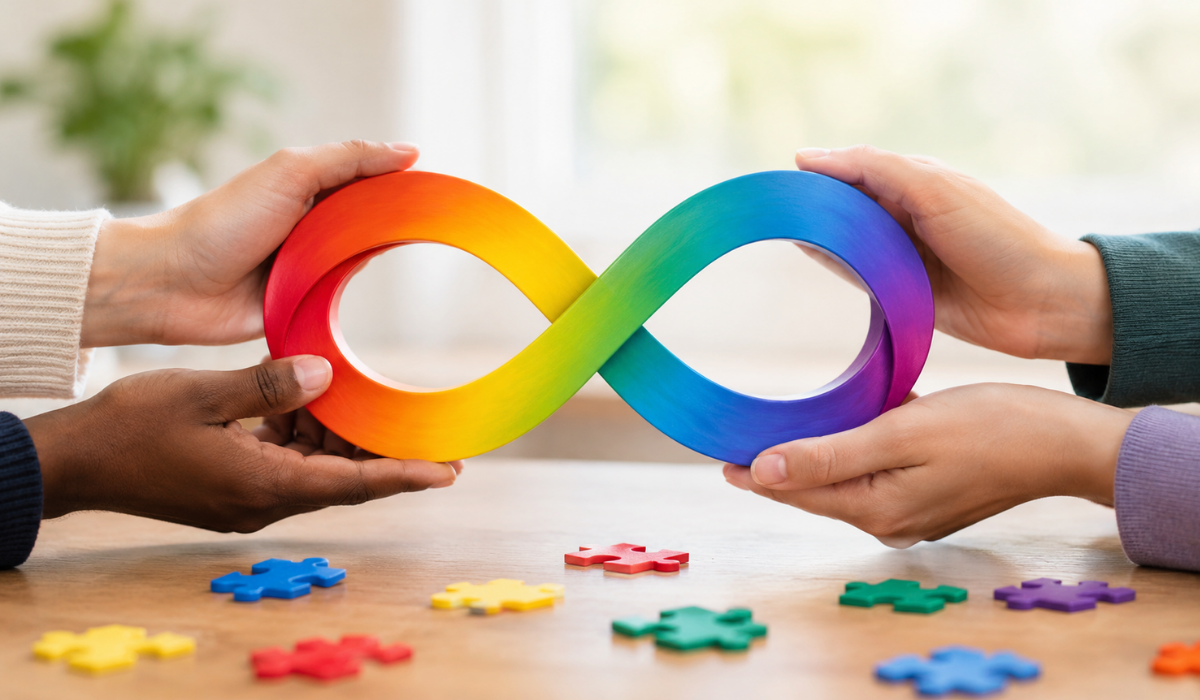
If you’ve spent time around autism communities online, you’ve probably seen a colorful, sideways figure eight on shirts, stickers, profile pictures, and awareness posts. That is the autism infinity sign. It looks simple, but it carries a lot of meaning for many autistic people and their families.
This article explores the meaning of the autism infinity sign, its origins, its connection to neurodiversity, and why many people prefer it over older autism symbols.
What Is the Autism Infinity Sign?
The autism infinity sign is the infinity symbol (∞) used as an emblem for autism acceptance and neurodiversity. It is usually shown in one of two ways:
- Rainbow infinity: A multicolored infinity symbol representing the wide range of autistic people and their experiences.
- Gold infinity: a gold-colored loop, linked to the chemical symbol for gold, “Au,” which also happens to be the first two letters of the word autism.
You may also see red or other colored versions, which some autistic advocates use in their own campaigns. There is no single rulebook, and that fits the spirit of the symbol. No one organization owns it, and it grew out of the autistic community itself.
Why an Infinity Symbol?
The infinity shape has no beginning and no end. The line loops forever without a break. People who use the symbol say this reflects a few ideas:
- Endless variety. No two autistic people are alike. Some speak, some don’t. Some need a lot of daily support, and others need very little. The loop suggests there are countless ways to be autistic.
- Lifelong identity. Autism is not a phase or an illness that comes and goes. It is part of how a person’s brain works from birth through old age.
- Unlimited potential. The symbol sends a hopeful message that autistic people are not defined by a list of limits.
It’s worth saying that the symbol’s meaning comes from the people using it. There is no single documented moment when someone invented the autism infinity sign. It spread gradually through autistic-led spaces, social media, and advocacy groups, which is why you’ll find slightly different versions and explanations.
The Link Between the Infinity Sign and Neurodiversity
To understand the symbol, it helps to understand the word neurodiversity.
Neurodiversity is the idea that human brains naturally work in different ways, just as people differ in height, eye color, or personality. The term gained wider recognition in the late 1990s, with sociologist Judy Singer often credited with helping bring it into broader use. Under this view, conditions like autism, ADHD, and dyslexia are seen as natural variations of the human mind, not simply as defects to be repaired.
This doesn’t mean that life with autism is always easy. Many autistic people face real challenges with communication, sensory overload, anxiety, or daily living, and some need significant support. Neurodiversity doesn’t ignore those needs. It says that support and acceptance matter more than trying to make someone “normal.”
The rainbow infinity sign puts that idea into a picture. The many colors stand for many types of minds. The unbroken loop says that all of these minds belong in the same shared world.
The Rainbow Infinity vs. the Gold Infinity
The two versions share a shape but emphasize slightly different messages.
The rainbow infinity is the most common. It celebrates diversity within the autism spectrum and is often used for neurodiversity as a whole, not just autism. Because it covers a wide range of people, it is popular on flags, pins, and social media graphics.
The gold infinity is more specific to autism. Gold has long been a color tied to value and worth, so many users like the message that autistic people are valuable exactly as they are. The “Au” connection also makes it a clever, easy-to-remember symbol. Some autistic adults like it because it feels more personal and less crowded than the rainbow version.
Neither one is the “correct” choice. People simply pick the one that feels right to them.
The Puzzle Piece and Why Some People Moved Away From It
You can’t talk about the autism infinity sign without mentioning the puzzle piece, the symbol it is most often compared with.
The puzzle piece was introduced in 1963 by a parent associated with the National Autistic Society in the United Kingdom. The original idea was that autism is puzzling or hard to understand. Over the decades, the symbol spread worldwide and became the most recognized autism image, appearing on ribbons, charity campaigns, and awareness materials.
Over time, though, many autistic adults began to speak up about how the puzzle piece made them feel. Their concerns include:
- It can suggest that autistic people are “puzzles” to be solved rather than people to be understood.
- A puzzle piece implies something is missing or incomplete.
- It has often been used in campaigns led by non-autistic people, with little input from autistic voices.
Because of this, many in the self-advocacy community looked for something that felt more positive and more representative. The infinity sign became one of the most popular answers.
It would be unfair to say everyone agrees, though. Some autistic people and many families still feel connected to the puzzle piece and see it as a symbol of community and awareness. Both views exist, and respect for both is the best approach.
How the Infinity Symbol Is Used Today
The autism infinity sign shows up in many everyday places:
- Autism Acceptance Month: Observed in April, when many people share rainbow or gold infinity graphics.
- Autistic Pride Day: Observed on June 18, with the rainbow infinity symbol often featured in celebrations.
- Clothing and accessories: T-shirts, bracelets, badges, lanyards, and stickers.
- Social media: Profile frames, bios, and posts that signal “I support neurodiversity” or “I’m autistic.”
- Schools and workplaces: Posters or lanyards that tell neurodivergent people they are welcome.
For many autistic people, wearing the symbol can be a simple way to express their identity without having to explain it. For parents and allies, it is a way of showing they stand with the community.
Is the Autism Infinity Sign an Official Symbol?
No. There is no single, universally official symbol for autism. The puzzle piece remains the best-known one, especially among large organizations and older awareness campaigns. The infinity sign is more of a community-chosen symbol, strongest among self-advocates, autistic adults, and groups that support neurodiversity.
This matters because it shows the difference between a symbol assigned to a group and one chosen by a group. Many people feel that is exactly why the infinity sign carries weight. It came from inside the community.
Using the Symbol Respectfully
If you are an ally, parent, teacher, or friend, here are a few simple ways to use the autism infinity sign thoughtfully:
- Listen first. Notice which symbols and words autistic people in your life prefer, and follow their lead.
- Don’t speak over autistic voices. A symbol should support autistic people, not replace their stories.
- Remember that support matters. A symbol on a T-shirt is a start, but real acceptance means patience, accommodations, and understanding in daily life.
- Avoid treating it as a trend. For many people, the symbol is closely connected to their identity, so it’s important to use it thoughtfully.
- Respect different opinions. Some autistic people prefer the puzzle piece, others prefer the infinity symbol, while some prefer not to use either. All of those views are valid.
Limits and Honest Criticisms
No symbol can capture everything about autism, and the infinity sign is no exception. Some people point out that “infinity” and “rainbow” are broad ideas, so the symbol can feel vague or may be used by brands for decoration without any real commitment to autistic people. Others worry that focusing on pride and diversity can overshadow people with high support needs, whose daily struggles are serious and deserve attention.
These are fair concerns. A good way to think about it is that the autism infinity sign is a starting point for a conversation about acceptance, not a complete answer to the challenges autistic people face.
Final Thoughts
The autism infinity sign is a small design with a big message: autistic people are diverse, valuable, and part of the natural range of human minds. Its looping shape reflects endless variety, while the rainbow and gold versions highlight diversity and worth.
It grew from the autistic community, which is a big part of why it resonates. At the same time, it lives alongside other symbols like the puzzle piece, and people will keep having different feelings about them. What matters most is listening to autistic people, respecting their choices, and turning symbols into real understanding and support.
FAQs
What does the autism infinity sign mean?
The autism infinity sign stands for the wide, endless variety of autistic people and for neurodiversity. Its looping shape suggests no fixed beginning or end, which reflects the idea that autism is a natural part of human diversity rather than something to be fixed or cured.
Is the infinity symbol officially recognized as the autism symbol?
No single official symbol exists. The puzzle piece is still the most widely recognized, especially among large organizations, while many autistic self-advocates prefer the rainbow or gold infinity. Which symbol people choose often depends on their own experience and community.
Why do some autistic people dislike the puzzle piece?
Some people feel the puzzle piece can imply that autistic people are incomplete, difficult to understand, or something that needs to be fixed. Critics say it frames autism as something missing rather than a different way of thinking. Others still find it meaningful, so opinions within the community differ.
What does the gold infinity symbol mean?
The gold infinity symbol uses gold as a reference to Au, the chemical symbol for gold, and the first two letters of “autism.” Combined with the infinity loop, it represents pride in being autistic and the idea that autistic people have real worth and value, just as they are.
Can non-autistic people use the infinity symbol?
Yes. Allies, parents, teachers, and friends can use it to show support for neurodiversity and acceptance. It helps to listen to autistic voices, use the symbol respectfully, and avoid speaking for autistic people or turning the symbol into a trend.
Disclaimer: The information in this article is for general educational purposes only and is not medical, psychological, or professional advice. Autism affects every person differently. For personal concerns about diagnosis, therapy, or support, please consult a qualified healthcare professional.
Pingback: What Are the Common Anxiety Symptoms in Autism