
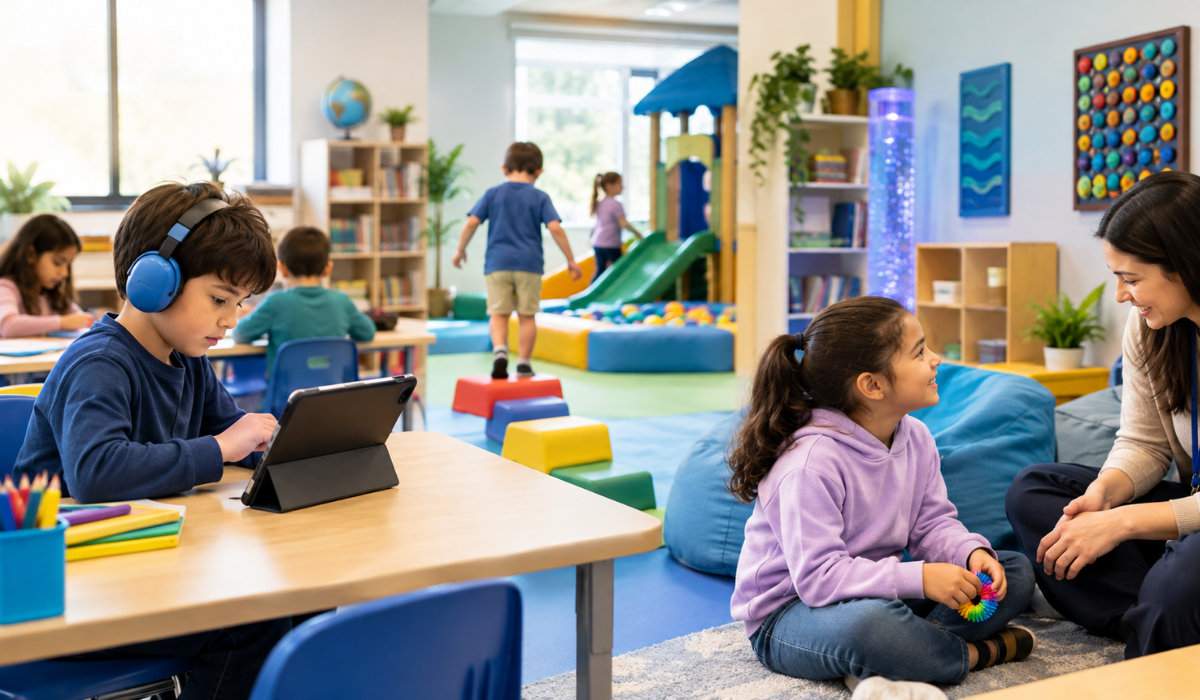
The place for children with autism is one that keeps sensory input low, follows predictable routines, and has patient, trained adults. This can be a school, a play area, or a support center. The best match depends on your child’s needs, not on a label or a brand name.
Why the Right Environment Matters
Every autistic child is different. One child may love loud music and crowds, while another may feel overwhelmed by a buzzing light. Because of this, the space a child spends time in can change how they learn, play, and feel.
The CDC estimates that about 1 in 31 children in the United States is identified with autism spectrum disorder. Families everywhere are looking for safe and understanding spaces. When a place fits a child well, the child is calmer and more willing to try new things. When it doesn’t, even a simple outing can end in stress.
Creating a suitable space for autistic children is less about special facilities and more about making thoughtful adjustments to everyday surroundings. Let’s look at what those details are.
What Makes a Place Autism-Friendly?
Most autism-friendly spaces share a few common features:
- Sensory control. Soft lighting, low background noise, and few strong smells.
- Predictability. Clear routines, posted schedules, and warnings before changes.
- Quiet space. A corner or room where a child can pause and reset.
- Visual support. Pictures, signs, and step-by-step cards that make instructions easier to follow.
- Trained, patient staff. Adults who understand that meltdowns are not bad behavior, and who stay calm when they happen.
- Flexibility. Permission to move, fidget, wear headphones, or take breaks.
If a place has most of these, it is likely to work well for many autistic children, though not every child.
Autism-Friendly Schools
An autism-friendly school takes up a big part of a child’s day, so this choice matters most for many families. In general, there are three paths.
Mainstream Schools With Support
Some autistic children do well in regular classrooms when they get the right help. This may include a classroom aide, extra time on tasks, a quiet space, or a written support plan. In the US, this is often an Individualized Education Program (IEP). Other countries use different names, but the idea is the same: a written plan built around the child.
Special Education Programs
These classes are smaller and led by teachers trained in special education. They often use visual schedules, structured routines, and therapy goals within the school day.
Specialized Autism Schools
These schools are designed only for autistic students. Classrooms are usually built with sensory needs in mind, and therapists such as speech and occupational therapists may work on site.
What to Check When Visiting a School
Seeing a classroom in action tells you more than any brochure. Try to notice:
- How Can Teachers Comfort Children When They Feel Upset?
- Is the room cluttered or calm?
- Are there visual schedules on the walls?
- How does the school communicate with parents?
- What is the class size, and how many adults are present?
- How are children included in lunch, recess, and group activities?
Don’t be afraid to ask how staff are trained. A good school will answer openly.
Autism-Friendly Play Areas
Play is how children learn about the world, so a good play space is more than a fun extra. Many autistic children enjoy play but find regular playgrounds hard because of noise, crowds, and unpredictable movement.
Features of a Good Play Area
- Separate zones. Quiet corners away from the busiest equipment.
- Different types of play. Swings, climbing, sand, water, and calm sensory activities.
- Clear boundaries. Fenced edges help keep children safe, especially those who tend to wander.
- Shade and soft surfaces. These reduce heat and sudden impact.
- Simple layout. Easy-to-see entrances and exits.
Some communities now offer sensory-friendly hours at indoor play centers, museums, cinemas, and trampoline parks. During these sessions, lights are dimmed, music is turned down, and fewer people are allowed in. Check with local venues to see if they offer such times.
Tips for Visiting Play Areas
- Go at quiet times. Weekday mornings are usually quieter and less crowded.
- Preview the place. Look at photos or videos together before you go.
- Pack comfort items. Headphones, a favorite toy, or a small snack can help.
- Point out the exit and quiet spot. Knowing where to go gives children a sense of control.
- Keep it short. A brief, enjoyable visit is often more helpful than a long and overwhelming one. Short, successful visits build confidence over time.
Autism Support Centers
Support centers are places where children receive therapy and where parents get guidance. Many families use them alongside school.
Common Services
- Speech and language therapy. Supports the development of speech, language comprehension, and other communication skills.
- Occupational therapy. Works on daily skills such as dressing, writing, and handling sensory needs.
- Behavioral therapy. Builds learning, social, and coping skills. Approaches vary, so ask what methods a center uses and why.
- Social skills groups. Give children a safe setting to practice sharing, turn-taking, and conversation.
- Parent training. Helps families learn practical techniques they can use in everyday home life.
- Early intervention. Programs for toddlers and preschoolers, often started soon after a developmental concern is noticed.
Questions to Ask a Support Center
- What are the qualifications of the therapists?
- Is the therapy plan written individually for each child?
- How often are progress reviews held?
- Can parents watch or take part in sessions?
- How does the center respect the child’s comfort and consent?
- What are the costs, waiting times, and insurance options?
A good center will welcome these questions and explain its approach clearly. Be cautious of any place that promises a “cure” or guarantees fixed results. Autism is a lifelong difference, and good support focuses on helping a child grow, communicate, and feel comfortable as themselves.
Other Places That Can Be Autism-Friendly
Not every helpful space is formal. Many children also feel comfortable in:
- Libraries. Quiet, orderly, and often running sensory story times.
- Parks and nature trails. Open space with fewer demands.
- Swimming pools. Water can be calming for many children, especially at quieter hours.
- Sensory rooms. Found in some hospitals, airports, and community centers.
- Dental and medical clinics. Some now offer longer appointments or sensory-aware care.
It helps to call ahead and ask what adjustments a place can make. Many people are willing to offer support when they understand your child’s needs.
How to Choose the Right Place for Your Child
Use these steps as a simple guide:
- Start with your child. Write down their strengths, triggers, interests, and communication style.
- Make a short list. Include schools, therapy centers, and play spaces within a reasonable distance.
- Visit in person. Go at a normal time, not only at a planned tour.
- Observe how adults respond. Kind, calm reactions matter more than fancy equipment.
- Talk to other parents. Local parent groups often share honest and practical feedback.
- Try before you commit. A trial day or short visit can show whether the fit is right.
- Review often. Needs change as children grow, so a good choice today may need adjusting later.
Preparing Your Child for a New Place
Change can be hard for many autistic children. Taking a few simple steps beforehand can make a big difference:
- Use a social story or simple picture book that shows what will happen.
- Visit once without any activity, just to look around.
- Share a visual schedule for the day.
- Practice what to say or do if your child needs a break.
- Tell staff in advance about triggers, calming methods, and how your child communicates.
Afterward, talk about what went well. Celebrating small wins helps your child feel more positive about the next visit.
A Note for Parents
It’s normal to feel unsure when searching for the right place. You may visit several before one feels right, and that’s okay. You know your child best. Trust your observations, ask questions, and don’t settle for places where your child is not treated with respect.
The ideal place for children with autism is one where they are accepted as they are, supported where they need help, and given room to enjoy being a child.
Frequently Asked Questions
What is an autism-friendly place for children?
An autism-friendly place is a space that reduces sensory overload, uses clear routines, and trains staff to understand autistic behavior. It offers quiet areas, visual guides, and patient communication, so children feel safe, understood, and able to take part at their own pace.
How can you choose the right school for a child with autism?
There is no single best school. The right choice depends on your child’s communication, learning, and sensory needs. Options include mainstream classes with support, special education programs, and specialized autism schools. Visit each one, observe classrooms, and review the support plan before deciding.
How can I make a public play area easier for my autistic child?
Visit during quiet hours, preview photos or videos beforehand, and bring familiar items like headphones or a favorite toy. Help your child identify the exit and find a quiet place to relax. Keep the first visit short and leave on a good note. Short, successful visits build confidence over time.
What services do autism support centers offer?
Most centers offer speech therapy, occupational therapy, behavioral support, social skills groups, and parent training. Some also provide early intervention, school guidance, and sensory rooms. Services vary by location, so check each center’s programs, staff qualifications, and waiting times before enrolling.
When should parents seek help for an autistic child?
Seek an evaluation as soon as you notice differences in speech, eye contact, play, or social response. Early support helps, but it’s never too late. Talk to your pediatrician, request a developmental screening, and begin looking at local support options while you wait for results.
What should I look for in a sensory-friendly space?
Look for soft lighting, low noise, uncluttered layouts, and a designated quiet area. Staff should respond calmly, allow movement breaks, and avoid forcing eye contact or touch. Easy-to-understand signs and visual routines help children anticipate upcoming activities and feel more comfortable.
Disclaimer: The information on AutismCue (autismcue.com) is shared for general educational purposes only. It is not a substitute for professional medical, educational, or therapeutic advice, diagnosis, or treatment. Every child is different, so please consult a qualified healthcare provider, therapist, or educator about your child’s specific needs.