
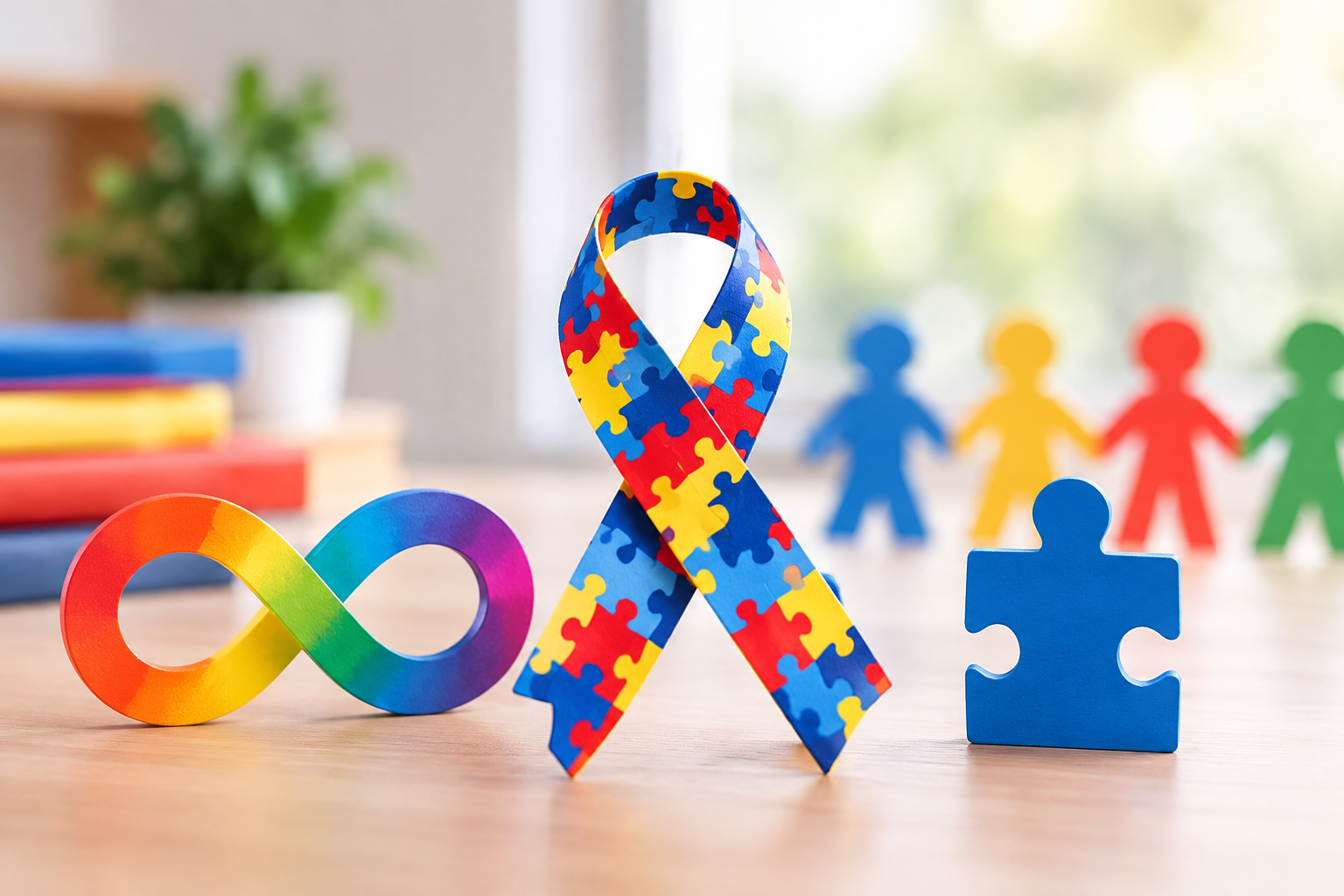
Autism awareness signs and symbols are commonly used to promote understanding, inclusion, acceptance, and visibility for autistic people. In the United States, you may see autism-related symbols in schools, healthcare settings, community organizations, workplaces, public events, and online campaigns.
However, there is not one universally accepted autism awareness sign. Different symbols have developed over time, and their meanings can vary among organizations and autistic people. Understanding that history can help readers recognize the symbols they encounter without assuming that every autistic person or advocacy organization uses or supports the same one.
This guide explains common autism awareness symbols, colors, ribbons, and signs, along with their meanings and how they are used in the US.
What Is an Autism Awareness Sign?
An autism awareness sign is a visual symbol, image, color combination, or emblem used to communicate awareness or information related to autism.
These signs can serve several purposes, including:
- Raising public awareness about autism
- Encouraging acceptance and inclusion
- Identifying autism-related events or organizations
- Supporting educational campaigns
- Communicating that a location or event is intended to be more welcoming or accessible
- Helping people recognize autism-related community initiatives
An awareness symbol does not itself indicate that someone is autistic. It is generally a communication or awareness tool rather than a medical or diagnostic indicator.
Common Autism Awareness Symbols
Several symbols are associated with autism awareness. Their popularity and acceptance have changed over time, so it is useful to understand the differences.
Puzzle Piece
The puzzle piece is one of the most recognizable historical autism symbols. It has been used by various autism organizations and awareness campaigns for decades.
The symbol has sometimes been explained as representing the complexity or mystery historically associated with autism. However, some autistic people and advocacy groups have criticized the puzzle piece because they believe its historical use can suggest that autistic people are incomplete, puzzling, or in need of being “fixed.”
As a result, the puzzle piece can have different meanings depending on the organization or individual using it.
Infinity Symbol
The infinity symbol, particularly the rainbow infinity symbol, has become increasingly associated with neurodiversity and autism acceptance.
The infinity symbol is commonly used to represent the diversity of human brains and neurological differences. Rainbow coloring can represent the broad range of experiences associated with neurodiversity.
Rather than suggesting that autism is a problem that needs to be solved, this symbol is often used in conversations about acceptance, inclusion, and neurodiversity.
Rainbow Infinity Symbol
The rainbow infinity symbol is especially common in neurodiversity communities.
Its use can communicate ideas such as:
- Neurodiversity
- Individual differences
- Acceptance
- Inclusion
- The broad range of ways people experience and express neurological differences
The symbol is not a medical designation and should not be interpreted as an official diagnostic symbol.
What Colors Are Associated With Autism Awareness?
Color is another important part of autism awareness campaigns.
Blue
Blue has historically been strongly associated with autism awareness, particularly through campaigns connected with Autism Speaks and its Light It Up Blue initiative.
Blue may still appear in autism awareness graphics, buildings, clothing, social media campaigns, and community events.
However, the use of blue does not mean that there is an official government-approved autism color. Different organizations and communities use different colors and symbols.
Rainbow Colors
Rainbow colors are frequently associated with the broader neurodiversity movement.
A rainbow infinity symbol, for example, may communicate acceptance of neurological differences and the diversity of autistic experiences.
This approach differs from awareness campaigns that focus primarily on increasing recognition of autism. Neurodiversity-oriented campaigns may place greater emphasis on acceptance, inclusion, accessibility, and respecting individual differences.
Red and Other Colors
Some autism advocates and organizations have used colors other than blue, including red, gold, and rainbow combinations.
Gold has also appeared in autism acceptance campaigns. The use of different colors demonstrates why it is important to consider the organization or community behind an awareness campaign rather than assuming that one color has a universal meaning.
Also read: What Is the Autism Awareness Flag? Meaning, History, Colors & Symbolism
What Does the Autism Awareness Ribbon Mean?
Ribbons are commonly used by health and social awareness campaigns, and autism has also been represented through ribbon designs.
A traditional autism awareness ribbon may incorporate a puzzle-piece pattern and multiple colors. The exact design can vary between organizations.
Today, however, not every autism advocacy group uses a ribbon. Some organizations and autistic advocates prefer the infinity symbol or other representations of neurodiversity.
Therefore, an autism awareness ribbon should generally be understood as an awareness or advocacy symbol rather than an official medical symbol.
Autism Awareness vs. Autism Acceptance
The words awareness and acceptance can represent different approaches.
Autism awareness campaigns generally focus on helping the public understand that autism exists and learning more about autistic people and their experiences.
Autism acceptance campaigns often go further by emphasizing inclusion, accessibility, respect, participation, and recognition of autistic people’s differences.
Neither term automatically describes every organization or campaign using an autism symbol. Readers should look at the organization’s stated goals to understand what a particular campaign represents.
Why Autism Symbols Matter in Healthcare Settings
Visual symbols can have a role in communication and public education, including healthcare environments.
For example, a healthcare organization may use autism-related information to indicate that it provides educational resources or is participating in an autism awareness initiative. However, displaying a symbol alone does not establish that a healthcare facility has specific autism accommodations or services.
Healthcare organizations should communicate accessibility information accurately and avoid implying that a particular symbol represents a medical certification when it does not.
For patients and families, practical information—such as available communication accommodations, sensory considerations, appointment procedures, and accessibility policies—can be more useful than a symbol by itself.
How Should Organizations Use Autism Awareness Signs?
Organizations considering an autism awareness symbol can take several practical steps.
Explain the Meaning
If an organization uses a particular symbol, it can explain what the symbol means and why it was selected.
Avoid Medical Implications
An awareness symbol should not be presented as a diagnostic tool or as evidence that a person has autism.
Provide Practical Accessibility Information
Symbols are most useful when accompanied by meaningful information. For example, a healthcare organization could explain available communication or accessibility options rather than simply displaying an autism-related image.
Use Respectful Language
Autism-related terminology can vary among individuals. Some people prefer identity-first language, such as “autistic person,” while others prefer person-first language, such as “person with autism.”
Organizations can use respectful language and, where appropriate, follow the terminology preferred by the person or community they are communicating with.
Consider the Perspective of Autistic People
Because autism symbols have different histories and interpretations, organizations can review how autistic people and established advocacy groups describe particular symbols before using them in public campaigns.
How Can Readers Interpret an Autism Awareness Sign?
When you encounter an autism awareness sign, consider the context.
Ask:
- Who created or displayed the symbol?
- What does that organization say the symbol represents?
- Is the purpose awareness, acceptance, advocacy, education, or accessibility?
- Does the organization provide practical information about accommodations?
- Is the symbol being used as an awareness image rather than a medical or diagnostic sign?
These questions can help prevent misunderstandings about what a particular symbol means.
Key Takeaways About Autism Awareness Signs
There is no single universal autism awareness sign used by every person, organization, or advocacy group.
The puzzle piece, infinity symbol, rainbow infinity, blue, and awareness ribbons are among the symbols and visual elements associated with autism awareness or neurodiversity. Their meanings can differ depending on the organization and context.
For US healthcare audiences, it is especially important to distinguish awareness symbols from medical or legal designations. A symbol does not diagnose autism, establish disability status, or automatically demonstrate that a healthcare organization provides particular accommodations.
Understanding the history and context of autism symbols can help healthcare organizations, educators, families, and community members communicate about autism more accurately and respectfully.
Frequently Asked Questions
1. What is the most common autism awareness sign?
There is no single universally accepted autism awareness sign. Historically, the puzzle piece has been widely recognized, while the infinity symbol—particularly the rainbow infinity—has become increasingly associated with neurodiversity and autism acceptance.
2. What color represents autism awareness?
Blue has historically been strongly associated with autism awareness campaigns. Other colors, including rainbow combinations and gold, are also used by different organizations and communities. There is no single universally required autism awareness color.
3. What does the autism infinity symbol mean?
The infinity symbol is commonly associated with neurodiversity. A rainbow infinity symbol can represent neurological diversity, acceptance, inclusion, and the broad range of human experiences.
4. Is the puzzle piece still an autism awareness symbol?
Yes, the puzzle piece remains recognizable as an autism-related symbol and is still used by some organizations. However, some autistic people and advocacy groups have criticized its use because of concerns about its historical associations and possible implications about autistic people.
5. Can an autism awareness sign identify someone as autistic?
No. An autism awareness symbol cannot diagnose or identify an individual as autistic. Autism diagnosis requires an appropriate professional evaluation based on established diagnostic criteria and relevant developmental and behavioral information.