
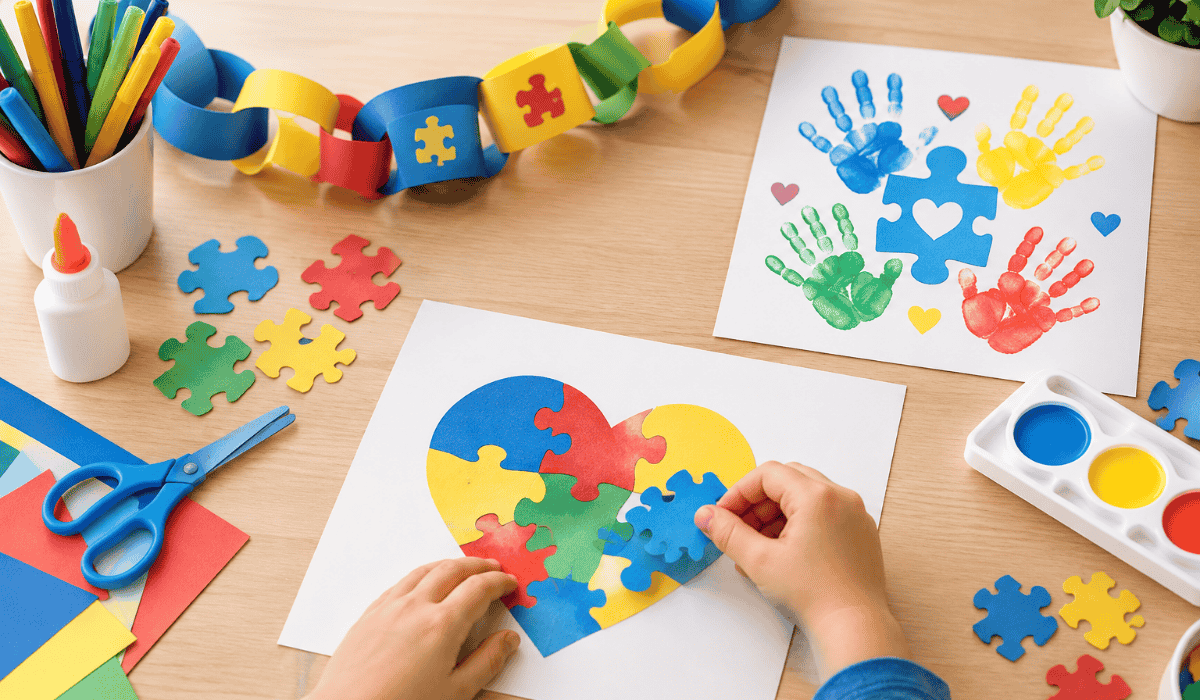
April is Autism Awareness Month (many groups now call it Autism Acceptance Month), and crafts are one of the easiest, most fun ways to mark it with kids, students, or a whole classroom. You don’t need fancy supplies or a big budget. A few simple projects, a little bit of talk about what the colors and symbols mean, and you’ve got an activity that teaches something real while everyone has a good time.
Here’s a simple list of craft ideas you can use at home, in a classroom, or at a community event, plus a bit of background so you know what you’re actually making and why.
Quick Note on Colors and Symbols
Before you dive into crafts, it helps to know what you’re working with:
- Blue used to be the main color tied to autism, from the old “Light It Up Blue” campaign.
- Gold and rainbow colors are now more widely used and preferred by many autistic people, since gold stands for the “Au” in autism (like the chemical symbol) and rainbow represents the full spectrum of autistic experiences.
- The puzzle piece symbol is being phased out by many groups because a lot of autistic people feel it implies something is “missing” or needs to be “solved.” The infinity symbol, especially in rainbow or gold colors, has become the more accepted choice.
- Red is also used by some as “Red Instead,” a nod away from the old blue campaign.
Keep this in mind when picking craft themes. Leaning toward infinity symbols and rainbow or gold colors is a simple way to make your project feel current and respectful.
Craft Ideas for Kids and Classrooms
1. Rainbow Infinity Symbol Painting Draw a large infinity symbol (a sideways figure 8) on paper or poster board. Have kids fill it in with rainbow colors using paint, markers, or tissue paper squares. This works well as a group project too, where each student paints one small section.
2. Handprint Rainbow Art Have each child paint their hand and press it onto a shared poster in a rainbow pattern, arranged in an infinity loop or a simple arc. It’s a nice way to show that everyone’s handprint looks different, just like every autistic person’s experience is different.
3. Paper Plate Sensory Wheels Autistic kids often experience the world through touch, sound, and texture in unique ways. Turn a paper plate into a spinning “sensory wheel” with different textured materials glued around the edge, like cotton balls, sandpaper, felt, and bubble wrap. It’s a hands-on way to talk about sensory differences.
4. Rainbow Infinity Bracelets or Friendship Bracelets Using beads or embroidery thread in rainbow colors, kids can make simple bracelets shaped or patterned after the infinity symbol. These make great take-home items for an awareness event or fundraiser.
5. “What Makes You, You” Collage Give each child a blank outline of a puzzle-free shape (a circle, star, or infinity loop) and have them fill it with pictures, words, or drawings representing their own interests and strengths. This ties into the acceptance message: everyone is different, and that’s something to celebrate, not “fix.”
6. Autism Acceptance Posters Have kids design their own posters using markers, paint, or collage materials, with messages like “Different, Not Less” or “Celebrate Every Mind.” Display them around the classroom or school hallway during April.
Craft Ideas for Teens and Adults
7. Painted Rocks Paint rocks with rainbow infinity symbols or simple encouraging words and leave them around a park, school, or neighborhood for people to find. It’s a low-cost, low-mess project that still spreads a visible message.
8. Tie-Dye Shirts Tie-dye is naturally rainbow-colored and works well for a group activity at a school or community event. Add an infinity symbol using fabric paint once the shirt is dry for an extra Autism Acceptance Month touch.
9. DIY Awareness Pins or Buttons Using a button maker or simple felt and fabric glue, create small pins with the rainbow or gold infinity symbol. These are easy to hand out at events, schools, or workplaces.
10. Sensory Bottles Fill clear plastic bottles with water, glitter, glycerin, and small beads or sequins, then seal them shut. These calming bottles are often used as a sensory tool, and making them together is a great way to start a conversation about sensory regulation and self-soothing strategies that some autistic people use.
Craft Ideas for Community Events or Fundraisers
11. Community Infinity Mural Set up a large blank infinity symbol outline on a wall, banner, or canvas at a school or community event, and invite people to paint or place a handprint inside it throughout the day. By the end, you have a colorful group piece that represents the whole community coming together.
12. Puzzle-Free Quilt Squares If your group wants a lasting project, have participants each decorate a fabric square (paint, fabric markers, or iron-on transfers) with their own design representing acceptance or inclusion, skipping the puzzle piece shapes some groups now avoid. Sew or tape the squares together into one big quilt or banner to display.
A Few Simple Tips
- Keep instructions short and use pictures or examples, since not every child processes verbal instructions the same way.
- Offer a quiet space or noise-reducing headphones nearby if you’re doing a group craft event, in case anyone needs a sensory break.
- Let kids opt out of messy textures (like glue or paint) if they don’t like the feeling on their hands, and offer gloves or tools as an alternative.
- Pair each craft with one simple, honest fact about autism appropriate to the age group, rather than vague slogans. Kids remember specifics better than generic phrases.
Wrapping Up
Crafts are a simple way to bring Autism Awareness and Acceptance Month into a classroom, home, or community space without needing a big budget or a lot of prep time. Whether it’s a rainbow infinity painting, a sensory bottle, or a full community mural, the goal is the same: give people something hands-on that opens the door to a real conversation about acceptance, not just awareness.