
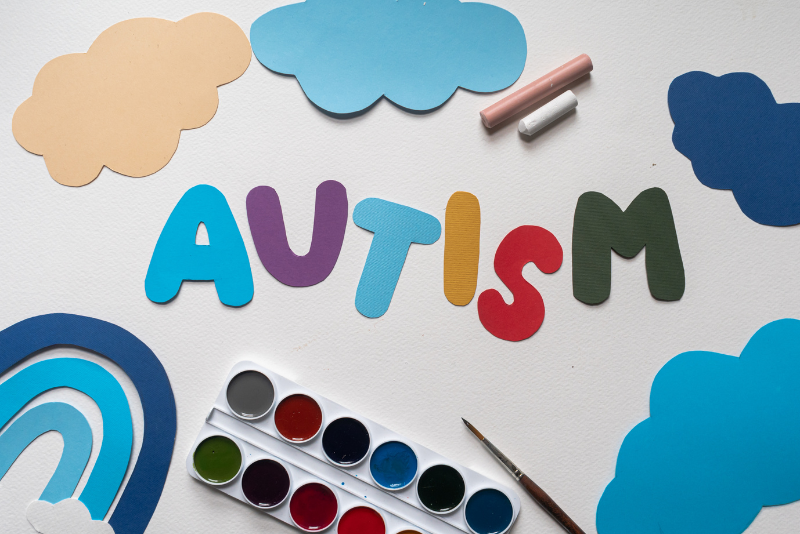
If you have ever seen buildings illuminated in blue, people wearing blue shirts, or autism awareness graphics featuring blue, you may have wondered: what color is autism awareness?
The short answer is blue. Blue is widely recognized as a color associated with autism awareness in the United States, largely because of the Light It Up Blue campaign, which was created by Autism Speaks in 2010. The campaign encouraged landmarks, buildings, homes, and communities to use blue lighting around April 2, World Autism Awareness Day.
However, autism awareness is not represented by blue alone. Different organizations and members of the autism and neurodiversity communities use other colors and symbols as well. Understanding this distinction is important because autism is not one single experience.
This guide explains the meaning behind the autism awareness color, why blue became associated with autism, what other symbols you may encounter, and what the term “autism spectrum” actually means.
What Color Is Autism Awareness?
Blue is the color most commonly associated with autism awareness in the United States.
Its popularity is closely linked to the Light It Up Blue campaign. Since the initiative began, blue lighting and blue-themed materials have been used in public awareness activities connected with autism.
You may see blue used in:
- Autism awareness ribbons
- T-shirts and clothing
- School and community events
- Social media graphics
- Building and landmark lighting
- Educational materials
- April awareness campaigns
Blue is therefore a familiar visual reference when people discuss autism awareness.
It is worth emphasizing, though, that blue is an awareness color, not a medical marker. The color someone wears does not indicate whether they are autistic, and a blue ribbon cannot tell you anything about an individual’s diagnosis, abilities, or support needs.
Why Is Blue Associated With Autism?
Blue became associated with autism primarily through public awareness efforts rather than through medical science.
The Light It Up Blue initiative was created in 2010 and became a recognizable part of autism awareness activities. On April 2, landmarks and communities have participated in lighting displays using blue to recognize World Autism Awareness Day.
The idea is straightforward: a highly visible color can attract attention and create an opportunity for people to learn more about autism.
For example, someone might see a building lit in blue and become curious about the reason behind it. That curiosity can lead to conversations about autism, developmental differences, and the experiences of autistic people.
The color itself does not have a diagnostic meaning. There is no scientific rule that says blue represents a particular type or severity of autism.
Is Blue the Only Autism Awareness Color?
No.
Although blue is one of the best-known autism awareness colors in the U.S., you may also see rainbow and multicolored designs, particularly in discussions involving neurodiversity.
This difference reflects the fact that autism can involve a broad range of experiences. Some autistic people may have strong spoken-language skills, while others may communicate in different ways. Some may live independently, while others may require substantial assistance with daily activities.
The CDC describes autism spectrum disorder (ASD) as a developmental disability associated with differences in the brain. It notes that autistic people may experience differences in social communication and interaction, restricted or repetitive behaviors or interests, learning, movement, or attention.
Because people can have very different characteristics and support needs, some communities prefer symbols that emphasize diversity rather than a single color.
What Does the Autism Awareness Color Mean?
Blue generally communicates public awareness and recognition of autism.
It does not mean that every autistic person prefers blue or identifies with the same autism-related symbols.
This is an important distinction when creating educational content for a U.S. audience. Awareness campaigns can help people recognize and discuss autism, but the color should not be presented as a medical fact or a way of identifying individuals.
For example, these statements would be misleading:
- “Blue identifies someone with autism.”
- “A certain shade of blue represents a specific autism level.”
- “Wearing blue means someone has autism.”
- “Blue can be used to diagnose autism.”
None of these claims is supported by the clinical understanding of autism.
A more accurate statement is that blue has become a widely recognized symbol of autism awareness because of public awareness campaigns.
What Is Autism Spectrum Disorder?
Autism spectrum disorder, commonly called ASD, is a developmental disability. According to the CDC, people with ASD may communicate, interact, behave, and learn differently from people who do not have ASD. The abilities and characteristics of autistic people can vary significantly.
Autism can involve differences in social communication and interaction, as well as restricted or repetitive behaviors or interests. Some people may also have differences in how they learn, move, or pay attention.
The word “spectrum” is important because autism does not have one standard presentation.
Two autistic people can have very different strengths and challenges. One person might have fluent speech but experience difficulty with social communication. Another person might communicate using an augmentative or alternative communication method. Someone else may have significant support needs in daily life.
This variety is one reason why awareness materials should avoid stereotypes.
Also read:
How Many Levels of Autism Are There?
People researching autism often ask, “how many levels of autism are there?”
In the DSM-5-TR framework used in the United States, autism spectrum disorder can be described using three severity levels based on support needs:
Level 1: Requiring Support
Level 1 indicates that support is needed. A person may experience noticeable difficulties with social communication or restricted and repetitive behaviors.
Level 2: Requiring Substantial Support
Level 2 indicates a greater degree of support is needed. Social communication differences and restricted or repetitive behaviors may have a more noticeable effect on functioning.
Level 3: Requiring Very Substantial Support
Level 3 indicates very substantial support needs. Difficulties in social communication and restricted or repetitive behaviors can have a significant effect on daily functioning.
The American Psychiatric Association’s clinical severity measure describes support needs separately for social communication and restricted or repetitive behaviors.
Therefore, these levels should not be treated as a simple scale that places every autistic person into one of three identical categories.
They also should not be guessed based on appearance, behavior observed for a few minutes, or whether someone wears an autism awareness color.
Can Autism Be Identified by Appearance?
No.
There is no particular clothing color, physical appearance, or awareness symbol that can establish whether someone is autistic.
The CDC explains that diagnosing autism can be difficult because there is no single medical test, such as a blood test, that diagnoses ASD. Healthcare professionals consider developmental history and behavior as part of the diagnostic process.
This distinction matters for parents, caregivers, teachers, and other people who may have questions about developmental differences.
Reading about autism online can provide general education, but online articles and checklists should not be treated as a diagnosis.
When developmental concerns arise, the appropriate next step is to discuss them with a qualified healthcare professional who can determine whether further evaluation is appropriate.
Autism Awareness in the United States
Autism awareness has become an important part of public conversations about developmental health in the United States.
The CDC’s surveillance work continues to monitor autism identification among children in communities across the country. Its findings help researchers and public-health professionals understand patterns in autism identification and guide further research.
However, population statistics should not be used to make assumptions about an individual.
Autism can affect people differently, and identification can also vary according to factors such as access to evaluation, recognition of developmental characteristics, and differences in healthcare and educational systems.
For families researching autism, reliable sources such as the CDC and qualified healthcare professionals are more appropriate than relying on social media claims or stereotypes.
Autism Awareness vs. Autism Acceptance
You may notice that some people use the phrase “autism awareness,” while others prefer “autism acceptance.”
Awareness generally focuses on increasing public understanding of autism.
Acceptance places additional emphasis on respecting autistic people, recognizing differences, and creating environments in which people can participate without unnecessary barriers.
The terms can be used differently by different individuals and organizations. There is no need to assume that one color or symbol represents everyone’s personal views.
The larger point is that awareness should be based on accurate information rather than assumptions.
What Color Should You Use for Autism Awareness?
If you are creating a U.S.-based autism awareness graphic, article, presentation, school activity, or community event, blue is a recognizable choice because of its established connection with Light It Up Blue.
At the same time, rainbow and multicolored imagery may be appropriate when the purpose is to communicate diversity or neurodiversity.
The choice ultimately depends on the context and the audience.
Most importantly, the accompanying message should be accurate. A color can draw attention to a topic, but it cannot explain the complexity of autism on its own.
Why Accurate Autism Information Matters
Autism is a medical and developmental topic, so accuracy matters when discussing it online.
Avoid claims that promise a particular outcome, suggest a universal treatment, or imply that a person’s characteristics can confirm autism without professional assessment.
It is also important not to portray autism as having one fixed appearance. The CDC notes that autistic people can have substantially different abilities and characteristics.
Good autism awareness content should instead focus on factual information, individual differences, respectful language, and the importance of appropriate professional evaluation when someone has developmental concerns.
Conclusion
So, what color is autism awareness?
The simplest answer is blue. Blue became strongly associated with autism awareness through the Light It Up Blue campaign and its use in public awareness activities surrounding World Autism Awareness Day.
But blue is not a medical identifier, diagnostic tool, or universal representation of autism. Other colors and symbols, including rainbow designs, are also used by different communities.
Ultimately, autism awareness is about more than choosing a color. It is about understanding that autism is a spectrum and that autistic people can have very different communication styles, abilities, characteristics, and support needs.
Medical and informational disclaimer: This article is intended for general educational purposes for readers in the United States. It is not medical advice, does not diagnose or treat autism, and does not make promises about health outcomes. Individual questions about development, diagnosis, or health should be discussed with an appropriately qualified healthcare professional.
Frequently Asked Questions
What color is autism awareness?
Blue is the color most commonly associated with autism awareness in the United States. Its widespread recognition is closely connected to the Light It Up Blue campaign. Other colors and multicolored symbols are also used by different autism and neurodiversity communities.
Why do people wear blue for autism awareness?
People may wear blue as a way to participate in autism awareness activities. The practice became especially recognizable through the Light It Up Blue initiative, which encouraged people and communities to use blue during autism awareness events.
Is blue an official medical color for autism?
No. Blue is an awareness color, not a medical or diagnostic marker. Clothing colors, ribbons, logos, and other awareness symbols cannot determine whether someone is autistic.
Are rainbow colors used for autism awareness?
Yes. Rainbow and multicolored imagery are also used in autism and neurodiversity discussions. Different people and organizations may prefer different colors or symbols to represent the diversity of autistic experiences.
How many levels of autism are there?
The DSM-5-TR framework describes three autism severity levels based on support needs: Level 1, Level 2, and Level 3. These correspond to requiring support, requiring substantial support, and requiring very substantial support. Severity is considered separately across social communication and restricted or repetitive behavior domains.
Can you tell if someone has autism based on their appearance or clothing?
No. Autism cannot be reliably identified from someone’s appearance, clothing, or the color they wear. Diagnosis involves consideration of developmental history and behavior by qualified professionals; there is no single medical test that establishes an autism diagnosis.