
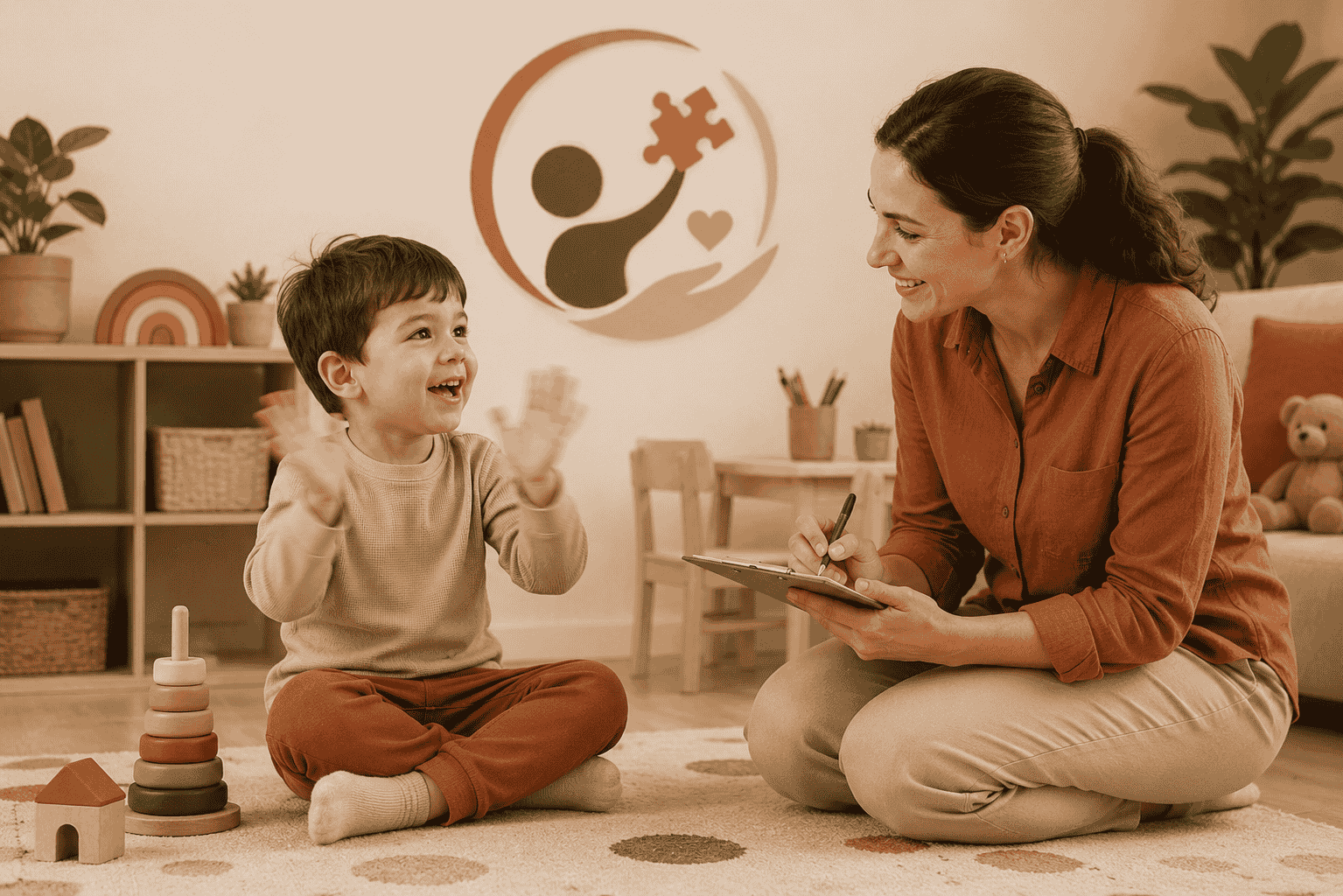
If you’ve noticed your child flapping their hands, you may wonder, “Is flapping hands a sign of autism?” Hand flapping can be associated with autism, but it does not mean a child is autistic by itself. Children may also flap their hands when they are excited, happy, nervous, or overwhelmed. What matters is the overall pattern, including communication, social interaction, repetitive behaviors, and other developmental differences.
What is Hand Flapping, Exactly?
Hand flapping is a quick, repetitive movement of the hands or wrists, often up and down or side to side.
It sometimes comes with:
- Arm shaking or waving
- Finger flicking or wiggling
- Jumping or rocking at the same time
- Excited squealing or vocal sounds
Doctors call this kind of repeated movement “stimming,” short for self-stimulatory behavior. It’s the body’s way of releasing or managing energy and emotion.
So, Is It Always Autism?
No. This is the part most parents get wrong.
Plenty of toddlers flap their hands when they’re thrilled, nervous, or overstimulated. It’s a normal part of early childhood development for many kids.
What actually matters is the pattern, not the single moment.
Hand flapping leans toward autism when it:
- Continues well past age 3
- Happens often, not just during big excitement
- Shows up along with other developmental differences
- Seems hard for the child to stop or control
Hand flapping is likely just normal excitement when it:
- Only happens during strong emotions (joy, surprise, nervous energy)
- Fades away as the child grows and gains language skills
- Isn’t paired with other social or communication concerns
Read More: What Are the Early Signs of Autism in Infants?
Autism Hand Flapping vs. Normal Hand Flapping
Here’s a simple way to compare the two side by side.
Typical hand flapping usually:
- Shows up briefly during exciting moments
- Reduces as verbal language improves
- Doesn’t interfere with play or learning
- Isn’t accompanied by other red flags
Autism-related hand flapping usually:
- Happens frequently, even in calm settings
- Continues alongside limited eye contact
- Comes with delayed speech or social withdrawal
- Includes strong reactions to noise, light, or textures
One clue rarely tells the full story. Clinicians look at the whole picture, not one behavior in isolation.
Other Conditions That Can Cause Hand Flapping
Autism isn’t the only explanation. Hand flapping also shows up in:
- ADHD
- Sensory processing differences
- Anxiety or excitement in neurotypical children
- Down syndrome and some other developmental conditions
This is exactly why a single behavior should never be used as a self-diagnosis tool, for a child or an adult.
When Should You Actually Pay Attention?
You don’t need to panic over one flapping episode at a birthday party. But it’s worth getting a professional opinion if you also notice:
- Little to no eye contact
- Delayed or missing speech milestones
- Not responding to their name
- Strong preference for routines, upset by small changes
- Limited interest in playing with other children
If several of these appear together with hand flapping, a pediatrician or developmental specialist can help you understand what’s happening. Early evaluation isn’t about labeling a child. It’s about giving them the right support sooner rather than later.
How to Support a Child Who Flaps Their Hands
Whether it turns out to be autism or simply a phase, your response matters more than the behavior itself.
- Don’t force the hands to stop. Stimming often serves a real purpose for the child.
- Watch for triggers. Is it excitement, noise, or overwhelm?
- Offer safe alternatives if the behavior seems to cause discomfort.
- Talk to a pediatrician instead of relying only on online checklists.
- Be patient. Many children naturally outgrow it with time and language growth.
Hand flapping is not something to be ashamed of or ashamed of for your child. For many kids, it’s simply how big feelings come out.
Conclusion
Flapping hands can be a completely normal part of growing up, or it can be one small piece of a larger developmental picture. The behavior alone doesn’t confirm anything either way.
If you’re unsure, a short conversation with your child’s doctor will give you far more clarity than hours of searching online. Trust your instincts, but let a professional confirm them.
FAQ’s
1. At what age is hand flapping considered a concern?
If it continues consistently past age 3, especially with other developmental delays, it’s worth discussing with a doctor.
2. Can adults flap their hands without having autism?
Yes. Some neurotypical adults flap their hands briefly during extreme excitement or stress, though it’s less common than in children.
3. Does hand flapping alone mean my child has autism?
No. It’s one possible sign among many and should never be used alone to diagnose autism.
4. Should I stop my child from flapping their hands?
Not usually. Unless it’s causing harm, it’s often better to understand the trigger than to suppress the behavior.
5. Who can properly diagnose autism in a child?
A pediatrician, developmental pediatrician, or child psychologist can conduct a proper evaluation based on multiple factors, not just one behavior.