
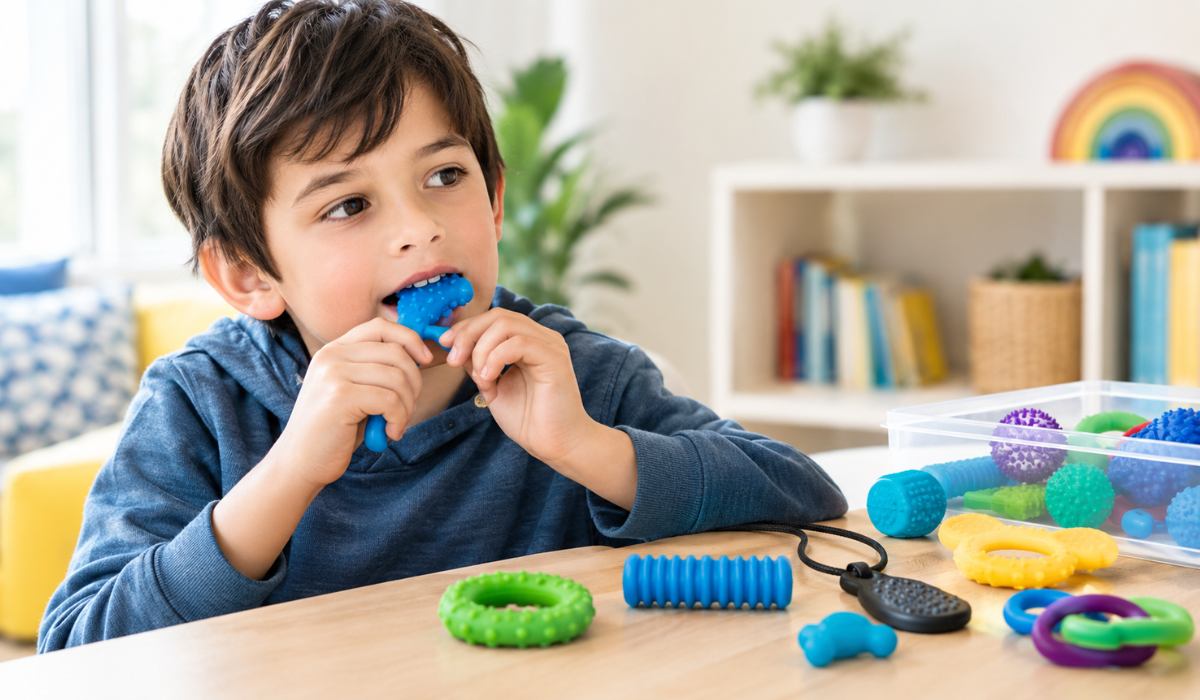
Some autistic children chew on their sleeves, pencils, or shirt collars. Some adults do it too, just more quietly. It can look like a habit, but for many people, it is a way to meet sensory needs.
Sensory chew toys for autism can be a safe, clean item to chew on instead. This guide explains why chewing happens, how these tools may help, what types are out there, and how to pick a safe one.
What Are Sensory Chew Toys?
A sensory chew toy is an item made to be chewed on safely. Most are made from soft but firm materials such as food-grade silicone. They come in many shapes, including necklaces, pencil toppers, rings, tubes, and small handheld pieces.
The goal is simple. Chewing gives the mouth and jaw strong, steady input. For some people, that input feels calming or helps them stay alert. A proper chew tool lets them get that feeling without damaging clothes, nails, or teeth.
Why Do Some Autistic People Chew?
Autism often involves differences in how the brain processes sensory information. Sounds can feel too loud, lights too bright, and clothes too scratchy. Some individuals are particularly sensitive to these factors. Others are undersensitive and look for more input to feel settled.
Chewing often falls into that second group. The jaw has many muscles and nerves, so chewing sends a lot of feedback to the brain. This is sometimes called oral sensory seeking.
People may chew for several reasons:
- To feel calm when they are stressed or anxious
- To stay focused during school, work, or homework
- To cope with loud, busy, or unfamiliar places
- To meet a need for pressure in the mouth and jaw
- Because they are bored, tired, or restless
Chewing is not “bad behaviour”. It is usually the body asking for something. Understanding the reason makes it easier to respond with kindness and find a safer option.
Possible Benefits of Sensory Chew Toys
Every person is different, and chew toys do not work for everyone. Still, many families and occupational therapists report helpful effects. Here are the most common ones.
Calmer feelings. The steady pressure from chewing can help some people settle when they feel upset or overwhelmed.
Better focus. Some children pay attention better when their mouth has something to do. A chew tool at a desk can make it easier to sit and finish a task.
Fewer harmful habits. A chew toy can replace chewing on shirts, fingers, pens, or other objects that are unsafe or unhygienic.
A healthier outlet for stress. Instead of biting nails or skin, a person has a safe item that is made for chewing.
A tool for self-regulation. Over time, people can learn to notice when they feel stressed and reach for their chew tool on their own. That builds independence.
It is worth being honest here: research on chew tools is still limited, and most evidence comes from therapists’ and families’ experiences. They can be a useful support, but they are not a treatment or cure for autism.
Main Types of Sensory Chew Toys
There are many styles, so it helps to know the basics.
Chewable Necklaces and Bracelets
These are worn on the body, so they are always within reach. They suit older children, teens, and adults because they look like regular jewellery. A breakaway clasp is important for neckwear since it releases if the necklace gets caught.
Pencil Toppers
These slip onto the end of a pencil. They are good for school because the child can chew while writing without anyone noticing much. Many students find them helpful in class.
Handheld Chew Tools
These are small shapes, such as sticks, tubes, or textured pieces, that you hold while chewing. They are easy to clean and good for home use. Some have a loop or handle that keeps the toy from slipping too far into the mouth.
Chew Rings and Teethers
These are often used for younger children. They are easy to grip and usually softer. They work well for kids who are still learning to use a chew tool.
Textured and Shaped Chews
Some chews have bumps, ridges, or grooves. The texture adds extra sensory input. These can suit children who want something more than a plain surface, but a few kids dislike strong textures, so test first.
Chewable Gadgets and Fidget-Style Chews
Some items combine chewing with other sensory features, such as a stretchy or squeezable part. These suit people who like to use their hands and mouth together.
How to Select a Sensory Chew Toy That Meets Your Needs
Picking the right one takes a little trial and error. Think about these points.
Check the Material
Look for food-grade silicone or similar safe material. The label should say it is BPA-free, phthalate-free, and lead-free. Avoid toys with no material information, strong chemical smells, or a sticky, cheap feel.
Match the Firmness to the Chewer
Chew toys come in soft, medium, and hard levels. A strong chewer who bites through a soft toy needs something firmer. A child with a lighter bite may be fine with soft. If a toy gets damaged quickly, it is too soft for that person.
Think About Size and Shape
The toy must be big enough that it cannot slip to the back of the mouth or be swallowed. Pick a size that suits your child’s age and mouth. A shape that is easy to hold helps too.
Consider Where It Will Be Used
A necklace may work well for school. A pencil topper helps in class. A larger handheld tool may be better at home. Choose based on when and where chewing happens most.
Pay Attention to Texture and Taste Preferences
Some people like smooth surfaces. Others want bumps or ridges. Allow your child to explore a few options and notice which one they naturally prefer. Their reaction tells you more than any guide can.
Make It Easy to Clean
A chew toy goes in the mouth all day, so cleaning matters. Pick one that can be washed with soap and water or that is dishwasher-safe if the maker says so. Avoid designs with small hollow spaces where dirt can get trapped.
Let the Person Choose
Where possible, involve the chewer. Children are more likely to use a toy when it matches their preferences. Teens and adults may care a lot about how it looks and whether it feels discreet.
Safety Tips You Should Not Skip
Safety matters most with anything that goes in the mouth.
- Supervise young children. Stay close, especially when they are new to a chew toy.
- Inspect the toy often. Look for cracks, tears, thin spots, or pieces coming loose. Throw it away at the first sign of damage.
- Use breakaway clasps on necklaces so they cannot choke the wearer.
- Wash it regularly. Wash the toy every day using gentle soap and warm water, then allow it to air-dry completely before use.
- Replace it on a schedule. Heavy chewers may need a new one every one to three months.
- Do not use random objects. Pen caps, jewellery, and toys not made for chewing can break and cause choking.
- Watch for allergies. If you see redness, swelling, or a rash around the mouth, stop using the toy and speak to a doctor.
How to Introduce a Chew Toy
Some children take to a chew toy at once. Others need time. A few simple steps help:
- Show the toy and let your child explore it with their hands first.
- Model how to use it, for example, by pretending to chew on it yourself.
- When you notice your child chewing on clothing or other objects, calmly offer them the chew toy as an alternative.
- Praise them when they use it, and never punish them for chewing something else.
- Try a different shape or firmness if they refuse it.
Patience is important. It may take several tries before a child accepts a new tool.
When to Talk to a Professional
Chewing is common, but some signs are worth discussing with a doctor or an occupational therapist:
- Chewing causes cuts, bleeding, or damage to teeth
- Your child chews or swallows non-food items
- Chewing increases or changes suddenly
- Eating or speaking is affected
- The chew toy does not seem to help
An occupational therapist can check sensory needs and suggest other tools, such as a sensory diet or movement breaks. They can also tell you if a medical or dental issue is involved.
Final Thoughts
Sensory chew toys for autism can be a helpful, low-cost way to support people who have a strong need to chew. They may bring comfort, better focus, and fewer harmful habits. The best choice depends on the person’s age, bite strength, and sensory likes and dislikes.
Start with safe materials, watch how your child responds, and be ready to try a few options. Check the toy often, keep it clean, and replace it when it wears out. If you have worries about chewing, a therapist can guide you toward the right support.
Frequently Asked Questions
Are chewing toys good for autism?
Chew toys can help many autistic people feel calmer and more focused because chewing gives steady sensory input. These products do not treat or cure autism. Results differ from person to person, so it helps to watch how your child responds and adjust.
Why do autistic children chew on things?
Many autistic children chew to meet a sensory need. Chewing can calm the body, ease stress, or help with focus. Some chew when they feel anxious, bored, or overwhelmed. Others simply enjoy the feel of pressure in the mouth and jaw.
What material is safest for a sensory chew toy?
Food-grade silicone is a popular choice because it is soft, durable, and easy to clean. Look for products that are BPA-free, phthalate-free, and lead-free. Medical-grade options also exist. Avoid cheap toys that do not list their material clearly on the label.
Can adults use sensory chew toys?
Yes. Many autistic teens and adults use chewable jewellery or discreet chew tools to manage stress and stay focused. Adult-sized options are firmer and made to look like normal necklaces or bracelets. Choose a size and firmness that fit your jaw strength.
When should a sensory chew toy be replaced?
Check the toy every few days for cracks, tears, or thin spots. If you notice any signs of wear or damage, stop using the toy and replace it immediately. Even without damage, heavy chewers may need a new one every one to three months. Clean the item every day using warm water and a gentle soap.
Do chew toys replace therapy?
No. Chew toys are a support tool, not a replacement for therapy. If chewing is intense, causes injury, or affects eating, speak with an occupational therapist or doctor. They can find the cause and suggest a plan that fits your child.
Pingback: Best Toys for Preschoolers With Autism: A Complete Guide
Pingback: Best Sensory Toys for Children With Autism | Autismcue