
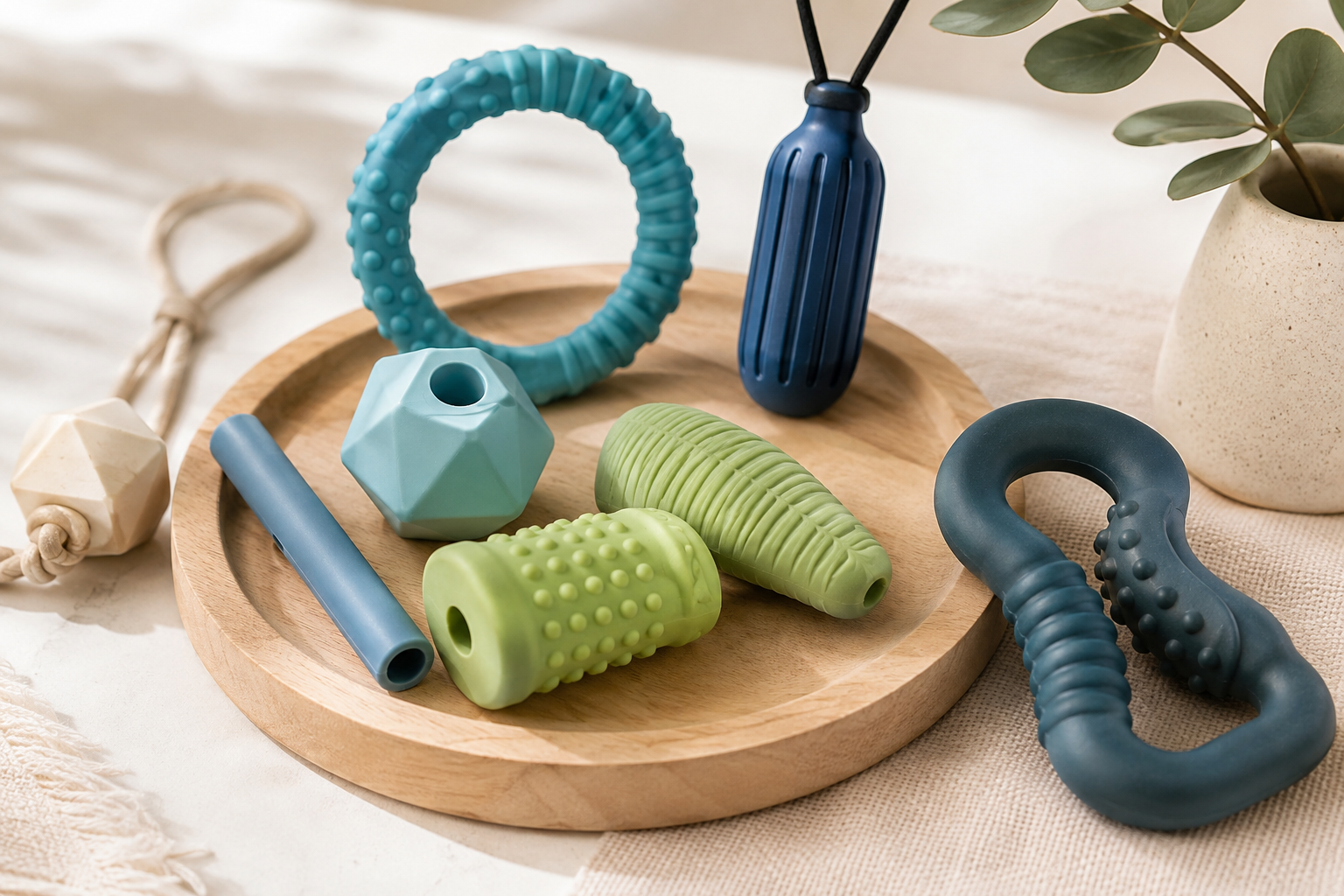
For some autistic adults, chewing on clothing, pens, fingernails, or other objects can be part of an individual sensory pattern. This can raise a practical question: Are autism chew toys for adults a safer option for people who seek oral sensory input?
Chewable sensory tools are designed to be placed in the mouth and chewed rather than used as ordinary toys. They may include chewable pendants, tubes, hand-held chews, and other oral sensory products. However, they are not appropriate for everyone, and a chew product should not be presented as a treatment for autism.
This guide explains what adult chew tools are, why some people use them, the different types available, important safety considerations, and what U.S. consumers should know about healthcare claims and product regulations.
What Are Autism Chew Toys for Adults?
The phrase autism chew toys adults is commonly used to describe chewable sensory products intended for autistic adults or other people who have a preference for oral sensory input.
Unlike conventional children’s toys, adult chew products are often designed with older users in mind. Some look like jewelry, while others are simple handheld shapes or tubes.
Common examples include:
- Chew necklaces or pendants
- Chewable jewelry
- Handheld sensory chews
- Chew tubes
- Textured oral sensory tools
- Chewable pencil or pen toppers
- Silicone-based chew products
The purpose of these products varies by individual. Some people may simply prefer having a designated item available instead of chewing on everyday objects.
It is important not to assume that every autistic adult needs or wants a chew product. Autism is a spectrum, and sensory preferences differ considerably from person to person.
Why Do Some Autistic Adults Chew Objects?
Chewing is not an autism-specific behavior. People may chew for many different reasons, including sensory preferences, habit, concentration, stress, boredom, or other individual factors.
Autistic people can also experience sensory differences that affect how they respond to sounds, textures, movement, tastes, smells, or physical sensations. The National Institute of Dental and Craniofacial Research notes that developmental disabilities can create challenges with daily self-care and oral health, including difficulties associated with dental care.
Some autistic people may chew on objects such as clothing, pens, fingers, or other non-food items. Autism Speaks also notes that some autistic individuals may chew objects or grind their teeth in connection with sensory needs.
That does not mean chewing automatically indicates autism. A person’s overall behavior, communication, sensory profile, and health history are much more important than one behavior alone.
Potential Uses of Chew Tools
The word “benefits” can be misleading if it suggests that chew toys treat autism. There is no basis for describing an ordinary chew product as a treatment or cure for autism.
Instead, think of these products as sensory tools that some individuals choose to use.
Depending on the person, a chew tool may provide:
A designated object for chewing
Someone who regularly chews pens, clothing, or other everyday objects may prefer having a specific item intended for chewing.
A sensory option
Chew products can come in different shapes, textures, sizes, and firmness levels. Personal preference can therefore play an important role.
An age-appropriate alternative
Some adult users may prefer products that look less child-oriented. Chewable necklaces and discreet designs are examples of products marketed toward older users.
These possible uses should not be confused with proven medical outcomes. A person’s experience with a sensory product can vary, and a product should not be advertised as reducing anxiety, improving concentration, treating autism, or preventing a medical condition unless those claims are properly supported.
Types of Autism Chew Toys for Adults
There is no single “best” type of chew tool. The appropriate choice depends on the individual’s preferences, chewing pattern, environment, and safety considerations.
1. Chew Necklaces
Chew necklaces, sometimes called chewable jewelry or “chewelry,” are wearable pendants designed to be chewed.
They may be useful from a practical standpoint for someone who wants a portable option. However, necklace cords, clasps, and detachable pieces create additional safety considerations.
Inspect the entire product regularly and follow the manufacturer’s age, use, and care instructions.
2. Handheld Chew Tools
Handheld products do not need to be worn around the neck. They may have handles, loops, or textured surfaces.
This format can be preferable for people who do not want something hanging around their neck or who use an oral sensory tool only in particular settings.
3. Chew Tubes
Chew tubes are generally longer, tube-shaped oral sensory products. Different products can vary considerably in size, shape, firmness, and intended use.
Because the product is placed in the mouth, users should pay close attention to its condition and follow the manufacturer’s instructions.
4. Chewable Jewelry
Some products are designed to resemble ordinary accessories. This can be relevant for adults who want an age-appropriate appearance at work, school, social events, or while traveling.
The appearance of a product, however, should never take priority over its construction and safety.
5. Textured Chew Tools
Textured surfaces can provide a different tactile experience inside the mouth. Some products have ridges, bumps, or other patterns.
Texture is a personal preference rather than an indicator that one product is medically better than another.
How to Choose Autism Chew Toys for Adults
When researching autism chew toys adults, look beyond appearance and marketing language.
Consider these factors:
Material information
Check whether the manufacturer clearly identifies the materials used. Be cautious when a product provides little information about its construction, care instructions, or intended use.
Size and design
Consider whether the product is appropriate for the intended user and whether any components could detach.
Chewing intensity
Products can differ in firmness and durability. Someone who chews forcefully may place considerably more stress on a product than someone who uses it lightly.
Cleaning instructions
Because the product enters the mouth, hygiene matters. Follow the manufacturer’s cleaning instructions and replace the item when it becomes damaged or difficult to clean.
Intended age and use
Do not assume that a product designed for children is automatically suitable for an adult. Check the manufacturer’s stated intended use and warnings.
Personal preference
Some adults may prefer a necklace, while others may prefer a handheld tool. Comfort and willingness to use the product are important practical considerations.
Chew Toy Safety: What Adults and Caregivers Should Know
Safety deserves more attention than marketing claims.
A chew product can deteriorate with repeated biting. Look for cracks, tears, missing pieces, sharp edges, changes in texture, or other signs of damage. If the product becomes damaged, discontinue use according to the manufacturer’s safety guidance.
There can also be choking, aspiration, or other risks depending on the product and the individual. A person who has difficulty chewing or swallowing, has a history of aspiration, or has another relevant medical or dental concern should discuss appropriate options with a qualified healthcare professional.
Does Insurance Cover Adult Chew Tools?
Insurance coverage is another area where expectations should be realistic.
A sensory chew product purchased directly by a consumer is not necessarily treated the same way as a healthcare service or medically necessary equipment. Coverage can depend on the type of item, the insurance plan, the reason it is being requested, and applicable state and federal rules.
Medicaid’s autism-related resources focus on covered services and supports and provide state-specific guidance, rather than establishing that every sensory product is covered.
If someone is considering whether a particular item may qualify for coverage or reimbursement, the most reliable approach is to check the member’s plan documents or contact the insurer directly.
Also Read: Autism in Adults: Signs of Level 1, Level 2 & Level 3 Explained
When to Talk With a Healthcare Professional
A chew product should not replace evaluation when chewing is causing health or safety concerns.
Consider discussing persistent or intense chewing with an appropriate healthcare professional if there is:
- Damage to teeth or gums
- Frequent biting of the tongue, cheeks, or lips
- Swallowing of non-food objects
- Choking or breathing concerns
- Significant jaw pain
- Severe teeth grinding
- Difficulty chewing or swallowing
- A sudden change in chewing behavior
A dentist can evaluate oral-health concerns, while an appropriately qualified occupational or other healthcare professional may help assess sensory or functional concerns when relevant.
The goal is not to label a behavior as “autistic” simply because it involves chewing. The important question is what the individual is experiencing and whether there is a health or safety concern.
Final Takeaway
Autism chew toys for adults are chewable sensory products that some autistic adults may choose to use for personal oral sensory preferences. Options include chew necklaces, handheld chews, chew tubes, and chewable jewelry.
The most important considerations are individual preference, product construction, hygiene, durability, and safety. A chew tool should not be described as a cure or treatment for autism, and marketing claims about health benefits should be supported by appropriate evidence.
This article provides general educational information and should not be considered a substitute for professional medical advice, diagnosis, or treatment. Product safety and regulatory requirements can vary by product and intended use.
Frequently Asked Questions
1. What are autism chew toys for adults?
They are chewable sensory products intended for adults who choose to use an item for oral sensory input. Examples include chew necklaces, handheld chews, and chew tubes.
2. Are chew toys only for autistic adults?
No. Chewing is not exclusive to autism. People may chew for many different personal, sensory, or habitual reasons. A chew product should not be considered evidence that someone has autism.
3. Are autism chew toys safe for adults?
The right chew product may vary depending on the person’s needs and the product’s design. Users should follow manufacturer instructions, inspect products for damage, and stop using damaged items. People with swallowing, aspiration, or significant dental concerns should consult a qualified healthcare professional.
4. Does the FDA approve autism chew toys?
Not necessarily. A product’s regulatory status depends on factors including its intended use and the claims made about it. The term “FDA approved” should not be used casually for ordinary sensory products.
5. Does insurance cover chew toys for autistic adults?
Coverage is not automatic and can vary by insurance plan, product, and circumstances. Consumers should check their specific health plan or contact the insurer to determine whether a particular item may be eligible for coverage or reimbursement.