
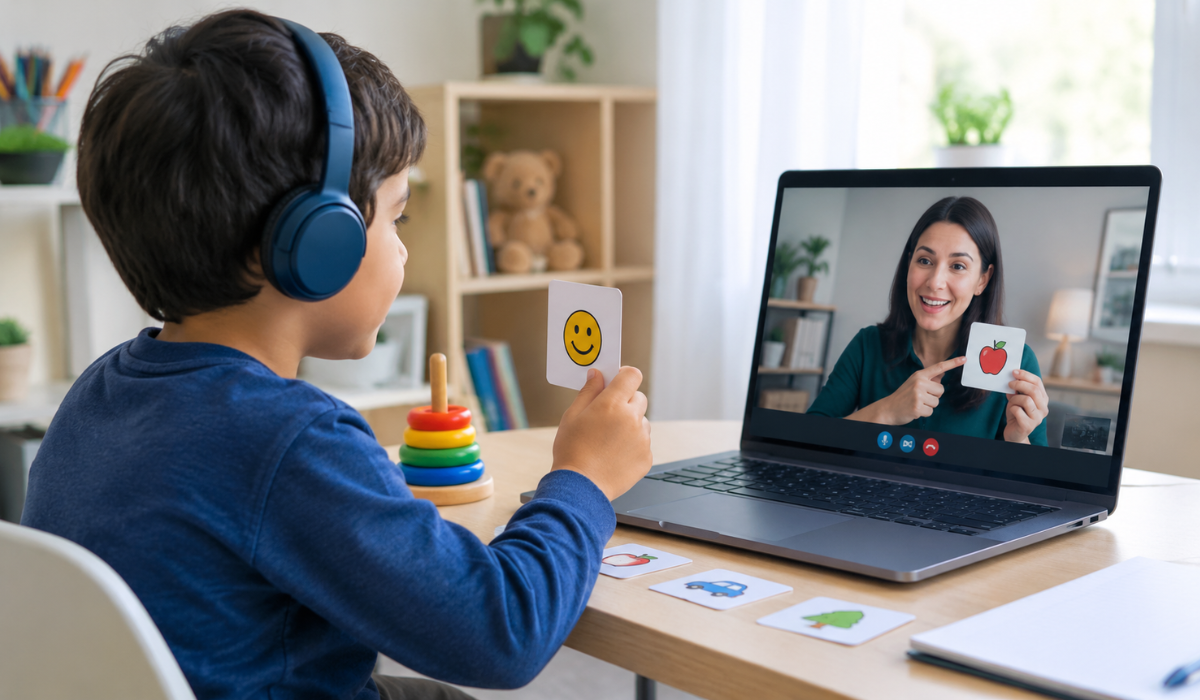
Many families want to try applied behaviour analysis (ABA) but live far from a clinic or have a packed schedule. Others simply feel more at ease working from home. That is why virtual ABA therapy has become a common option. It brings the planning, coaching, and teaching of ABA into your living room through a video call.
This guide explains what virtual ABA therapy is, how sessions run, who it may suit, and what you can expect along the way.
What Is Virtual ABA Therapy?
ABA is a way of teaching new skills by studying how behaviour works. A therapist looks at what happens before a behaviour, what the behaviour looks like, and what happens afterward. Then they use that information to teach helpful skills, like asking for a break, waiting a turn, or brushing teeth.
Virtual ABA therapy uses the same ideas, but the sessions happen online. A trained professional connects with the child and family through a secure video platform. Instead of the therapist doing all the hands-on work, a parent or carer often takes a bigger role. The therapist guides, shows examples, and gives feedback in real time.
This format is also called online ABA therapy or ABA telehealth. The names differ, but the idea is the same: ABA support delivered remotely.
How Virtual ABA Therapy Works
Every provider has its own process, but most programmes follow a similar path.
- Intake and assessment. The process usually starts with a talk about your child’s strengths, challenges, routines, and your family’s goals. The clinician may ask you to fill out checklists and share short home videos. They may also watch your child on a live video call.
- A personal plan. Using that information, a Board Certified Behaviour Analyst (BCBA) writes a treatment plan. Goals might include communication, daily living skills, play, safety, or reducing behaviours that make daily life hard. Good goals are specific and matter to your family, such as “your child asks for help using a picture card or words.”
- Live sessions. Sessions take place over video. Depending on the child’s age and needs, the therapist may talk directly with your child or mostly coach you while you work with your child. A registered behaviour technician (RBT) may also run some sessions under the BCBA’s supervision.
- Practice between sessions. Skills grow when they are used in real life. You may be asked to practice small steps during meals, play, bath time, or bedtime.
- Progress checks. The team tracks data, such as how often a skill happens or how much help your child needs. They review it regularly and change the plan if something is not working.
Who Is on the Team?
Understanding the roles can make the process feel less confusing.
- BCBA: The professional who assesses your child, writes the plan, and oversees the work.
- RBT: A trained technician who may carry out parts of the plan with your child.
- Parent or carer: The person who helps the most in virtual therapy. You know your child best and are with them the most.
- Other adults: Grandparents, older siblings, or teachers can sometimes join to keep approaches consistent.
Benefits of Virtual ABA Therapy
Virtual care is not a perfect fit for every family, but it offers some real advantages.
Easier access. Families in rural areas or places with few providers can reach specialists without long drives. Waitlists for in-person services can be long, and online options sometimes widen the choices.
Learning in the real setting. Skills practiced at home are already in the place where they are needed. If the goal is to help your child follow a morning routine, working in your own kitchen and bathroom makes more sense than a clinic room.
Stronger carer skills. Because parents are active partners, they learn strategies they can use every day. This can help new skills carry over into daily life, not just stay in a session.
Flexible scheduling. There is no commute, so it can be easier to fit sessions around school, work, and siblings.
A familiar space for your child. Some children feel calmer at home. Others get overwhelmed by new places, people, and sounds, so staying in a familiar room may help them focus.
Convenience for the whole family. Parents can avoid travel time and costs, and fewer cancellations happen due to bad weather or illness.
What the Research Says
Research on ABA is much larger than research on telehealth ABA specifically. Still, studies on telehealth and carer coaching have found that parents can learn to use ABA strategies well when a professional guides them remotely, and many children show progress. The evidence is still growing, so results depend on the child, the quality of the plan, and how consistently the family can practise. No one can promise specific results, and a good provider will not.
Limits and Challenges to Know About
It helps to look at the downsides honestly.
- Screen and attention needs. Young children or those with very short attention spans may find it hard to sit in front of a screen. Parent coaching often works better than direct video time for them.
- Parent time and energy. This model asks a lot from carers. If your household is already stretched thin, it may feel heavy.
- Safety concerns. Children with severe challenging behaviour, such as aggression or self-injury, may need in-person support so someone can respond right away.
- Technology. You need a steady internet connection, a device, and a quiet space. Technical problems can interrupt sessions.
- Fewer hands-on supports. Some skills, such as physical prompting or certain feeding programmes, are harder to teach through a screen.
Because of these limits, some families choose a mix of in-person and digital sessions.
Also read: 12 Red Flags to Watch for When Choosing a Virtual ABA Therapy Provider
Who May Be a Good Fit?
Virtual ABA therapy may work well when:
- A parent or carer is available and willing to take part
- The child can stay safe at home during sessions
- The goals focus on daily routines, communication, play, or parent training
- There are few in-person providers nearby
- The family has a stable internet connection
It may be a weaker fit when safety risks are high, no adult can join sessions, or the child needs a lot of physical help to learn. A BCBA can help decide this after an assessment.
What You May Notice During the First Few Weeks
The first weeks are mostly about getting to know each other. Expect questions about your child’s likes, dislikes, routines, and what a typical day looks like. The therapist may ask you to record short videos of daily moments.
Early sessions often focus on building a comfortable relationship with your child. A good therapist will not rush into demands. They will spend time on play and trust first.
Do not worry if your child does not sit still or walks away from the screen. This is common, and the therapist plans for it. You will probably get homework in small, doable pieces, like practicing one skill during snack time.
How to Set Up Your Home
You do not need fancy equipment. A few simple steps can help:
- Pick a quiet area with few distractions
- Use a tablet or laptop on a stable stand so the therapist can see your child
- Keep a few favourite toys, snacks, and learning materials nearby
- Test your internet and video app before the first session
- Turn off noisy devices and notifications
- Keep a notebook for questions and observations
Questions to Ask a Provider
Before starting, it is fair to ask:
- Is the BCBA licensed or certified, and who will supervise the work?
- How many hours of therapy each week do you suggest, and what factors determine that amount?
- How will you track and share progress?
- How do you protect my child’s privacy on video calls?
- What happens if my child cannot focus on the screen?
- Do you accept my insurance plan, and how much should I expect to pay out of pocket?
Insurance rules differ by plan and state, so check coverage for telehealth specifically before you commit.
Final Thoughts
Virtual ABA therapy is not a shortcut or a cure. It is one way to deliver support, and it works best when the plan fits your child and the family can take part. Its biggest strengths are access, convenience, and the chance to learn skills right where they are needed. Its biggest limits are screen time, safety needs, and the effort asked of carers.
If you’re considering this option, begin with an evaluation conducted by a qualified professional. Ask questions, set clear goals, and review progress often. Your child’s needs, comfort, and safety should guide the choice between virtual, in-person, or a mix of both.
Frequently Asked Questions
Is virtual ABA therapy effective?
Research on telehealth ABA is still growing, but early studies show many children make progress when parents are coached well. Results depend on the child’s needs, the quality of the plan, and how consistently carers practice. A professional assessment can show whether it suits your child.
Who provides virtual ABA therapy?
A Board Certified Behaviour Analyst (BCBA) designs and oversees the plan. A registered behaviour technician (RBT) may run some sessions under that supervision. Parents or Carers often take an active role, practising strategies between sessions and sharing updates so the plan can change when needed.
What age is virtual ABA suitable for?
Virtual ABA can be used with toddlers through teenagers, but fit matters more than age. Younger children often need a carer nearby to help them stay engaged. Older children may handle screen time better. A provider can judge attention, communication, and safety needs before recommending a format.
How many hours of virtual ABA does a child need?
Hours vary widely. A BCBA sets them after an assessment, based on your child’s goals, age, and family schedule. Some plans use a few hours of direct sessions plus parent coaching, while others use more. The plan should be reviewed regularly and adjusted as your child grows.
Does insurance cover virtual ABA therapy?
Many insurance plans that cover ABA also cover telehealth, but rules differ by plan and state. Call your insurer and ask about telehealth coverage, authorisation, session limits, and required diagnosis paperwork. Getting answers in writing can help you avoid unexpected costs later.
Can virtual ABA replace in-person therapy?
Not always. Some children, especially those with severe challenging behaviour, safety concerns, or very limited attention to screens, may need hands-on support. Many families choose to combine both approaches based on their individual needs. Your BCBA can recommend the right balance after observing your child.