
Imagine starting a new job where nobody tells you the schedule, the rules, or what is expected of you. You would probably feel lost and stressed. Many children with autism feel something similar in everyday life, because new places, sudden changes, and unclear instructions can be hard to handle.
That’s why the environment where therapy takes place can make a meaningful difference. A structured ABA therapy environment is built to make learning feel calm, clear, and predictable. This article explains what it means, what it includes, and why it can make a real difference.
What Is a Structured ABA Therapy Environment?
ABA stands for Applied Behaviour Analysis. It is a therapy approach that teaches skills, such as communication, play, and self-care, by breaking them into small steps. It uses encouragement to help a child keep practicing.
A structured ABA therapy environment is the planned setting where this teaching happens. “Structured” means that the space, the schedule, and the teaching steps are organised ahead of time. The child knows what to expect next without having to figure it out on their own.
In simple terms, it includes:
- A clear daily routine
- A tidy, organised space
- Simple rules and instructions
- Visual tools that show what to do
- Steady rewards for effort and progress
- The same teaching methods used by every adult
Structure does not mean the room is cold or strict. A well-run setting can be full of play, laughter, and warmth. The structure just works quietly in the background to keep things steady.
Why Structure Helps Children With Autism
Many autistic children find it easier to learn when things are predictable. Changes in routine, loud noises, or crowded spaces can feel overwhelming. When a child is overwhelmed, it is hard to focus on learning.
Structure helps in several ways.
It lowers stress. When a child knows what is coming next, there are fewer surprises. Less anxiety means more energy for learning.
It improves focus. A clean space with fewer distractions makes it easier to pay attention to the task at hand.
It makes expectations clear. Children do better when they understand what is being asked. Short, simple instructions leave less room for confusion.
It builds confidence. Small, achievable steps lead to frequent success. Each success makes the child more willing to try the next step.
It helps adults stay consistent. If every therapist and parent responds in the same way, the child learns faster because the rules stay the same.
Key Parts of a Structured ABA Therapy Environment
Different providers set things up in different ways, but most structured settings share the same core parts.
Predictable Routines
Sessions often follow a familiar order. For example, a child might arrive, put their things away, do a short greeting activity, work on a learning task, take a play break, and then finish with a closing routine.
The exact order can vary, but the pattern stays similar from day to day. This repeating pattern gives the child a sense of safety.
An Organised Physical Space
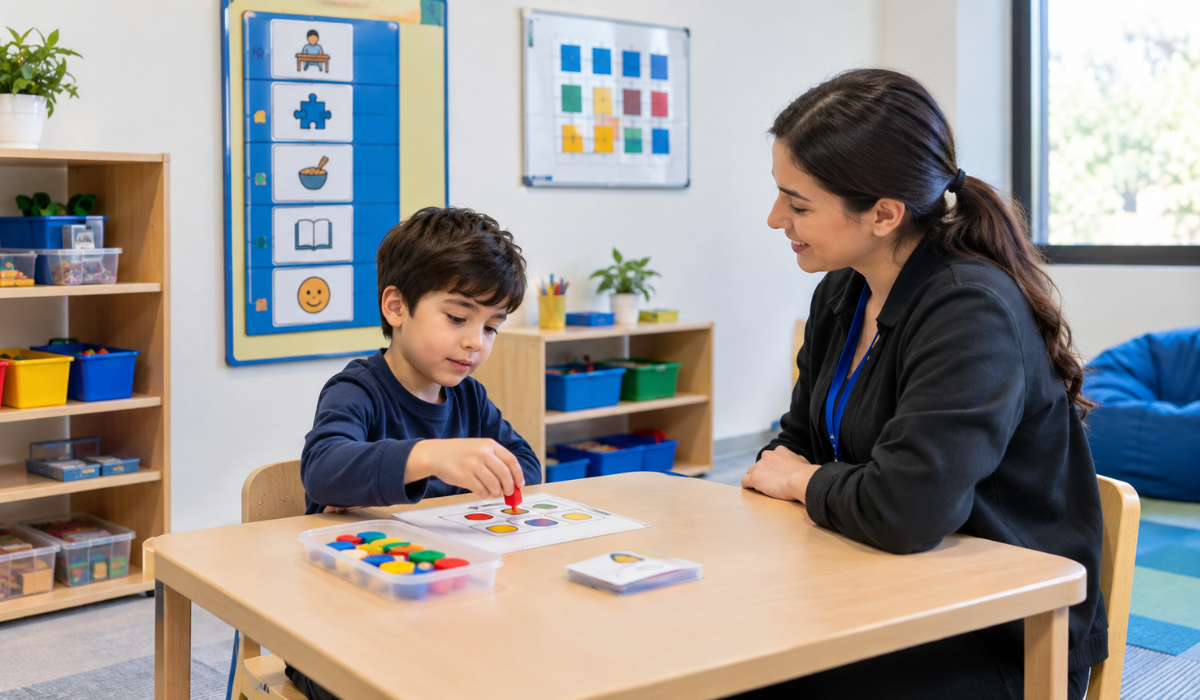
The therapy environment itself can play an important role in the session. A structured space usually has:
- Clear areas for different activities, such as a table for learning and a corner for play or rest
- Toys and materials stored in labelled bins or shelves
- Minimal clutter on walls and surfaces
- Comfortable lighting and low background noise when possible
Keeping each area for one purpose helps the child connect the place to the activity. When they sit at the learning table, they know it is time to work. When they go to the play area, they know it is time to relax.
Visual Supports
Many children understand pictures better than spoken words. Visual tools are very common in ABA settings. These can include:
- Picture schedules that show the order of activities
- “First-then” boards can show a simple sequence, such as “First puzzle, then bubbles.”
- Timers that show how long an activity will last
- Simple charts that track rewards
- Labels on objects and storage spaces
Visual supports let a child see what is happening instead of trying to remember or guess.
Clear and Simple Instructions
Therapists usually keep language succinct and clear. Saying “Put the block in the box” is easier to follow than a long sentence with many steps. The therapist also gives the child enough time to respond before repeating or helping.
Positive Reinforcement
Positive reinforcement means giving the child something they enjoy right after a helpful behaviour. This might be praise, a high-five, a favourite toy, or a short break. The goal is to make good learning behaviours more likely to happen again.
In a structured setting, reinforcement is planned and consistent. The child learns that effort leads to something good.
A Consistent Team
A Board Certified Behaviour Analyst (BCBA) usually designs the plan. Trained therapists, often called registered behaviour technicians, carry it out during sessions. Parents and carers are also part of the team. When everyone uses the same approach, the child gets the same message everywhere.
Tracking Progress
Structured programmes usually collect simple data during sessions, such as how often a child completes a task or uses a new word. The team reviews this information regularly. When an approach isn’t effective, the plan can be modified to better meet the child’s needs.
Structured Teaching vs. Natural Environment Teaching
You may hear two terms in ABA: structured teaching and natural environment teaching.
Structured teaching often happens at a table. The therapist gives a clear instruction, the child responds, and feedback comes right away. This style is often called discrete trial training. It is useful for teaching new skills step by step.
Natural environment teaching happens during play, snack time, or other daily activities. The therapist uses the child’s interests to teach skills in a more relaxed way. For example, they might practice asking for help while the child is building with blocks.
Most good programmes use both. Structure helps a child learn a new skill. Natural settings help the child use that skill in real life. A child who learns to say “more” at the table also needs chances to say it at snack time and on the playground.
What a Structured Session Can Look Like
Every child’s plan is different, but here is a simple example of a session for a young child.
- The child arrives and checks the picture schedule.
- They do a short greeting routine with the therapist.
- They work at the table for a few minutes on a skill, such as naming objects.
- They earn a play break with a favourite toy.
- They practice a skill during play, such as taking turns.
- They have a snack and practice requesting items.
- They clean up and look at the schedule to see what comes next.
Notice that the session has a mix of work and play, and the child always knows what is coming. The therapist watches the child’s mood and adjusts the pace when needed.
Where Structure Can Happen
A structured ABA therapy environment does not have to be a clinic. It can be built in several places:
- Therapy centres: These are designed for learning, with set areas, shared materials, and chances to practise with peers.
- At home: Therapists can help families set up routines and spaces that fit the home.
- At school: Some programmes support children in the classroom, helping them follow routines and join group activities.
The right setting depends on the child’s age, needs, and family situation. What matters most is that the key ideas, like predictability, clarity, and consistency, are present.
How Parents Can Add Structure at Home
Families do not need a special room to help. Small changes can make a big difference. Always check with your child’s BCBA first, so home strategies match the therapy plan.
- Keep daily routines steady. Try to wake up, eat, play, and sleep at similar times.
- Use a visual schedule. Simple pictures on the wall can show the day’s activities.
- Create a calm space. A quiet corner with a few favourite items can help a child reset.
- Give short instructions. Say one step at a time and wait for a response.
- Warn about changes. If plans change, tell your child ahead of time and show them with a picture.
- Praise effort. Notice what your child does well and say so right away.
Common Misunderstandings
“Structured” means “strict”. Not true. Structure is about being organised and clear. A good therapist stays kind, flexible, and responsive to the child.
“The child must stay at a table all day.” Good programmes mix table time with play, movement, and breaks.
“One setup fits every child.” Each child has different needs. Some prefer quiet rooms, while others handle more noise. Some need many visual supports, and others need only a few.
“Structure means no choices.” Children can and should have choices, such as picking a reward or choosing between two activities. Choice-making is a skill too.
It is also fair to know that ABA has received criticism from some autistic adults and advocates, who worry that older approaches focused too much on compliance. Modern practice puts more weight on a child’s comfort, preferences, and consent. Families are encouraged to ask questions and stay involved.
What to Look For in a Therapy Setting
If you are visiting a centre or reviewing a plan, these questions can help:
- Is the space clean, calm, and organised?
- Does the child have a clear schedule they can see?
- Do therapists speak kindly and clearly?
- Are breaks and play built into the day?
- Does the team explain the goals and share progress regularly?
- Are parents invited to take part and ask questions?
- Does the plan change as the child grows?
A good setting should feel supportive, and your child should seem safe and comfortable.
Final Thoughts
A structured ABA therapy environment is about making learning easier for children who need clarity and predictability. Clear routines, organised spaces, visual tools, and consistent teaching help children feel safe and ready to learn. When it is done well, structure is gentle, flexible, and centred on the child.
If you are exploring ABA for your child, talk with a qualified BCBA about how the environment will be set up and how it will fit your child’s needs and your family’s routine.
Frequently Asked Questions
What is a structured ABA therapy environment?
A structured ABA therapy environment is a planned setting with clear routines, organised space, and consistent rules. It helps children know what to expect, stay focused, and practice new skills. Therapists use schedules, visuals, and rewards to keep each session predictable and easy to follow.
Why is structure important in ABA therapy?
Structure lowers confusion and stress. When a child knows what comes next, they can pay attention to learning instead of worrying. Clear steps and steady routines also make it easier for therapists to teach skills, track progress, and help the child use those skills in daily life.
Is a structured environment the same as a strict one?
No. Structured means organised and predictable, not harsh or rigid. A good setting stays warm, flexible, and child-centred. Therapists adjust the pace, offer breaks, and follow the child’s comfort level while still keeping routines, expectations, and teaching steps clear and steady.
Can parents create a structured ABA environment at home?
Yes. Parents can use simple daily routines, a visual schedule, a calm learning corner, and clear, short instructions. Praise or small rewards for good effort help too. It is best to ask the child’s BCBA for guidance so home strategies match the therapy plan.
What is the difference between structured and natural environment teaching?
Structured teaching, often called discrete trial training, happens at a table with clear steps and quick feedback. Natural environment teaching happens during play and daily activities. Many programmes mix both, using structure to build new skills and natural settings to practise them.
Does a structured ABA environment work for every child?
Not always in the same way. Every child has different needs, strengths, and sensory preferences. Some do well with high structure, while others need more flexibility. A qualified BCBA reviews progress regularly and changes the setup so it fits the child and stays comfortable.