
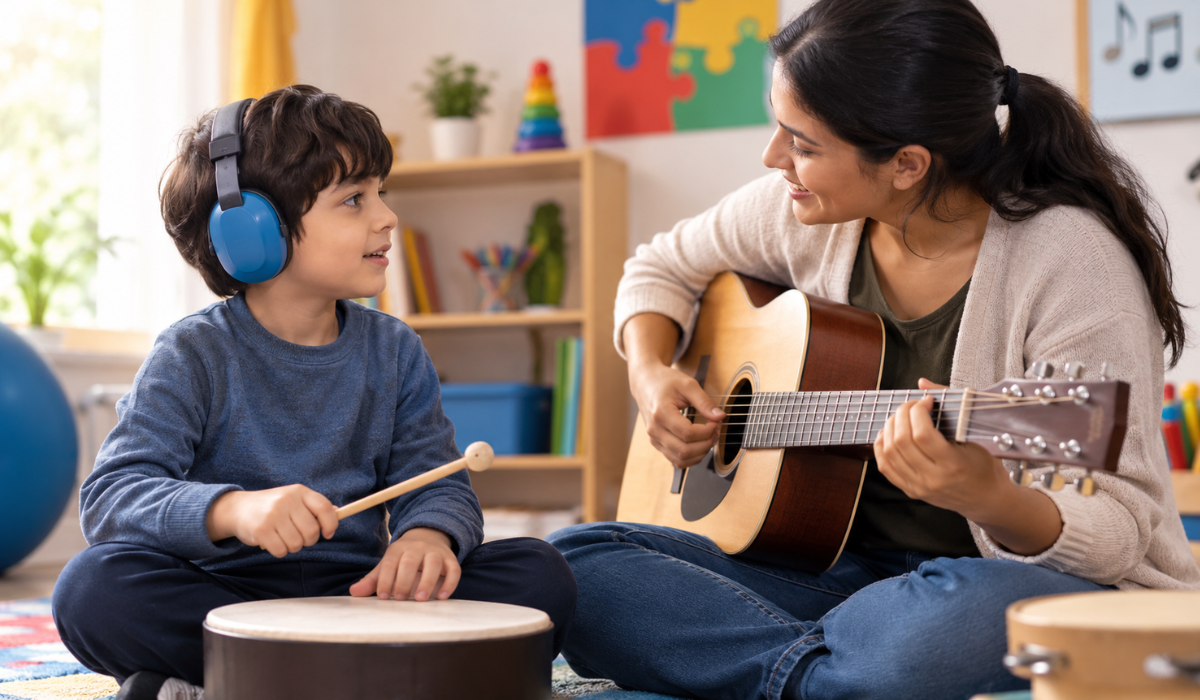
Most children react to music in some way. A toddler might bounce to a beat, and an older child might hum the same tune all day. For many autistic children, music can be even more than fun. It can be a comfortable way to connect, express feelings, and learn new skills.
That is the idea behind music therapy for autistic children. This guide explains what it is, how sessions work, what benefits families may see, and which approaches therapists commonly use.
What Is Music Therapy?
Music therapy is a planned form of therapy led by a trained and qualified music therapist. The therapist uses music in different ways, such as singing, playing instruments, moving to a beat, listening, or making up songs. The goal is to work on needs that go beyond music itself.
That is the main difference between music therapy and music lessons. In a lesson, the goal is to learn an instrument or a song. In therapy, music is a tool. The child may be working on talking, taking turns, calming down, or paying attention. Playing a drum well isn’t the point. What matters is what the drum helps the child do.
Why Music Works Well for Autistic Children
Autism can influence a child’s communication, social interactions, and perception of their surroundings. Spoken language can be hard for some children. Eye contact and back-and-forth conversation can feel confusing or tiring.
Music offers a different route. Here is why many therapists find it helpful:
- It is predictable. Rhythm, repeated patterns, and familiar songs give a clear structure, and many autistic children feel safe with structure.
- It doesn’t depend on words. Rather than using words, a child may communicate through sounds, rhythms, or physical movements.
- It is shared but not demanding. Making music together lets a child be with another person without the pressure of direct conversation.
- It engages many senses at once. Sound, touch, and movement all come together in one activity.
None of this means every autistic child loves music. Each child is different, and a good therapist pays attention to what the child enjoys and what they find uncomfortable.
Possible Benefits of Music Therapy for Autistic Children
Research on music therapy and autism is still growing, but several studies and reviews point to useful results. A well-known Cochrane review found that music therapy may improve social interaction, communication, and quality of life in autistic children. Not every outcome shows strong evidence, and results differ from child to child. Here are the areas where families and therapists most often notice change.
Communication Skills
Songs and rhythms can encourage a child to make sounds, copy words, or answer a musical “question”. Some non-speaking children begin to vocalise or use gestures more during music activities. For children who already speak, singing can help with tone, rhythm, and the flow of speech.
Social Interaction
Taking turns is built into music. Each person takes a turn playing before passing it to the other. A child learns to watch, wait, listen, and respond, which are the same skills needed in everyday play and conversation. Group sessions can also give children a safe space to practice being around peers.
Emotional Expression and Regulation
Many autistic children find it hard to name or explain what they feel. Music offers an alternative way for them to express their feelings and ideas. A therapist might use slow, soft music to help a child settle down or lively music to match high energy. Over time, children may learn simple ways to calm themselves.
Attention and Focus
Following a song, a rhythm, or a set of steps can help a child stay with one activity for longer. These skills can also be useful during everyday activities and classroom learning.
Motor Skills and Body Awareness
Clapping, drumming, shaking instruments, and dancing all use movement. These activities can support coordination, balance, and body awareness.
Sensory Comfort
Some children are sensitive to certain sounds. In a controlled session, a therapist can slowly introduce different sounds at a pace the child can handle. For some children, this may help them feel more at ease with everyday noise, though it varies widely.
Common Approaches Used in Music Therapy
There isn’t a single method. Therapists choose an approach based on the child’s age, abilities, and goals. Often they blend several. Below are some examples that are commonly seen.
Improvisational Music Therapy
Here the therapist makes music “in the moment”, following the child’s lead. If the child taps a drum, the therapist might match the rhythm on a piano or guitar. This creates a back-and-forth exchange without words. It is widely used with autistic children because it builds connection and communication naturally.
Nordoff-Robbins Music Therapy
This is a well-known form of improvisational therapy. It is based on the belief that every person can respond to music, whatever their ability. The therapist and child create music together, and the therapist often works with a co-therapist or assistant. Each session is adapted to the child’s needs and adjusted according to how they respond.
Structured or Activity-Based Music Therapy
Some sessions follow a clear plan. The therapist might use a “hello song” to start, a movement game in the middle, and a calming song to end. This kind of routine can feel safe and predictable. It works well for teaching specific skills, such as following instructions or waiting for a turn.
Neurologic Music Therapy
This approach uses music and rhythm to support brain-based skills like speech, movement, and attention. Therapists use specific techniques, such as rhythmic cues to guide movement or melodic patterns to help with speech.
Receptive Music Therapy
In this approach, the child mainly listens. The therapist might play calming music, guide a relaxation activity, or use certain songs to help the child manage strong emotions. It can be helpful for children who feel overwhelmed and need quiet time.
Songwriting and Song-Based Methods
Older children and teens may write or change lyrics to talk about their day, their feelings, or things they care about. Social stories can also be set to a simple tune, which helps some children remember new routines.
What Happens in a Typical Session?
Every session looks a little different, but many follow a similar flow.
- Welcome and greeting. A familiar hello song tells the child that the session is starting.
- Main activities. These might include drumming, singing, playing keyboards, using bells or shakers, or moving to music.
- Skill-building moments. The therapist builds in small chances to practise goals such as eye contact, turn-taking, or making requests.
- Closing routine. A goodbye song or calm activity helps the child finish smoothly.
Sessions often last between 30 and 60 minutes and may be held one-on-one or in small groups. A first session usually involves the therapist getting to know the child, observing how they respond to sounds, and talking with parents about goals.
How to Find a Qualified Music Therapist
Look for a therapist who has formal training and is registered or certified in your country. In the United States, this is usually the credential MT-BC. Other countries have their own professional bodies. It also helps to look for someone with experience working with autistic children.
Here are a few questions parents can ask:
- What training and experience do you have with autistic children?
- How do you set goals, and how will I know if my child is progressing?
- Can I watch or join a session?
- How do you handle a child who dislikes certain sounds?
A good therapist will welcome these questions and work with you, the school, and your child’s other therapists.
Is Music Therapy Safe?
For most children, music therapy is considered low-risk. Still, a few points are worth keeping in mind:
- Some autistic children are very sensitive to loud or sudden sounds. A therapist should adjust volume and instruments to suit the child.
- A child may not enjoy it at first. Giving them time and allowing breaks often helps.
- It should not replace other recommended support, such as speech therapy, occupational therapy, or educational support. It usually works best as part of a wider plan.
If your child seems distressed in sessions, talk to the therapist and your child’s healthcare provider.
Simple Music Ideas Parents Can Try at Home
You don’t need special skills or equipment. These small activities can add to what a therapist is doing:
- Sing a favourite song together and pause so your child can fill in a word or sound.
- Clap or tap a simple rhythm and see if your child copies you.
- Use a pot and a wooden spoon as a drum and take turns.
- Play calm music before bedtime to build a relaxing routine.
- Dance or move together and let your child lead.
Make it light and pressure-free. If your child turns away or covers their ears, stop and try again another day.
Final Thoughts
Music therapy for autistic children offers a gentle way to build communication, social skills, emotional awareness, and comfort with sensory input. It isn’t a cure, and it won’t suit every child in the same way. But for many families, it opens a path to connection that seems natural and enjoyable.
If you are thinking about it for your child, speak with your child’s doctor or care team and look for a qualified music therapist. Starting with a trial session is a simple way to see how your child responds.
Frequently Asked Questions
What is music therapy for autistic children?
Music therapy for autistic children is a structured therapy where a trained music therapist uses singing, playing instruments, movement, and listening to work on goals like communication, social skills, and emotional regulation. Sessions are planned around each child’s needs and are not the same as ordinary music lessons.
Does music therapy really help autistic children?
Research suggests it can help. Reviews of studies report improvements in social interaction, communication, and quality of life for many children. Results vary from child to child, and music therapy works best as one part of a wider support plan, not as a cure or replacement for other therapies.
Does my child need musical talent to join?
No. Music therapy does not require any musical skill or training. The therapist uses simple sounds, rhythms, and songs that any child can join in with. The focus is on connection, expression, and learning skills, so a child can take part whether they hum, tap, listen, or move.
At what age can a child start music therapy?
Children can start at a very young age, often from toddler years, and the therapy can continue into the teenage years. A therapist adjusts activities to the child’s age, abilities, and interests. If you are unsure about the right time, ask your child’s doctor or therapist for advice.
How long are sessions, and how often should they happen?
Sessions usually last 30 to 60 minutes and are often held once a week, though this depends on the child’s needs and the setting. Younger children may do shorter sessions. The therapist reviews progress regularly and adjusts the plan, so there is no single fixed schedule for everyone.
Can parents do music activities at home?
Yes. Singing songs, clapping rhythms, dancing together, and using simple instruments at home can support the work done in therapy. Keep it relaxed and playful, follow your child’s lead, and watch for signs of discomfort. Home activities add to professional therapy but do not replace it.