
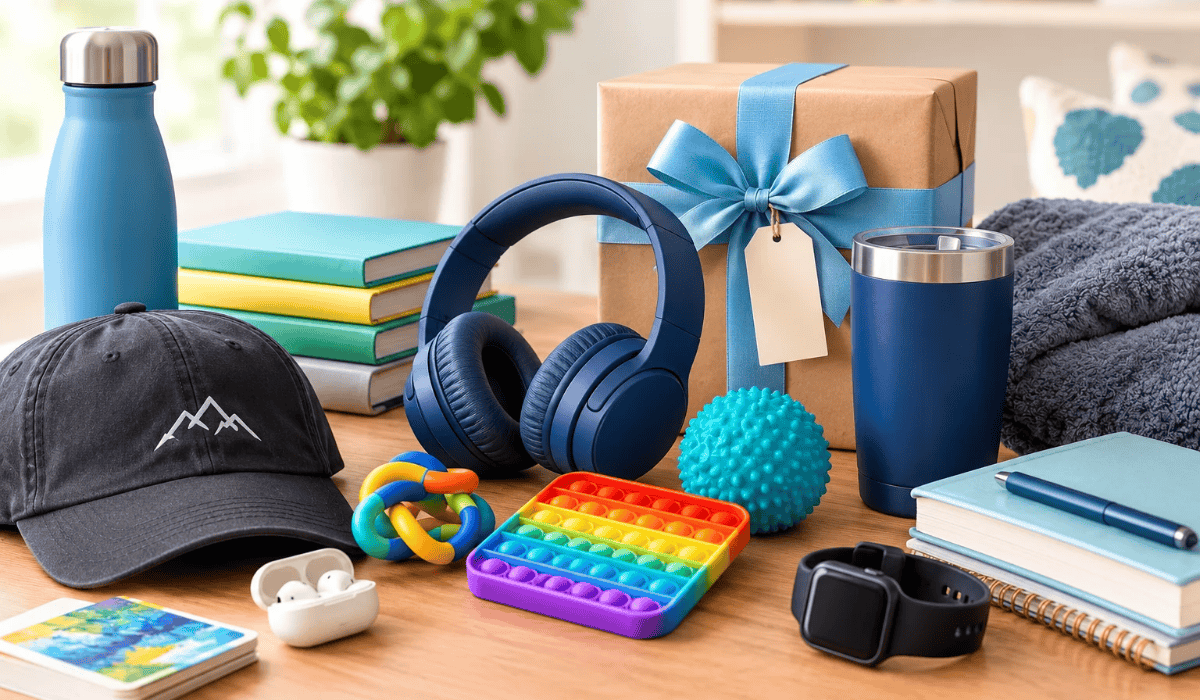
Picking a gift for an autistic teen or adult can feel tricky if you’re worried about getting it wrong. Here’s the good news: you don’t need to buy anything labeled “autism-friendly.” You just need to think about two things, what this person genuinely loves, and how their senses experience the world. Get those two right, and almost any gift will land.
Below, I’ll walk through the best options by age group, and explain why each one works instead of just listing it.
Start Here: What Actually Makes a Gift Good for an Autistic Person
Before you shop, keep these in mind:
Follow the special interest, not the diagnosis. If someone is obsessed with trains, dinosaurs, a specific band, or a video game, lean into that. A gift connected to a real passion will always beat a generic sensory toy, because it shows you paid attention to them, not their diagnosis.
Think about their senses, not just their taste. Some autistic people love deep pressure, weighted objects, and soft textures. Others can’t stand tags, seams, or loud packaging. If you’re not sure, ask someone close to them, or ask the person directly. It’s a completely normal question.
Avoid anything that looks like a “special needs product.” Plenty of autistic teens and adults would rather receive something stylish and normal looking than something that visibly signals “this is for your condition.”
When you’re unsure, give them the choice. A gift card to a store tied to their interest isn’t a lazy gift. For someone with very specific preferences, it’s often the most respectful option, because it lets them pick exactly what fits.
Gifts for Autistic Teenagers and Teens
Teenagers are figuring out who they are, so gifts that give them a little more independence tend to mean the most.
Noise-cancelling headphones are a great place to start, because school hallways, cafeterias, and social gatherings can be genuinely overwhelming. Headphones give a teen an easy way to control their environment without needing to explain themselves to anyone.
A weighted blanket or lap pad works well too. Deep pressure has a calming, grounding effect for a lot of people. So this becomes something they reach for during homework, downtime, or before bed.
Fidget tools that look “grown-up,” like a clickable pen, a textured ring, or subtle fidget jewelry. Also give a teen a way to self-regulate without drawing attention, which matters a lot at an age when fitting in feels important.
Merchandise tied to their special interest, whatever it is, tells them you actually listened when they talked about it. That matters more than the item itself.
And if they’re into building or making things, a skill-building kit like a coding kit or a musical instrument. That gives them something to grow into, not just something to open.
Unique Gifts for Autistic Young Adults
In the young adult years, a lot of gifts are really about supporting the shift into independence, so give things that reduce daily friction.
Daily-wear noise-reducing earplugs are a small thing that makes a big difference, since young adults are navigating commutes, jobs, and social settings on their own now, often for the first time.
A well-designed planner or journal, especially one built for executive functioning, helps with the parts of adult life that aren’t taught anywhere: remembering appointments, breaking tasks into steps, tracking routines.
Smart home gadgets, like voice-activated lights or reminders, quietly reduce the mental load of daily tasks, which can free up energy for things that actually matter to them.
An experience tied to their interest, a con ticket, a museum membership, a class, often means more than an object, because it gives them something to look forward to and talk about.
And sensory-friendly self-care items, like unscented lotion or a weighted eye mask, are a quiet way of saying “I thought about your comfort,” which is a meaningful gesture at any age.
Gifts for Autistic Adults
For adults, the goal is simple: treat them like an adult with real interests, not like their autism is the main thing about them. A gift built for an adult body, an adult budget, and an adult routine will always land better than something that was clearly designed for a child and relabeled.
Quality tools tied to their hobby or work, art supplies, gardening equipment, tech accessories, show you see them as a whole person with real passions.
Comfort-focused home items, like a favorite-texture throw blanket or a genuinely good desk chair, matter more than people realize, because comfort at home directly affects how well someone can rest and recharge.
Noise management tools, like over-ear noise-cancelling headphones, bone-conduction headphones, or speech-clarifying earplugs for the commute, help create a sense of control over their environment, which is something a lot of autistic adults value highly.
Discreet self-regulation tools, like a sterling silver spinner ring or adult-labeled therapy putty, let someone manage anxiety in public without becoming the center of attention.
Something tied to identity and interest, a book by an autistic author, a neurodivergent pride t-shirt, or a cookbook built around low-effort meals, respects who they are instead of just managing their symptoms.
And when you’re genuinely unsure what they’d want, a gift card to their favorite store is one of the most appreciated gifts you can give an adult with strong, specific preferences. It’s not impersonal, it’s respectful.
A quick test for any gift on this list: can they turn it off or put it away without asking anyone? Does it behave the same way every time? Does it actually fit an adult life? And can they use it around other people without it becoming a whole conversation? If yes to all four, you’ve probably picked well.
Also Read: 25+ Autism Awareness Activities for Home, School, and World Autism Awareness Day
Frequently Asked Questions
What is a good gift for an autistic adult?
The best gifts respect sensory needs and connect to a genuine interest rather than the diagnosis itself. Popular, well-received options include noise-cancelling or bone-conduction headphones, weighted blankets, fidget jewelry, discreet sensory tools like a spinner ring, and anything tied to a specific hobby or special interest. A gift card is also a solid choice when you’re unsure of exact preferences.
What do you buy an autistic person who has everything?
Look toward experiences instead of objects: a class or workshop tied to their interest, museum or event tickets, or a subscription box that keeps delivering something new each month. Personalized items, like a custom playlist, an engraved item, or a book by an autistic author, also tend to stand out.
What not to give an autistic person as a gift?
Avoid anything that’s overly childish for their age, strongly scented (candles, perfumed lotions), texturally unpredictable, or branded in a way that highlights the diagnosis rather than the person. Surprise gifts with strong smells, sounds, or textures can be risky if you don’t know their sensory profile.
Are weighted blankets good for autistic adults?
Many autistic adults find weighted blankets calming because deep pressure has a grounding, anxiety-reducing effect for a lot of people. That said, sensory preferences are individual, so it’s worth checking whether the person already likes firm pressure or hugs before assuming they’ll enjoy one.
What is a sensory-friendly gift?
A sensory-friendly gift is one that’s been chosen with the person’s specific sensory profile in mind rather than a generic idea of what autistic people like. That could mean tagless, soft-fabric clothing for someone sensitive to touch, or noise-reducing earplugs for someone sensitive to sound. The “sensory-friendly” label only works when it’s matched to the individual, not applied as a blanket rule.
Do autistic teens like fidget toys?
Many do, but preferences vary widely. Discreet options like fidget rings, clickable pens, or “chewelry” (jewelry designed for chewing) tend to be more popular with teens than obvious toys, since they can be used without drawing attention in class or social settings.
What is the best gift for someone recently diagnosed with autism as an adult?
A thoughtful option is a book written by an autistic author about the adult diagnosis experience. Many adults describe late diagnosis as validating but disorienting, and having resources written by people who’ve been through it can feel more supportive than a physical object. Pairing that with something comfort-focused, like a weighted lap pad or good headphones, covers both the emotional and sensory side.