
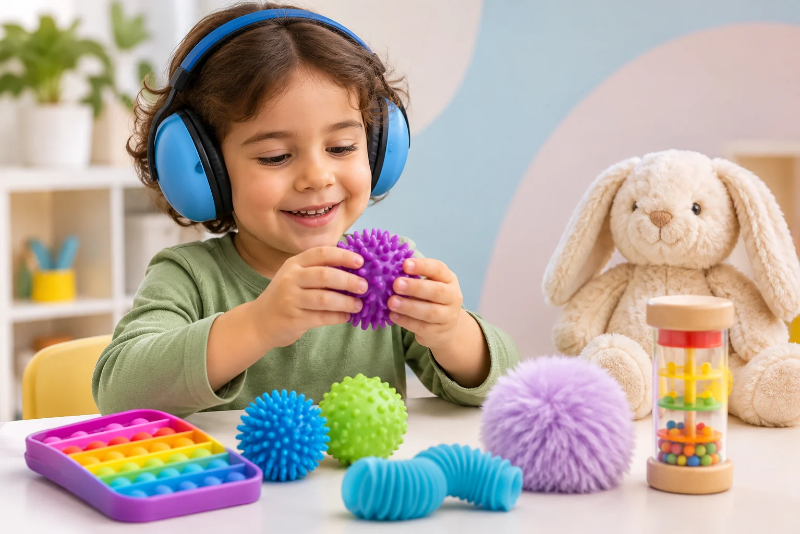
Observe how the child responds to different textures and sounds before choosing a toy. The right toy should make play comfortable, enjoyable, and stress-free.
Why Do Texture and Sound Matter When Choosing Sensory-Friendly Toys?
Children experience the world through different senses. Touch and hearing are particularly relevant when selecting toys because they determine how a child experiences physical materials and auditory feedback.
For example, a child may enjoy squeezing a soft silicone toy but avoid a toy with a rough or sticky surface. Another child may enjoy gentle rattling sounds but become uncomfortable around toys that produce sudden, loud noises.
These differences are sometimes noticeable in autistic children and children with sensory processing differences. However, sensory preferences are individual. Not every autistic child has the same reactions to textures or sounds.
Understanding these preferences can help parents choose toys that support comfortable exploration rather than introducing unnecessary sensory discomfort.
What Textures Should You Look for in a Sensory-Friendly Toy?
Texture describes how a material feels when a child touches, squeezes, rubs, or holds it. A toy’s surface can make it appealing to one child and uncomfortable for another.
Before purchasing a toy, consider the following texture characteristics.
1. Soft and Smooth Materials
Soft and smooth textures can be comfortable for children who dislike rough, scratchy, or uneven surfaces.
Examples include:
- Soft silicone sensory toys.
- Smooth rubber balls.
- Plush toys with gentle fabric.
- Soft fabric sensory blocks.
These materials can offer a comfortable tactile experience. However, some children may prefer firmer or more noticeable textures.
2. Different Textures for Tactile Exploration
Some children enjoy exploring different surfaces with their hands. Toys with varied textures can provide opportunities to touch, squeeze, and compare materials.
Examples include:
- Textured sensory balls.
- Silicone pop fidget toys.
- Fabric touch-and-feel books.
- Sensory blocks with raised patterns.
Look for textures that are interesting without being uncomfortable. If a child repeatedly pulls away, avoids touching the toy, or appears distressed, consider offering a different surface.
3. Avoid Unexpected or Uncomfortable Textures
Not every textured toy is suitable for every child. Sticky, rough, slippery, or scratchy materials may be unpleasant for children who are sensitive to certain tactile experiences.
Check the material before buying and, when possible, let the child touch a sample.
Pay attention to:
- Rough edges or abrasive surfaces.
- Sticky or greasy coatings.
- Strong material odors.
- Surfaces that collect dirt easily.
- Materials that may irritate sensitive skin.
A simple, comfortable texture may be more suitable than a toy with several different tactile features.
4. Consider the Toy’s Material and Safety
Texture should never be considered separately from safety.
Choose toys made from durable, age-appropriate materials. Check whether the product has small detachable parts, exposed seams, sharp edges, or damaged areas.
For younger children, avoid toys containing small parts that could create a choking hazard. If a child mouths or chews toys, select products specifically designed for that purpose and follow the manufacturer’s age and safety instructions.
What Types of Sounds Are Best for Sensory-Friendly Toys?
Sound is another important consideration, especially for children who are sensitive to noise. A toy that produces loud, sudden, or unpredictable sounds may be uncomfortable, even if its design looks appealing.
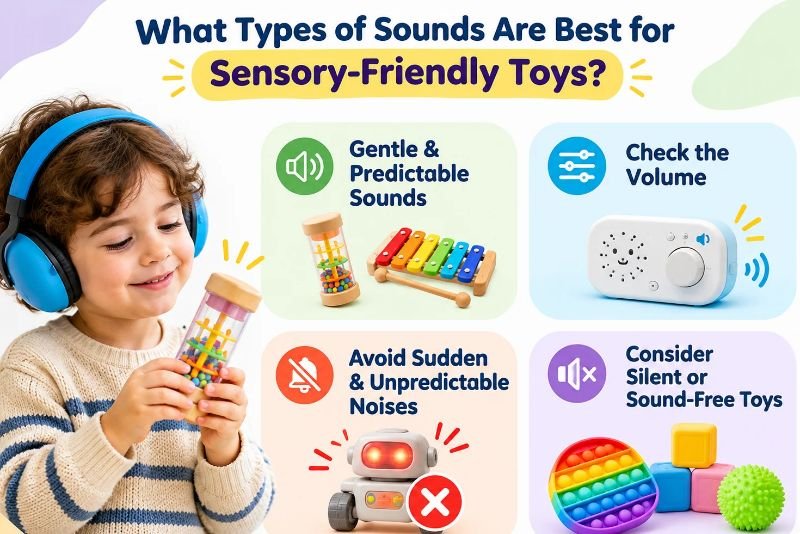
Consider these sound-related features before buying a toy.
1. Choose Toys With Gentle and Predictable Sounds
Some children enjoy toys that produce soft, consistent sounds. Predictable sounds can make it easier to understand what happens when they press, shake, or move a toy.
Examples include:
- Soft rattles with gentle sounds.
- Wooden rainmakers.
- Quiet musical toys.
- Toys with soft clicking sounds.
- Simple instruments with adjustable volume.
A predictable sound allows children to explore cause and effect without introducing unnecessary noise.
2. Check the Volume Before Purchasing
A toy may look suitable but produce sounds that are too loud during everyday play.
Whenever possible, listen to the toy before purchasing it. If shopping online, check product demonstrations and customer reviews for comments about sound levels.
Look for:
- Adjustable volume settings.
- A low-volume or quiet mode.
- A mute button.
- Gentle sound effects.
- Clear and simple audio rather than multiple overlapping noises.
A volume-control feature gives parents more flexibility to adjust the toy according to the child’s comfort.
3. Avoid Sudden and Unpredictable Noises
Some toys produce unexpected sounds when a button is pressed, a part moves, or a sensor detects movement.
Examples include loud electronic toys, sudden alarms, and toys with multiple sound effects.
These features may be uncomfortable for children who are sensitive to unexpected noises.
Instead, consider toys that produce sounds only when the child intentionally activates them. This gives the child more control over when the sound starts and stops.
4. Consider Silent or Sound-Free Toys
Not every sensory-friendly toy needs to make noise. In fact, silent sensory toys may be a better choice for children who prefer a quieter play experience.
Examples include:
- Silicone fidget toys.
- Textured sensory balls.
- Soft stacking blocks.
- Fabric sensory books.
- Smooth wooden puzzles.
These toys allow children to explore touch and movement without additional auditory stimulation.
How Can You Match a Toy’s Texture and Sound to a Child’s Sensory Preferences?
Choosing a toy becomes easier when you observe how a child responds to different sensory experiences.
Instead of assuming that every child will enjoy the same sensory features, consider their individual reactions.
| Child’s sensory preference | Toy features to consider |
| Dislikes rough surfaces | Smooth silicone or soft fabric |
| Enjoys touching different materials | Toys with varied, gentle textures |
| Dislikes loud noises | Silent toys or adjustable-volume toys |
| Enjoys gentle sounds | Soft rattles or quiet musical toys |
| Avoids unexpected sounds | Toys with predictable, child-controlled audio |
| Enjoys squeezing objects | Soft, squeezable sensory balls |
These are starting points, not fixed rules. A child may enjoy one texture on a particular day and avoid it on another.
Observe the Child Before Buying
Pay attention to how the child interacts with everyday objects and toys.
For example:
- Do they enjoy touching soft blankets or textured cushions?
- Do they avoid sticky or rough surfaces?
- Do they cover their ears around loud sounds?
- Do they enjoy shaking objects to hear gentle noises?
- Do they prefer toys that make no sound?
These observations can help narrow down suitable options.
You can also introduce a new toy gradually. Let the child explore it at their own pace without forcing them to touch, hold, or listen to it.
What Safety Features Should Parents Check in Sensory Toys?
Texture and sound are important, but safety should always come first. A sensory-friendly toy should be appropriate for the child’s age, abilities, and play habits.
Consider these important safety checks:
- Material quality: Choose durable materials without sharp edges, loose pieces, or damaged surfaces.
- Small parts: Avoid detachable components that could create choking risks, particularly for children who mouth or chew objects.
- Battery safety: Check that battery compartments are secure. Button batteries can cause serious injuries if swallowed.
- Sound levels: Avoid toys that produce excessively loud sounds, particularly when played close to the ears.
- Cleaning requirements: Select toys that can be cleaned according to the manufacturer’s instructions, especially when children frequently put them in their mouths.
- Age recommendations: Always check the manufacturer’s age guidance and safety warnings.
The U.S. Consumer Product Safety Commission’s toy safety guidance provides additional information about age labels, small parts, and toy-related hazards.
Common Mistakes to Avoid When Choosing Sensory-Friendly Toys
Even well-intentioned toy purchases may not match a child’s sensory preferences. Avoid these common mistakes:
- Choosing toys based only on appearance: Bright colors and attractive designs do not necessarily make a toy enjoyable or comfortable.
- Assuming every autistic child likes textured toys: Some children enjoy tactile exploration, while others prefer smooth and familiar surfaces.
- Ignoring sound sensitivity: A toy with loud music or unexpected sound effects may create discomfort.
- Buying toys with too many features: Multiple lights, sounds, and textures can become overwhelming for some children.
- Forcing interaction: Allow children to decide whether they want to touch, hear, or explore a new toy.
- Ignoring changing preferences: A child’s sensory preferences may vary depending on their mood, environment, and other circumstances.
The goal is not to find the most complicated sensory toy. It is to find something the child feels comfortable exploring.
How Can Parents Test Whether a Sensory Toy Is Suitable?
Before investing in an expensive sensory toy, try a simple approach:
- Introduce one toy at a time: Avoid presenting several new sensory toys together.
- Start with a familiar texture: Choose a material the child already enjoys touching.
- Test the sound separately: If the toy makes noise, activate it at a comfortable distance and observe the reaction.
- Allow independent exploration: Give the child time to interact with the toy without pressure.
- Observe their response: Notice whether they approach, avoid, repeatedly explore, or move away from the toy.
- Adjust when necessary: If the child seems uncomfortable, stop the activity and consider a quieter or differently textured alternative.
If you are unsure about a child’s sensory preferences, a pediatric occupational therapist can help identify relevant sensory needs and suggest suitable play experiences.
Conclusion
When choosing a sensory-friendly toy, texture, sound, comfort, and safety should guide your decision. Soft surfaces, varied tactile materials, gentle sounds, and adjustable volume features can be useful starting points, but there is no single combination that works for every child.
Observe what the child enjoys and what makes them uncomfortable. Give them opportunities to explore toys at their own pace and respect their preferences.
Ultimately, the best sensory-friendly toy is one that makes a child feel comfortable, interested, and free to enjoy play in their own way.
Frequently Asked Questions
1. What texture is best for sensory toys for autistic children?
There is no universally best texture for autistic children. Some enjoy smooth silicone, soft fabric, and plush materials, while others prefer bumpy, ridged, or textured surfaces. Choose materials based on the child’s individual tactile preferences.
2. Are noisy toys bad for children with sensory sensitivities?
Not necessarily. Some children enjoy musical toys, rattles, and gentle sound effects. However, loud or unpredictable noises may cause discomfort for children who are sensitive to sound. Choose toys with adjustable volume, predictable sounds, or mute options.
3. How do I know if a sensory toy is overstimulating my child?
Watch for signs such as covering their ears, moving away, avoiding the toy, appearing distressed, or repeatedly trying to stop its sounds. These behaviors can indicate discomfort, although context matters. Stop or reduce the sensory input and let the child decide whether to continue.
4. Should I choose silent sensory toys or toys that make sounds?
It depends on the child’s preferences. Silent toys are worth considering for children who prefer less auditory stimulation. Children who enjoy predictable sounds may prefer gentle rattles, rainmakers, or quiet musical toys. Having both options can be helpful.
5. What should I avoid when buying sensory toys for a child with autism?
Avoid toys with excessively loud sounds, uncomfortable textures, strong odors, sharp edges, and unsafe detachable parts. Also, avoid choosing toys based on assumptions about autism rather than observing the child’s actual preferences.