

Some children speak early, learn fast, and do well in class, yet still find everyday social life exhausting. At six, school makes these differences easier to see. Your son may be doing fine on paper, but something feels different compared to other kids.
What does “high functioning autism” mean?
“High functioning autism” is a popular phrase, not an official medical term. It usually describes autistic children who have strong speech and learning skills, and need less daily support. In the diagnostic manual used by doctors, this is closer to autism spectrum disorder, Level 1.
The phrase can also mislead. A child who looks fine at school may still struggle a lot with feelings, friendships, and change. “Needs less support” does not mean “needs no support.”
10 signs of autism in a 6-year-old boy
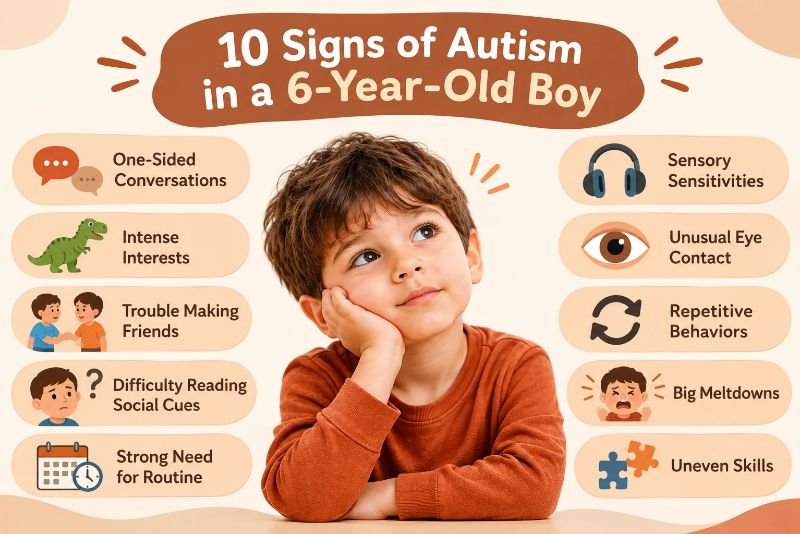
Every autistic child is different. Your son may show some of these signs and not others.
1. One-sided conversations
He may talk a lot, but mostly about what he cares about. He may not ask you questions, wait for your reply, or notice when you are bored. It can feel like he is giving a speech rather than having a chat.
2. Very intense interests
Many kids love dinosaurs or trains. The difference here is depth and intensity. He may learn every fact, talk about it all day, and get upset when asked to stop or change the topic. The interest often crowds out other play.
3. Trouble making and keeping friends
He may want friends but not know how to join a game, take turns, or compromise. He may prefer playing alone, or play near other children without really playing with them. Friendships may not last because he finds the unwritten social rules hard.
4. Difficulty reading feelings and social cues
He may miss facial expressions, tone of voice, or body language. He might not realize a friend is upset, or take jokes and sarcasm literally. If you say “hold your horses,” he may look around for horses. The NHS lists trouble understanding what others think or feel as a common sign in older children.
5. Strong need for routine
He may want the same breakfast, the same route to school, the same order for everything. A changed plan, a substitute teacher, or a new seat can cause real distress. Routine makes his world feel predictable and safe.
6. Sensory sensitivities
Loud sounds, clothing tags, certain food textures, bright lights, or strong smells may bother him far more than they bother others. Some boys do the opposite and seek out sensation, like spinning, crashing into furniture, or touching everything.
7. Unusual eye contact, voice, or body language
He may avoid eye contact or stare too long. His voice may sound flat, very formal, or unusually loud or soft. He may stand too close to people, or use few gestures. He might sound like a “little professor.”
8. Repetitive movements or phrases
This is often called stimming. It can look like hand flapping, rocking, finger flicking, or pacing. He may also repeat lines from shows or videos, or repeat the same phrase many times. These movements and words often help him calm down or manage excitement.
9. Big meltdowns that seem out of proportion
A meltdown is not a tantrum. A tantrum is about getting something. A meltdown happens when he is overwhelmed and cannot cope. It may follow a noisy day, a change of plan, or a small problem that seemed minor to you. He may hold it together at school and fall apart at home.
10. Uneven skills
He may read early, remember details perfectly, or be great with numbers, yet struggle with tying shoes, handwriting, sports, or following group instructions. He may also play by strict rules, line toys up, or sort them, instead of using pretend play. This gap between strengths and everyday skills is common.
Is it autism, or just personality?
All children show some of these traits sometimes. A shy child may avoid eye contact. A curious child may love one topic. What matters is the pattern: several signs, present across home, school, and play, and affecting daily life.
Ask yourself:
- Do these behaviors happen most days, not just now and then?
- Do they cause stress for him, or make school and friendships hard?
- Have teachers or family members noticed the same things?
If you answer yes to most, it is reasonable to seek an evaluation.
Why signs are often missed at this age
Boys with strong language skills are often diagnosed later because adults assume they are “just quirky,” shy, or stubborn. Some children also learn to hide their struggles at school, which is called masking. It can be exhausting, and the stress often comes out at home.
Signs usually appear in early childhood, but they may become clearer when social demands grow. At six, the classroom is full of group work, shared play, and rules nobody explains out loud.
What to do next
- Write down what you see. Note specific examples, when they happen, and how long they last. Short video clips can help too.
- Talk to his teacher. Ask how he handles groups, changes, and play.
- See your pediatrician. Share your notes and ask for a developmental screening. The CDC’s signs and symptoms page and the NICHD guide explain what doctors look for.
- Ask about a full evaluation. A specialist, such as a developmental pediatrician, child psychologist, or child psychiatrist, can make a diagnosis.
- Ask about school support. Many schools can evaluate children and offer help, even without a formal diagnosis.
A diagnosis does not change who your son is. It gives you a clearer picture of how he experiences the world, and helps you get the right support early.
How to support him while you wait
- Keep routines steady, and warn him before changes.
- Use clear, direct words. Say what you mean instead of hints or sarcasm.
- Give him a quiet space to recover after school.
- Use his interests to teach new skills and start conversations.
- Stay calm during meltdowns. Reduce noise and demands, and talk after he settles.
Frequently asked questions
1. What are the signs of high functioning autism in a 6-year-old boy?
These traits usually appear together and affect school, play, or home life. One sign alone does not mean autism. A doctor or specialist can tell you what is going on after a proper evaluation.
2. Can a 6-year-old with autism talk normally?
The difficulty is usually in using language socially: taking turns in conversation, understanding jokes, and noticing when a listener loses interest. Some also speak in a very formal way or repeat phrases.
3. Is high functioning autism an official diagnosis?
“High functioning” is an everyday phrase for autistic people with strong speech and learning skills. In medical terms, this is usually Level 1, which means needing support, though less than other levels.
4. At what age is high functioning autism usually diagnosed?
Children with strong language skills are often diagnosed later because their differences are less obvious early on. Signs are usually present from early childhood, even when they are not noticed.
5. What is the difference between autism and a tantrum or bad behavior?
Meltdowns often follow sensory overload, sudden change, or stress that built up over the day. Punishing a meltdown rarely helps. Calm, quiet, and time to recover work better.
Conclusion
If your son shows many of these signs, it does not mean something is wrong with him. It means his brain works differently, and he may need a different kind of support. Trust what you see, write it down, and talk to a professional.