
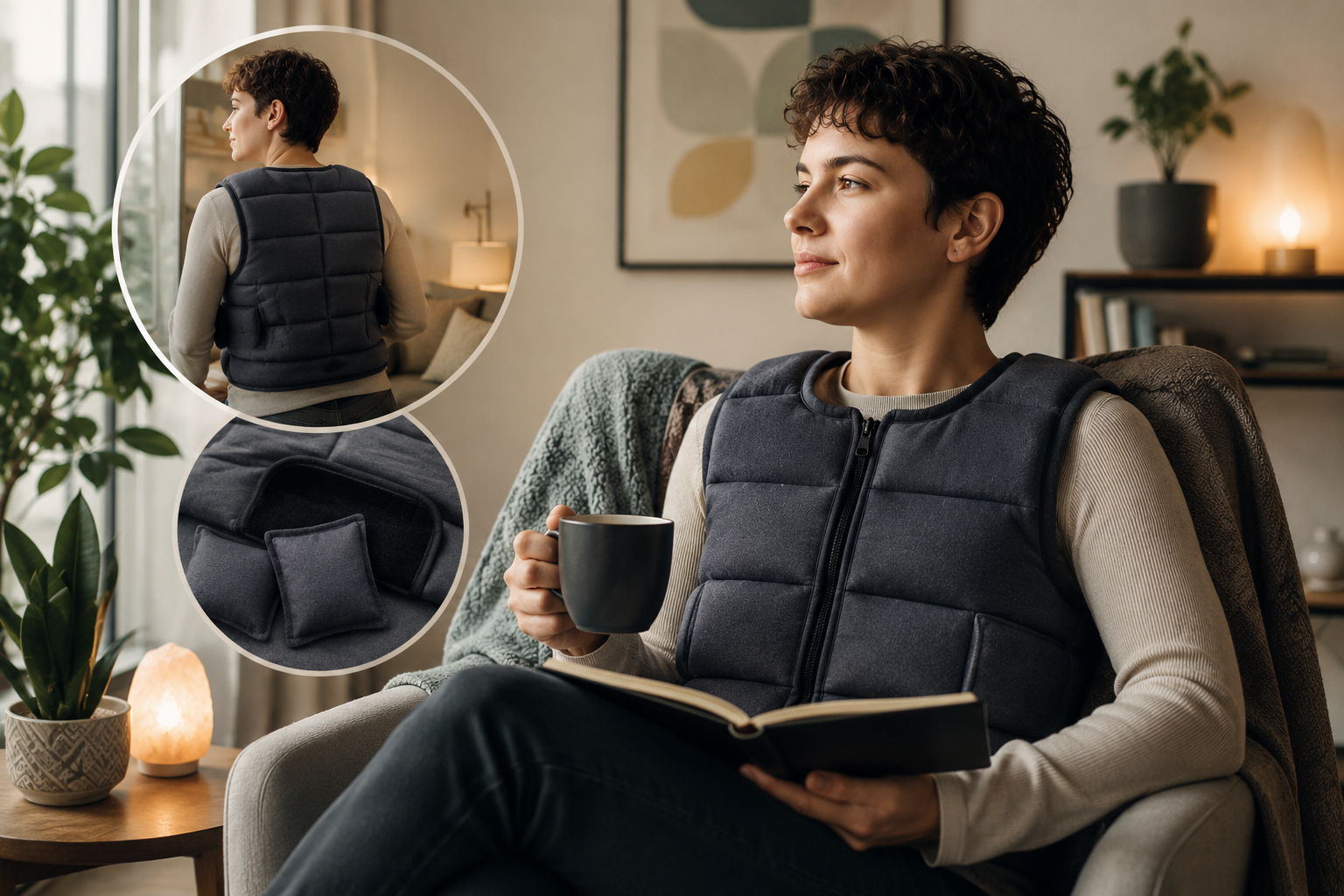
For some autistic adults, sensory input can be an important part of everyday comfort and self-regulation. A weighted vest is one type of sensory-support product that an autistic adult may encounter when exploring ways to manage sensory preferences. These garments add weight around the torso and are sometimes used as part of individualized sensory routines.
If you are researching a weighted vest for autism in adults, it is important to distinguish between a sensory-support product and a medical treatment. A weighted vest should not be described as a treatment or cure for autism. Research on weighted garments and specific sensory outcomes is limited, and individual experiences can differ substantially.
For people in the United States, cost and access may also depend on the healthcare setting, insurance plan, state program, and whether the particular product meets the plan’s coverage requirements. This guide explains what weighted vests are, what is currently known about their potential use, safety considerations, and questions to consider before using one.
What Is a Weighted Vest?
A weighted vest is a wearable garment containing fixed or removable weights. The weight is distributed across part of the upper body.
Weighted vests are available for different purposes, including exercise and sensory-support use. In autism-related discussions, they are often associated with providing additional proprioceptive or deep-pressure input.
However, a weighted vest is not an autism treatment. Autism is a developmental condition, and no single sensory product is appropriate or effective for every autistic person.
The American Academy of Pediatrics has discussed the limited evidence surrounding sensory-based interventions and emphasizes the importance of considering whether an intervention produces meaningful, observable benefits for an individual.
Can a Weighted Vest Help Autistic Adults?
There is no single answer that applies to every autistic adult.
Some people may prefer the sensation of additional pressure or weight, while others may find a weighted garment uncomfortable, restrictive, distracting, or overwhelming. Research has not established weighted vests as a universally effective intervention for autistic people.
An autistic adult may be interested in a weighted vest because they:
- Prefer certain types of pressure or resistance
- Seek particular types of sensory input
- Find the physical sensation comfortable
- Already use sensory strategies as part of an individualized routine
These experiences do not establish that a weighted vest treats autism or improves a specific medical condition.
If an autistic adult wants to explore a weighted vest, an occupational therapist or another appropriately qualified healthcare professional may be able to help consider sensory preferences, physical abilities, daily activities, and relevant safety factors.
Possible Benefits and Limitations
A weighted vest may be considered by some adults as one component of an individualized sensory routine. The main reason for considering one may simply be a personal preference for the sensation of additional weight or pressure.
However, several limitations are important to understand.
Individual responses vary
There is no guarantee that a weighted vest will produce a desirable sensory response. One person may find the sensation comfortable, while another may dislike it or experience discomfort.
For this reason, a product should not be recommended solely because an individual is autistic.
Research is limited
Sensory-based approaches have been studied in autism and other populations, but the evidence differs depending on the intervention, product, and outcome being evaluated.
Current evidence does not justify presenting weighted vests as a way to reduce autism itself, prevent meltdowns, improve social communication, or treat anxiety or another medical condition.
It should not replace appropriate care
A weighted vest should not be used as a substitute for healthcare, occupational therapy, mental-health services, medication management, or other care that an individual may need.
If a person is experiencing a medical or mental-health concern, the appropriate healthcare professional should be consulted rather than relying on a sensory product alone.
Weighted Vest Safety Tips for Adults
Safety and comfort should be considered before using any weighted garment.
1. Consider physical health and mobility
Additional weight may affect movement, balance, posture, or physical comfort. Adults with respiratory, cardiovascular, musculoskeletal, neurological, or other health concerns may want to discuss the use of a weighted garment with a healthcare professional before trying one.
The appropriate approach can vary depending on the person’s individual circumstances.
2. Check the fit
A weighted vest should fit securely without making normal breathing or movement difficult. It should not create excessive or uncomfortable pressure around the chest, neck, or abdomen.
If the garment causes significant discomfort, it should be removed.
3. Introduce it cautiously
If an appropriately qualified professional considers the product suitable, introducing it cautiously can help the wearer identify whether it feels comfortable.
The wearer should stop using the vest if they experience pain, difficulty breathing, dizziness, unusual weakness, or significant distress.
4. Consider the activity
A vest that feels comfortable while sitting may not be appropriate for every activity. Added weight can affect movement and balance.
Extra caution is particularly relevant during activities such as running, climbing, driving, swimming, or other situations where changes in movement or balance could create safety concerns.
5. Consider heat and comfort
A weighted garment can add another layer around the body and may contribute to heat discomfort, particularly in warm environments.
The environment, clothing, activity level, and individual tolerance should all be considered.
6. Respect the adult’s choice
An autistic adult’s preferences and consent should be respected. A caregiver should not force an adult to wear a weighted vest because someone else believes it may provide sensory input.
The person using the garment should be able to communicate discomfort and have the option to remove it when appropriate.
How to Choose a Weighted Vest
If an adult decides to explore a weighted vest, the focus should be on fit, comfort, safety, intended use, and product quality rather than marketing claims.
Consider the following features:
Adjustability: Removable or adjustable weights may make it easier to modify the garment according to the intended use.
Fit: The vest should allow comfortable movement without excessive compression or pressure.
Breathability: Materials that allow airflow may be more comfortable in warmer environments.
Weight distribution: Weight should be distributed in a way that does not create uncomfortable pressure in a particular area.
Ease of removal: The wearer should be able to remove the garment easily when necessary.
Care instructions: Check how the garment should be cleaned and maintained according to the manufacturer’s instructions.
Be cautious of products advertised as being able to “treat,” “cure,” or eliminate autism-related symptoms. Such claims go beyond what the available evidence supports.
Also read: Autism Chew Toys for Adults: Benefits, Types & Safety Tips
What Healthcare Professionals May Consider
An occupational therapist, physician, or another appropriately qualified professional may consider several factors when discussing whether a weighted vest is appropriate for an autistic adult.
These may include sensory preferences, mobility, posture, breathing, cardiovascular health, physical strength, communication preferences, daily activities, and the environment in which the vest would be used.
A professional may also consider the intended goal. Having a clearly defined purpose can make it easier to determine whether the product is actually useful or whether another approach may be more appropriate.
This individualized approach is preferable to assuming that a weighted vest is suitable for every autistic adult.
Questions to Ask Before Using a Weighted Vest
Before introducing a weighted vest, consider asking:
- Is this appropriate for the person’s physical health and mobility?
- What is the intended purpose of using it?
- What level of use is appropriate for this individual?
- What signs indicate that it should be removed?
- Is the fit appropriate for comfortable breathing and movement?
- Could another sensory strategy be more appropriate?
- Are there activities where the vest should not be used?
- If insurance payment is being considered, what documentation or authorization is required?
These questions can help keep the decision focused on safety, individual preferences, and evidence rather than product marketing.
Final Takeaway
A weighted vest for autism in adults is best understood as a sensory-support product rather than a treatment for autism. Some autistic adults may prefer the sensation of additional weight, while others may find it uncomfortable or unhelpful. Current evidence does not support presenting weighted vests as a universal intervention for autism.
For U.S. consumers, informed choice, individual safety, healthcare guidance when appropriate, and insurance-specific requirements are important considerations. Insurance coverage is not guaranteed, and federal autism-related programs should not automatically be assumed to cover a particular sensory product.
If an autistic adult is considering a weighted vest, an individualized discussion with an appropriate healthcare professional can help address the person’s preferences, physical circumstances, intended use, and safety considerations.
Frequently Asked Questions
1. Are weighted vests good for autistic adults?
A weighted vest may be comfortable or preferred by some autistic adults, but responses vary. Current evidence does not establish weighted vests as a universal treatment or solution for autism. Individual preferences, intended use, and safety considerations should guide decisions.
2. How long should an autistic adult wear a weighted vest?
There is no universally appropriate wearing schedule for every autistic adult. Use should depend on the individual’s circumstances, comfort, activity, and professional guidance when appropriate. The vest should be removed if the wearer experiences pain, breathing difficulty, dizziness, overheating, or significant distress.
3. Does insurance cover weighted vests for autism?
Not necessarily. Coverage can vary by private insurance plan, Medicaid program, state, product, and individual circumstances. Consumers should check their specific plan’s benefits and any documentation, authorization, or medical-necessity requirements before assuming that a weighted vest will be covered.
4. Can a weighted vest treat autism?
No. A weighted vest should not be described as a treatment or cure for autism. It is a sensory-support product that some individuals may choose to explore based on personal preference or, when appropriate, professional guidance.
5. Should an autistic adult consult a healthcare professional before using one?
For an adult with physical health conditions, mobility concerns, breathing problems, or other relevant medical considerations, discussing the product with an appropriate healthcare professional can be an important safety step. An occupational therapist may also help consider sensory preferences and functional factors.