
Mornings can feel hard. So can meals, bath time, bedtime, and busy places. If you are raising a child with autism, you may know this feeling well.
The good news is this. Small changes at home can make a big difference. You do not need special tools or a big budget. You need a clear plan, a calm space, and a lot of patience.
Why Daily Life Can Feel Hard for Autistic Children
Before you fix a problem, it helps to know why it happens. Many autistic children face these challenges:
- Sensory differences. Sounds, lights, smells, tastes, and touch can feel too strong or too weak.
- Trouble with change. A new place or a new plan can feel scary.
- Communication gaps. A child may know what they want but not know how to say it.
- Need for routine. Knowing what comes next brings comfort.
- Big feelings. It can be hard to name feelings and calm down.
When your child struggles, it is rarely about being “bad.” Most of the time, something feels too hard, too loud, or too unclear. Seeing it this way changes how you respond. And it makes your days calmer.
Build a Simple Daily Routine
A steady routine is one of the best tools you have. Many autistic children feel safe when they know what will happen next. That calm can cut down on worry and meltdowns.
Here is how to start:
- Write down your day. List the main parts: wake up, breakfast, school, play, dinner, bath, bed.
- Keep the order the same. The exact time matters less than the order.
- Start with one part. Pick the hardest time of day, such as mornings. Fix that first.
- Add one new step at a time. Do not change everything at once.
- Build in rest. Add quiet breaks between busy parts.
Quick tip: Include fun things in the routine, like a favorite show or park time. Your child will look forward to them.
Life will not always go to plan. That is okay. A routine is a guide. It is not a strict rule. When things change, stay calm and explain what is different.
Use Visual Schedules
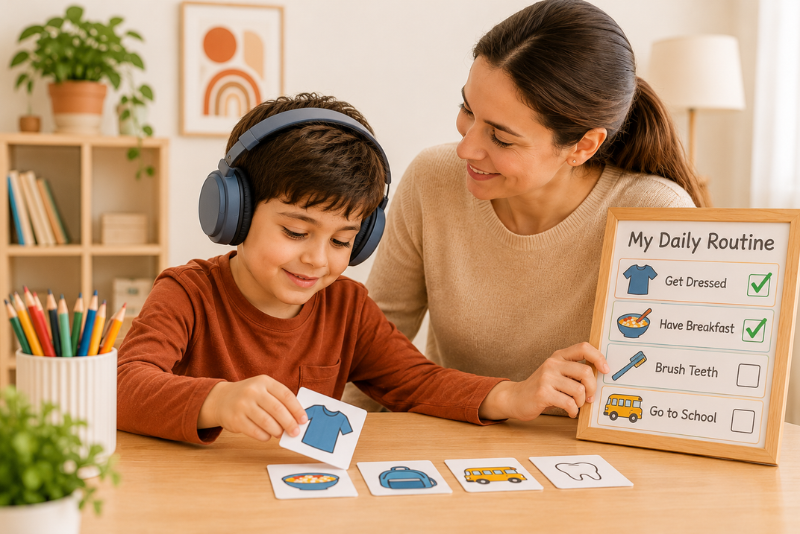
Many autistic children understand pictures better than spoken words. Words disappear. Pictures stay in place. That is why visual schedules work so well.
A visual schedule is a set of pictures or words that show what will happen. You can use:
- Real photos of your child doing each activity
- Simple drawings or icons
- Picture cards on a board with Velcro
- A written list for older children who can read
Here is how to use one:
- Put the schedule where your child can see it, such as on the fridge or a wall.
- Show the next step before it happens.
- Let your child remove or flip each card when a step is done.
- Use a “first, then” board for harder tasks. For example: “First shoes, then park.”
This small tool lowers stress for many families. It also builds independence, because your child can check the plan without asking you.
Prepare Your Child for Changes
Change is hard for many autistic children. A sudden switch from play to dinner can lead to tears. A new route to school can cause real fear.
You cannot avoid all change. But you can make it easier.
- Give a warning. Say “Five more minutes, then we stop.” Then say “Two more minutes.”
- Use a visual timer. A timer shows time passing in a way a child can see.
- Talk about it early. Explain what will change and why, using simple words.
- Use social stories. These are short picture stories that show what will happen, like a visit to the dentist.
- Keep one thing the same. Bring a favorite toy or snack to new places.
- Praise flexible moments. Say “You handled that change so well.”
The more you practice, the easier changes become.
Make Your Home Sensory-Friendly
Many autistic children are very sensitive to the world around them. A bright light can hurt. A loud vacuum can feel scary. A scratchy tag can ruin a whole day.
Try to notice what bothers your child. Then adjust the space.
For sound
- Offer noise-cancelling headphones or soft ear covers.
- Warn your child before loud sounds, like a blender or hair dryer.
- Use rugs and curtains to soften noise.
For light
- Use soft, warm bulbs instead of harsh ones.
- Try lamps instead of bright overhead lights.
- Let your child wear a cap or sunglasses if sunlight bothers them.
For touch
- Choose soft clothes without tags or rough seams.
- Wash new clothes before wearing them.
- Let your child choose clothes when you can.
For smell and taste
- Use mild soap and laundry detergent.
- Cook strong-smelling foods with the window open.
Create a calm corner. A quiet space with a soft blanket, a pillow, and a few favorite items gives your child a place to rest. Teach your child that it is a safe place to go when they feel overwhelmed. It is never a place for punishment.
Make Mornings Easier
Mornings are busy. For many families, they are also the hardest part of the day.
Here is what can help:
- Prepare the night before. Lay out clothes and pack the school bag.
- Use a morning checklist. Pictures can show each step: wake up, toilet, get dressed, eat, brush teeth, shoes.
- Wake up a little earlier. Extra time lowers pressure.
- Offer two choices. “Blue shirt or red shirt?” gives control without too much choice.
- Keep the screen off. If screens cause fights when it is time to stop, wait until after the morning tasks.
- Praise each step. “You put your shoes on. Great work.”
If your child gets stuck, break the task into smaller steps. Getting dressed can become: pants, shirt, socks, shoes.
Make Mealtimes Easier
Many autistic children are picky eaters. This is common. Some do not like certain tastes, smells, or textures. Others want the same food every day.
Try these gentle ideas:
- Keep mealtimes calm. Avoid pressure, bribes, or threats.
- Offer safe foods with new foods. Put one small new item next to a food your child likes.
- Let your child touch and smell the food. It is a first step before tasting.
- Try small portions. A big plate can feel like too much.
- Keep a steady meal schedule. This helps hunger cues.
- Let your child help. Washing veggies or stirring can build interest.
- Be patient. A child may need to see a food many times before trying it.
Talk to your child’s doctor if your child eats only a few foods, loses weight, gags often, or seems to be in pain when eating. A feeding therapist or dietitian can help. Please do not start a restrictive diet or supplements without medical advice.
Make Bath Time and Toileting Easier
Bath time can bring up many sensory challenges. The water, the sound, the soap, and the towel can all feel strange.
Try these tips:
- Check the water temperature with care. Some children are sensitive to hot and cold.
- Use gentle, unscented soap.
- Let your child bring a favorite bath toy.
- Use a timer or picture steps so your child knows when bath time ends.
- If showers are scary, try a bath, or the other way around.
- Use a soft towel and dry gently.
For toilet training, patience matters most. Many autistic children train later than others. That is normal.
- Wait until your child shows signs of readiness.
- Use a picture sequence for each step.
- Make the bathroom comfortable. A footstool and a small seat can help.
- Praise small steps, like sitting on the toilet.
- Do not use punishment for accidents.
If toilet training is not going well, ask your doctor or occupational therapist for guidance.
Make Bedtime Easier
Sleep problems are common in autistic children. Poor sleep can make the whole day harder for everyone.
Here is what can help:
- Keep the same bedtime every night. Try to keep it close on weekends too.
- Create a calm wind-down. Try the same steps each night: bath, pajamas, teeth, story, lights out.
- Turn off screens early. Stop screens at least an hour before bed.
- Make the room comfortable. Keep it dark, cool, and quiet. Some children like a weighted blanket or a soft night light. Ask your doctor before using a weighted blanket, especially for young children.
- Avoid caffeine and heavy snacks at night.
- Use a bedtime picture chart. It shows what comes next.
If your child still struggles to sleep, talk to your doctor. Sleep trouble can have causes that need care, such as pain, anxiety, or breathing problems. Do not give melatonin or other sleep aids without talking to a doctor first.
Help Your Child Communicate
Many daily struggles come from one problem. Your child cannot tell you what they need.
Here is how to help:
- Use short, clear words. Say “Shoes on” instead of a long sentence.
- Give extra time. Wait a few seconds for a reply.
- Show, do not just tell. Point to the item or show a picture.
- Use picture cards or a talker. These tools help children who speak little or not at all.
- Teach a simple way to ask for help. A word, a sign, or a card for “help” or “break” can stop a meltdown before it starts.
- Name feelings. Say “You look upset. Do you need a break?”
- Celebrate every attempt. A sound, a point, or a look all count.
A speech-language therapist can guide you on the best tools for your child.
Prevent and Handle Meltdowns
A meltdown is not a tantrum. It happens when a child is overwhelmed and cannot cope. It is not done on purpose.
How to prevent meltdowns
- Notice early signs. These may include covering ears, pacing, or going quiet.
- Keep a short log of what happens before meltdowns. Look for patterns like hunger, noise, or tiredness.
- Give breaks before your child reaches a breaking point.
- Keep routines steady and give warnings before changes.
What to do during a meltdown
- Stay calm. Your calm helps your child.
- Keep your child safe. Move hard or sharp things away.
- Lower noise and light.
- Use few words, and keep your voice soft.
- Do not argue, lecture, or punish.
- Wait until it passes. Then offer a drink, a hug if they like it, or quiet time.
After your child is calm, think about what caused it. Each meltdown teaches you something about your child’s needs.
Make Outings and School Easier
Going out can be hard. Crowds, noise, and new places add stress. But a little planning helps.
For outings
- Tell your child where you are going and what will happen.
- Pick quiet times, like early mornings, to visit busy places.
- Bring helpers: headphones, a favorite toy, snacks, and water.
- Plan an exit. Know where you can go if things get too much.
- Start with short trips and build up.
- Praise your child for the things they handle well.
For school
- Talk with the teacher early. Share what works at home.
- Ask about support, such as a visual schedule, a quiet break area, or extra time.
- Keep contact with a short note or message.
- Ask how your child’s day went in simple ways, like “What was fun today?”
Support rules differ by country and school. Ask the school what help is available.
Teach Daily Skills Step by Step
Skills like brushing teeth, dressing, and tying shoes can be hard. Break each one into small steps.
- Pick one skill.
- List the steps. For brushing teeth: pick up the brush, add toothpaste, brush the front, brush the back, rinse.
- Show it. Do it with your child.
- Help only as much as needed. Slowly step back.
- Praise the effort.
- Practice a little every day.
Many therapists also use rewards like stickers or short play time. These can make learning fun. Praise should be specific. Say “You rinsed your mouth all by yourself!”
Progress may be slow. Every small step is a win.
Take Care of Yourself
You cannot pour from an empty cup. Looking after your child is a big job. You need support, too.
- Ask family and friends for help.
- Join a parent group, online or in person.
- Take short breaks, even ten minutes.
- Sleep, eat, and move your body when you can.
- Talk to a counselor if you feel stressed, sad, or alone.
- Forgive yourself on hard days. Nobody does this perfectly.
If you feel hopeless or have thoughts of harming yourself, please reach out right away. Contact a doctor, a mental health professional, or your local emergency or crisis service.
When to Ask for Professional Help
Contact your child’s doctor or therapist if your child:
- Hurts themselves, such as biting or head banging
- Is often aggressive toward others
- Loses skills they once had
- Has trouble sleeping or eating that gets worse
- Has frequent meltdowns that you cannot manage
- Seems to be in pain but cannot say where
- Runs off or is not safe near water or roads
If your child is in immediate danger, call your local emergency number.
Final Thoughts
Making daily life easier for a child with autism is not about being perfect. It is about small, steady steps.
Start with one change. It might be a visual schedule, a calm corner, or a warning before transitions. See how your child responds. Then add more.
Be patient with your child. Be patient with yourself, too. Every small win counts.
Frequently Asked Questions
What is the best daily routine for a child with autism?
There is no single best routine. The best one is steady, simple, and fits your child. Keep the order of activities the same each day. Add visuals and warnings before changes.
How can I help my autistic child with transitions?
Give warnings before changes. Use a visual timer. Show the next step with pictures. Practice often, and praise your child when they do well.
How do I make my home autism-friendly?
Reduce loud noise and bright lights. Keep the space tidy and predictable. Add a quiet corner. Choose soft clothes. Use picture labels so your child knows where things go.
What helps an autistic child sleep better?
A steady bedtime, a calm wind-down routine, no screens before bed, and a dark, quiet room can help. If sleep problems continue, talk to your doctor. Do not use melatonin without medical advice.
How do I handle picky eating in autism?
Stay calm and avoid pressure. Offer small portions of new foods next to safe foods. Be patient. If your child eats very few foods or loses weight, talk to a doctor or dietitian.
How can I calm my child during a meltdown?
Stay calm, keep your child safe, lower noise and light, and use few words. Do not punish. Offer comfort when it passes.
Do visual schedules really work?
Many families and therapists find them very helpful. Pictures stay in view, so children can check them any time. This lowers stress and builds independence.
Can a child with autism live a happy, independent life?
Many can. Outcomes vary from child to child. With early support, understanding, and patience, autistic children can learn many skills and enjoy a good life.
Medical Disclaimer
The information on this page is for education only. It is not medical advice, diagnosis, or treatment. Always ask a qualified healthcare provider about your child’s care. Never ignore professional advice or delay getting help because of something you read here. If you think your child is in danger, call your local emergency number right away.